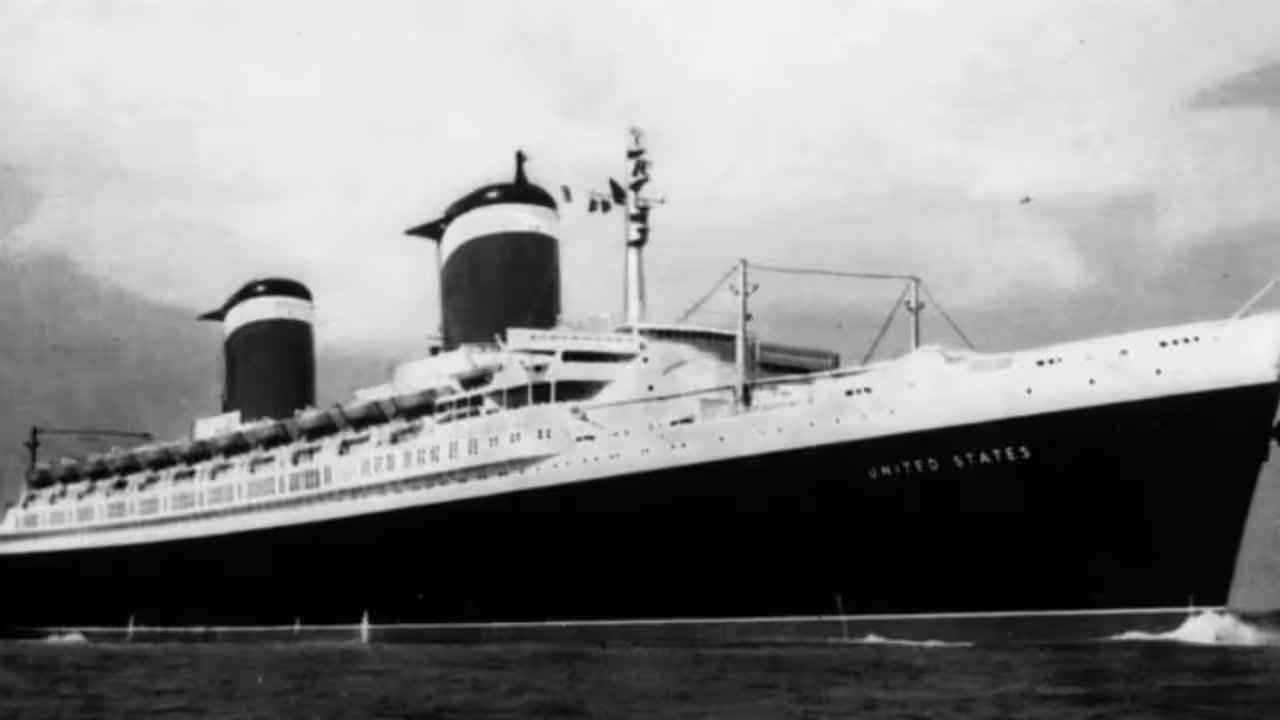
DESTIN, Fla. — Marine salvage crews sent the SS United States to the bottom of the Gulf of Mexico on Wednesday night, scuttling the historic 990-foot ocean liner to forge the largest artificial reef on the planet.
The operation took hours longer than planned. Technicians opened the ship's sea intake valves early in the day, but the steel leviathan—stretching 108 feet longer than the Titanic—clung stubbornly to the surface well into the evening. At roughly 9 p.m. local time, the hull listed sharply to one side and slipped into the sea 25 miles southwest of Destin, Florida.
She went down fighting.
She is an amazing lady who will not lay down without a fight. Much like the amazing nation she was named after.
Coleen O’Malley, President of Coleen Marine
The $13.5 million project transformed the retired luxury flagship into a sprawling aquatic nursery for swordfish, marlin, and tuna. Okaloosa County planners designed the reef to anchor a regional eco-tourism corridor, deliberately positioning the ship in 180 feet of water where its upper decks clear the surface by roughly 60 feet. That depth puts the superstructure within safe reach of recreational divers.
Strict federal environmental mandates barred salvage teams from using high explosives to blow the hull. Instead, engineers executed a slow, calculated hydro-scuttle.
Crews breached the vessel's internal seawater intake system, funneling seawater through the keel while workers cut 10-foot-by-10-foot ventilation hatches through the passenger decks. They stripped out more than 400 portholes to vent trapped air pockets. Technicians pumped millions of gallons of water directly into 128 empty fuel and lubricant tanks to guarantee the vessel settled upright on the seabed floor.
"She’s a big ship," said Nick Tomecek, spokesperson for Okaloosa County. The county managed the project alongside marine contractors to expand an offshore sanctuary that already houses more than 500 smaller artificial structures.
The sunken liner displaces the previous global record-holder, the 911-foot aircraft carrier USS Oriskany, which salvage teams scuttled off the coast of nearby Pensacola in 2006. Tomecek noted that experienced maritime divers can feasibly explore both deep-water wrecks within a single excursion.
| Vessel & Reef Parameter | Official Specification |
|---|---|
| Overall Length | 990 feet (302 meters) |
| Titanic Comparison | 108 feet longer than RMS Titanic |
| Scuttle Location | 25 miles southwest of Destin, Florida |
| Resting Depth | 180 feet to seabed; superstructure tops out at 60 feet |
| Total Project Cost | $13.5 million |
| Key Marine Species Targeted | Tuna, blue marlin, swordfish |
More than 3,000 shipyard workers assembled the SS United States in Newport News, Virginia, launching the vessel on its maiden transatlantic voyage in 1952. She was an engineering marvel.
On that maiden run carrying 1,700 passengers—including Margaret Truman, daughter of sitting President Harry Truman—the liner averaged nearly 41 miles per hour across the North Atlantic. It shattered the transatlantic crossing speed record held since 1938 by Britain's RMS Queen Mary, holding the line through open ocean gales where wind speeds topped 69 miles per hour.
Over the course of 800 Atlantic crossings, the liner operated as a floating sovereign palace. Cabin stewards served silver platters of caviar, roast duckling, and smoked ox tongue to Hollywood royalty Grace Kelly and Elizabeth Taylor. Presidents Harry Truman, Dwight Eisenhower, and John F. Kennedy walked its promenade decks. In 1968, a young Rhodes scholar named Bill Clinton sailed aboard her to begin his studies at Oxford University.
She really embodies and expresses this country’s best. She represents pride and resilience and strength and beauty.
Susan Gibbs, Granddaughter of SS United States Designer William Francis Gibbs
Commercial aviation grounded the liner's prestige. Decommissioned in 1969, the ship spent decades as an industrial orphan. Ambitious ventures to convert the empty hull into a luxury hotel casino, a floating conference hall, or a commercial cruise platform collapsed under towering overhead costs. From 1996 until late this year, the rusted hull sat tethered to Pier 82 on the Philadelphia waterfront, facing the prospect of being broken apart for scrap metal in foreign breaking yards.
Before the scuttling, salvage teams sheared away the ship's two iconic 65-foot red, white, and blue smokestacks. Curators preserved the funnels on land, where they will serve as the architectural centerpiece of a dedicated onshore museum detailing the vessel's maritime legacy.
| Previous Record Holder |
| USS Oriskany (911-foot aircraft carrier, sunk 2006) |