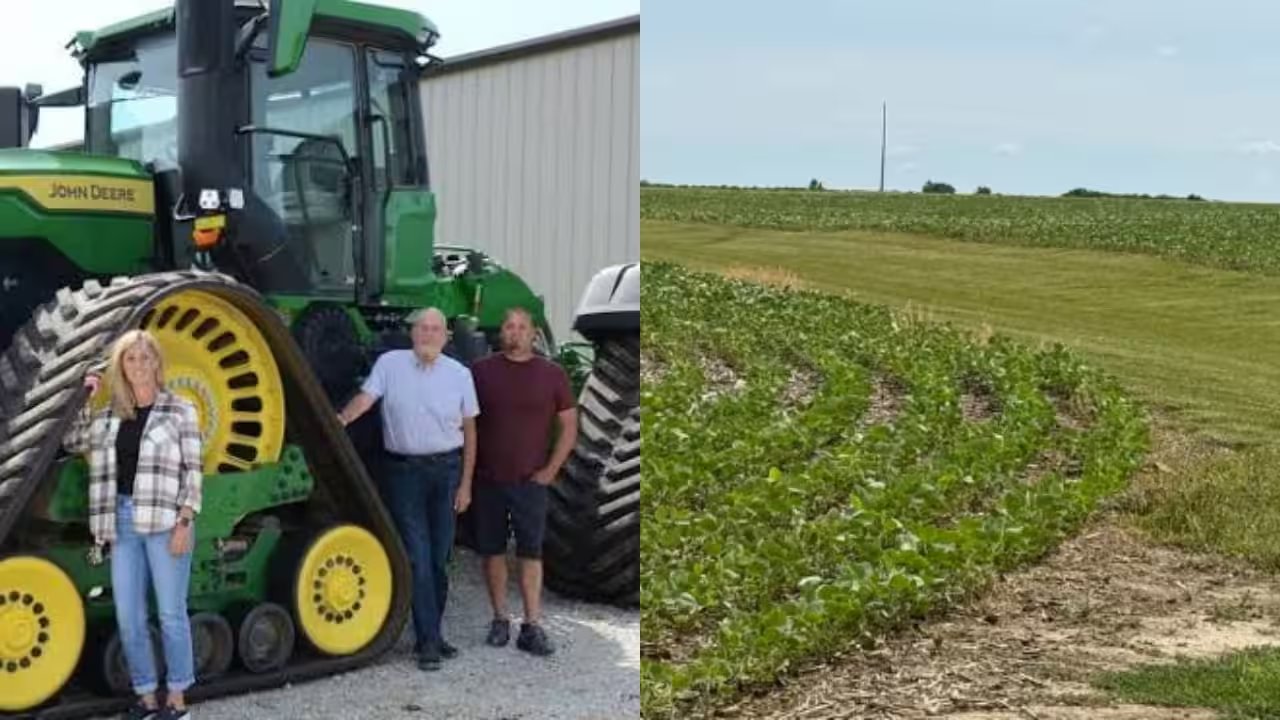
Erosion forced the change. Bill Kellogg watched water carve gullies through his family’s rolling Hardin County farmland, a sight that convinced him the traditional way of working the ground was unsustainable. What started as a desperate measure to stop the soil from washing away has evolved into an 8,000-acre operation, with 1,800 acres owned and the rest rented. The farm now integrates grid soil testing, no-till and strip-till practices, and approximately 60 acres of waterways, proving that conservation can scale alongside business growth.
The shift toward precision agriculture accelerated when Bill’s son, Shane, took the helm. In 1999, the family began grid soil sampling, a move that revealed how nutrients moved through the fields and how the soil responded to different management decisions. Strip-till became the visible centerpiece of this strategy. Instead of broadcasting fertilizer across entire fields, the Kelloggs began banding nutrients exactly where crops could access them. This method reduced fertilizer use while maintaining or improving yields, a critical balance in an era of rising input costs.
The Kelloggs reject the notion of a one-size-fits-all formula. They apply cover crops selectively, particularly on rolling ground where erosion risk is highest. Tillage remains shallow, rarely exceeding two inches unless drainage or leveling demands deeper disturbance. Economic realities also drive their decisions. With phosphate prices expected to surpass $900 per ton, the family is revisiting chicken litter as a nutrient source, a practice they used 15 to 20 years ago. They are now calculating if bringing back this material makes financial sense in the current market.
This expansion was not without peril. Bill began farming at 14 after his father exited agriculture to care for his ill wife. By his senior year of high school, he managed 700 acres largely through relationships with older community farmers. The farm weathered the severe agricultural crisis of the early 1980s, a period where Bill faced foreclosure and sold personal possessions to keep the operation afloat. A combination of family support and a strategic investment in payment-in-kind certificates pulled him out of the debt trap. Those hardships forged a financial philosophy that places profitability on equal footing with stewardship.
The family’s conservation work gained national attention after they joined a Farm Bureau and Natural Resources Conservation Service demonstration project following the 2014 Toledo water crisis. They later engaged with H2Ohio and have opened the farm to thousands of visitors, including students and officials. Their efforts recently earned the Ohio Conservation Farm Family Award. Now, multiple generations—Bill, Shane, Jacinta Burd, and their families—contribute to the farm’s future, ensuring the model persists beyond a single generation.