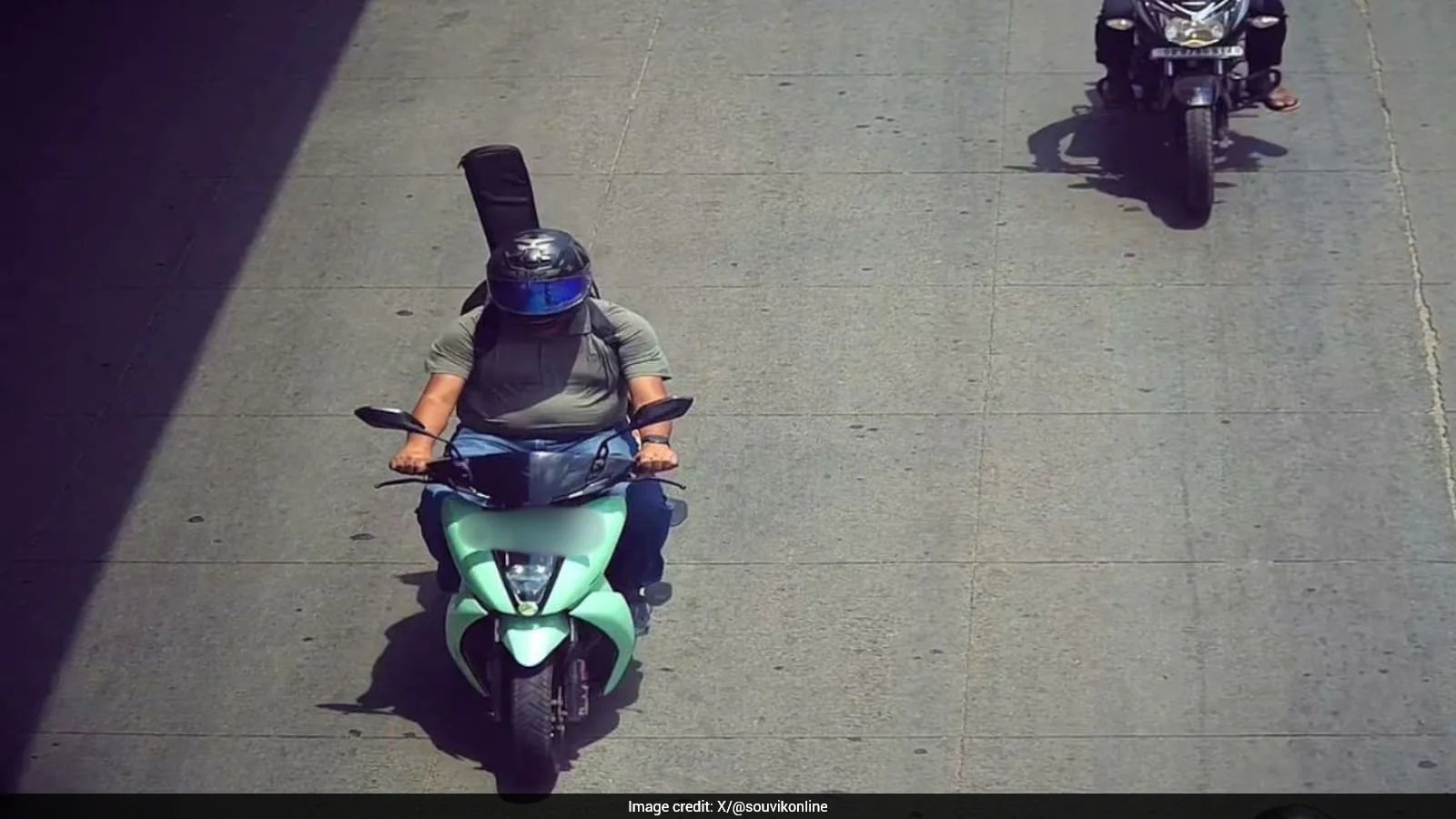
The algorithm saw a crime. It didn't see the music. Souvik Dutta, riding his wife's electric scooter alone in Bengaluru, received a Rs 500 challan for "pillion riding without a helmet." The AI-powered traffic camera, however, had identified the guitar strapped to his back as a human passenger lacking safety gear.
Dutta posted the violation notice (No. 86202541) and the camera image on X on September 26, 2026. The photo clearly showed him solo, wearing a helmet, with the instrument case slung across his shoulders. He tagged @blrcitytraffic, questioning the accuracy of the automated system. "So much for AI-based traffic violation detection! Pls revoke the challan #AISlop," he wrote.
The Bengaluru Traffic Police responded quickly to the viral post. They did not apologize for the error but directed Dutta to "mail to automationpubbcp@ksp.gov.in for violation rectification" or call 080-22943381. The bureaucratic response came as the post gained traction, highlighting a growing friction between automated enforcement and public trust in the system's precision.
Social media users piled on with skepticism. One commenter noted, "Nobody will revoke. This is a common mistake which traffic cameras make." Another warned, "If you go for revoke, you should invest 4-5 months with mental tension... And finally nobody will listen." A third user simply replied, "I don't see a helmet for the pillion," poking fun at the absurdity of the charge.
Dutta is now waiting for the email reply from the KSP automation cell. The incident reignites debate over the reliability of Bengaluru's AI traffic policing, where thousands of challans are generated daily with minimal human oversight.