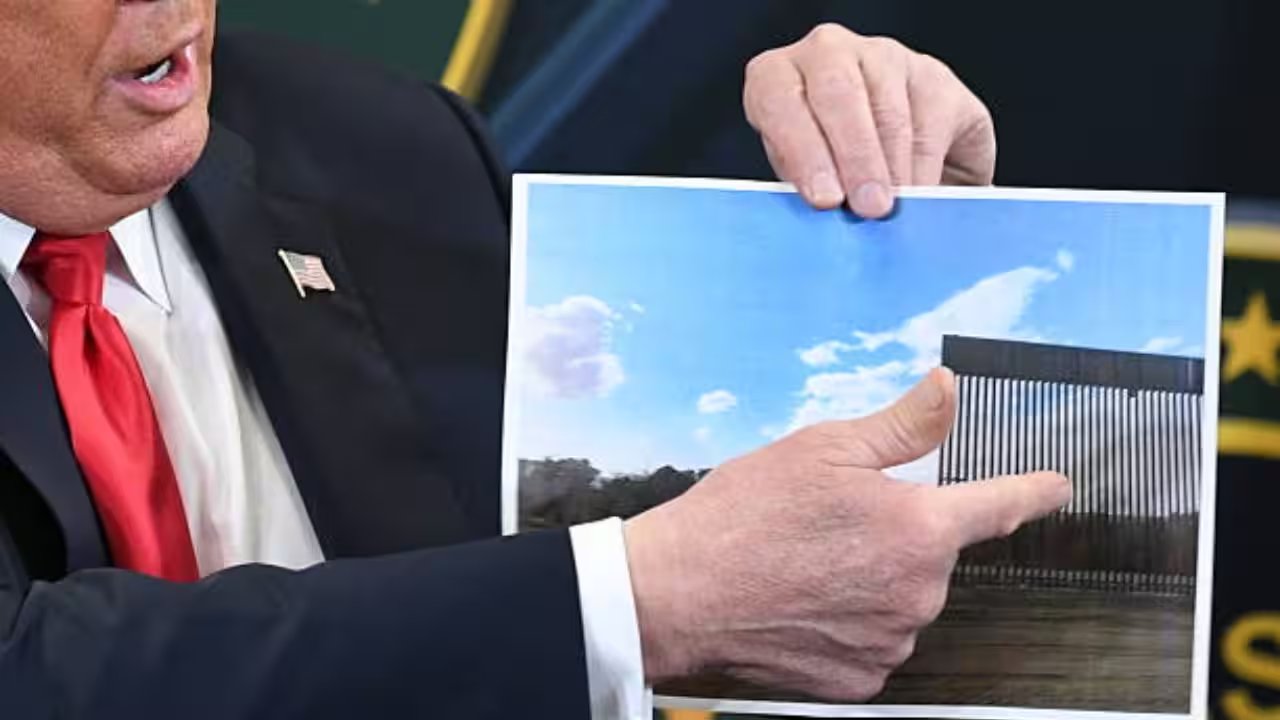
WASHINGTON — The US Supreme Court cleared the Trump administration on November 9 to resume building border barriers across Texas's Big Bend sector, wiping away a lower-court halt just 38 days after it took effect.
The emergency order temporarily dissolves a preliminary injunction issued by US District Judge Kathleen Cardone on October 2. That ruling had frozen all ground-disturbing work across more than 500 miles of rugged desert terrain running along the Rio Grande. But the justices intervened without a full signed opinion. Justice Ketanji Brown Jackson stood as the sole recorded dissenter.
The bulldozers can run again. The higher court determined that the lower-court freeze was stalling barrier deployment and hurting federal border-enforcement priorities. Yet the underlying fight remains alive in court.
The dispute tracks back to February 2026, when the Department of Homeland Security launched plans to build more than 300 miles of barriers, patrol roads, and surveillance towers through the Big Bend Border Patrol sector. To move fast, then-Homeland Security Secretary Kristi Noem invoked a 1996 federal immigration statute to bypass federal environmental and historic-preservation statutes. Her successor, Markwayne Mullin, pushed through additional waiver packages.
Environmental organizations, a local river guide, and a religious group sued in April. They argued the executive branch twisted emergency authorities meant for high-traffic crossing corridors to tear through an ecologically fragile park zone that posts some of the lowest apprehension rates along the southwestern boundary.
Judge Cardone had agreed, finding the challengers were likely to prove Homeland Security overstepped its legal mandate. She questioned whether the federal government could lawfully label Big Bend an area of high illegal entry.
Administration lawyers pushed back hard in emergency filings to the high court. Federal records submitted in the case showed authorities intercepted more than 89,000 individuals crossing illegally through the Big Bend sector between 2021 and 2025. The administration warned that leaving hundreds of miles open in West Texas invites cartel smuggling operations to exploit the gap.
Legal proceedings now return to the lower courts to resolve whether the executive branch possesses unchecked discretion to waive federal statutes along international frontiers.