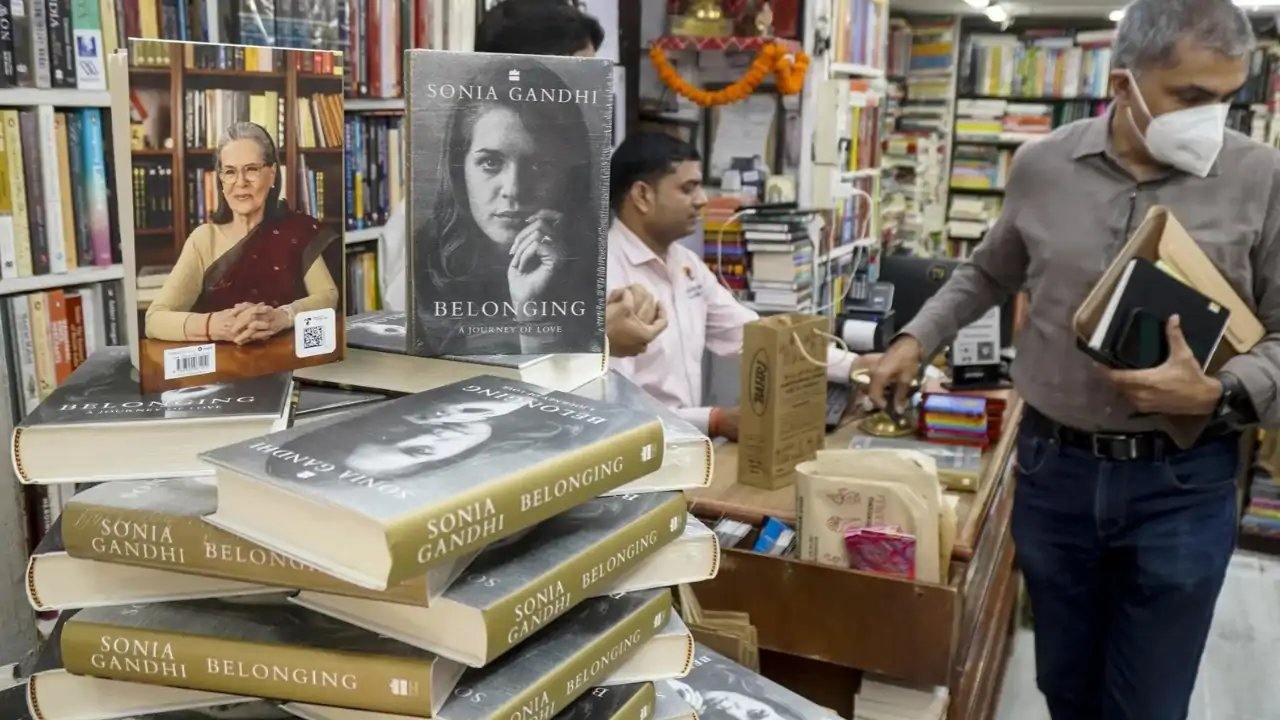
The Bharatiya Janata Party on Tuesday launched an aggressive offensive against Sonia Gandhi over her newly released memoir, branding the text a calculated maneuver to erase the excesses of the Nehru-Gandhi family. The counterattack landed within hours of Belonging: A Journey of Love hitting bookstores. The political response was fierce. In her pages, the Congress Parliamentary Party chairperson revisits the 21-month Emergency declared in 1975, calling the authoritarian period a mistake that her late mother-in-law, former Prime Minister Indira Gandhi, also came to regret.
Gandhi writes that keeping her brother-in-law Sanjay Gandhi "in check" could have averted substantial administrative damage during that era. The ruling party offered no quarter. BJP national spokesperson C R Kesavan dismissed the retrospective reckoning as an exercise in political evasion, arguing the book misrepresents its real agenda.
"Sonia Gandhi could have titled her memoir as 'Whitewashing' instead of 'Belonging', because the motive of this book appears to be sugar coating the historical wrongs perpetrated by the Nehru Gandhi family and camouflaging the cardinal sins committed by the Congress party," Kesavan stated.
Kesavan targeted Gandhi’s recorded reflections, contrasting her grief over select national flashpoints against unresolved tragedies under Congress administrations. Gandhi recounts weeping over the 1992 demolition of the Babri Masjid. Kesavan seized on the disclosure to challenge her moral record, asking why she failed to express comparable grief for the thousands butchered in the 1984 anti-Sikh violence under Congress rule. He pressed further, questioning whether tears were shed for CRPF personnel killed in the line of duty or for the 166 victims killed during the 26/11 Mumbai terror attacks in 2008.
He showed no restraint. Kesavan stated that Gandhi’s defense of the 1975 Emergency—a period marked by mass detentions, press censorship, and suspended constitutional freedoms—amounted to an appalling attempt to normalize authoritarianism. He asserted that near 55 years of Congress governance at the Centre inflicted deep institutional damage, crediting Prime Minister Narendra Modi with systematically undoing historical administrative failures.
Congress leaders closed ranks behind Gandhi, arguing the memoir provides an unfiltered personal chronicle of a turbulent era rather than a political tract. With parliamentary debates looming, the literary release has ignited a fresh ideological skirmish, guaranteeing that historical culpability remains front and center in the national discourse.