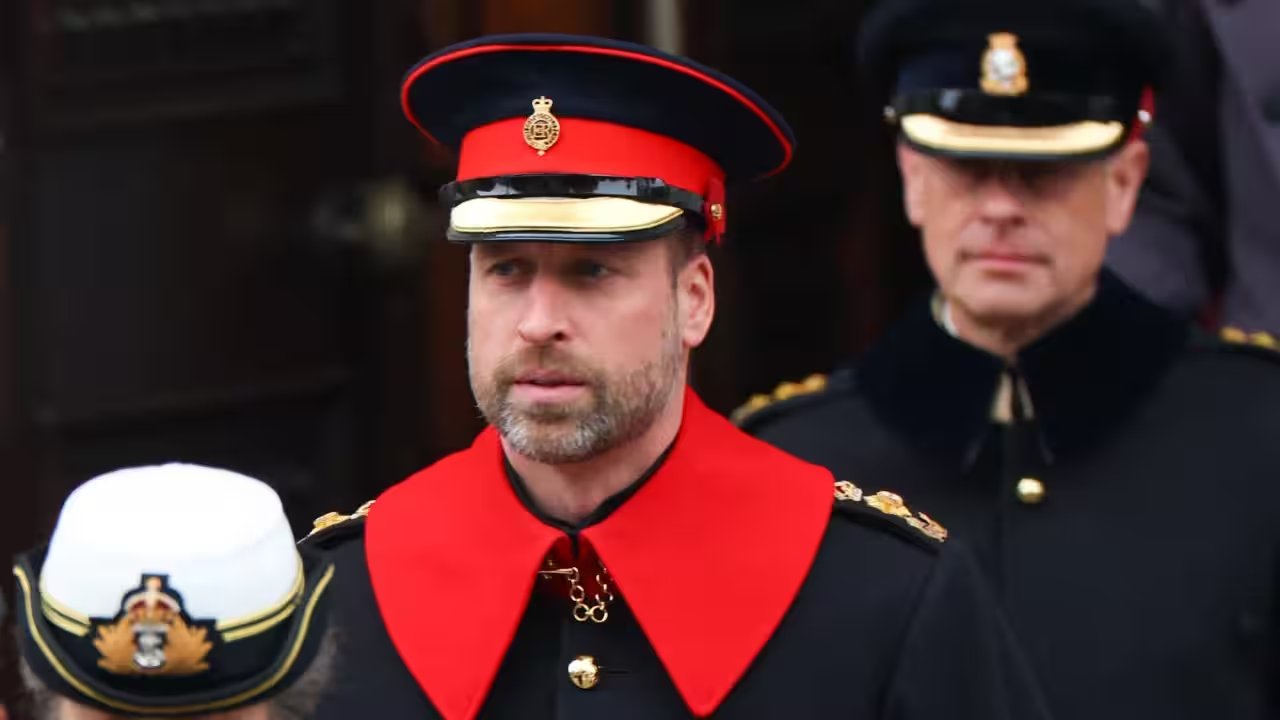
He flew commercial. He brought his heir.
Prince William took seat alongside his 13-year-old son, Prince George, aboard a scheduled British Airways flight to Barcelona during the boy's half-term break from Eton College. The Prince of Wales then boarded the same aircraft with George for the return leg. Father and son made the journey to watch their favourite club, Aston Villa, battle Barcelona at the Spotify Camp Nou stadium in the Champions League. To fellow economy and business travelers boarding the European carrier, the royal presence was an unexpected spectacle. But inside palace corridors, the joint journey crossed a bright constitutional red line.
A long-standing royal convention dictates that senior heirs to the British throne must never travel together on the same aircraft. The rule exists for a blunt, unsparing reason: an aviation catastrophe cannot be permitted to wipe out two generations of monarchs in a single blow.
| Succession Parameter | Standard Royal Convention | Prince William & George Case |
|---|---|---|
| Age Threshold for Separation | Separate aircraft mandatory after turning 12 | Prince George is 13 years old |
| Transport Carrier | Split chartered or commercial routing | Shared British Airways commercial flight |
| Journey Details | Authorized separate itineraries | London-to-Barcelona round trip |
| Event Destination | Official state travel / private passage | Champions League match at Spotify Camp Nou |
| Succession Lineage | Monarch and direct heir protected | First and second in line to the British throne |
The separation rule is neither theoretical nor novel. Graham Laurie, who flew Queen Elizabeth II as her personal pilot, previously established that William himself flew alongside his father, then Prince Charles, and his younger brother, Prince Harry, only until he reached the age of 12 in 1994.
Once William turned 12, the rules hardened. From that birthday onward, he was ordered onto a separate aircraft whenever his father traveled. Rare exemptions were permitted only with Queen Elizabeth II's explicit written consent. George celebrated his 13th birthday, yet the Prince of Wales bypassed the traditional safeguard without visible intervention from the Palace apparatus.
The Succession Protocol: The British line of succession rests entirely on direct biological continuity. William sits first in line; George sits second. If an aircraft carrying both heirs suffers a fatal crash, the crown instantly defaults to William's second child, Princess Charlotte, bypassing the entire direct male line of succession.
The Barcelona flight is not an isolated breach. William trained as an RAF pilot in 2008 and earned his wings as an operational search-and-rescue captain in 2012, openly describing the cockpit as his "happy place." Palace insiders confirm that William routinely pilots his immediate family across Britain in helicopters.
That habit sparked fierce domestic friction behind closed palace doors. In his 2024 biography, Catherine, the Princess of Wales: The Biography, royal author Robert Jobson revealed that King Charles formally challenged William over his insistence on piloting his wife and children through unpredictable air corridors.
Charles later asked his son to sign a formal document acknowledging the risks and accepting responsibility for his decision.
The late Queen Elizabeth II had voiced identical objections before her death, specifically protesting William's habit of personally piloting his young family on the short flight between Kensington Palace in London and their country home, Anmer Hall in Norfolk. Charles pushed the issue further by demanding William sign a formal document acknowledging the operational dangers and accepting full personal liability for the decision.
William appears unmoved by the bureaucracy. By steering his 13-year-old heir through crowded airport gates and onto shared commercial aircraft, the future king continues to chip away at the ancestral bubble that shielded previous generations of Windsor royalty.