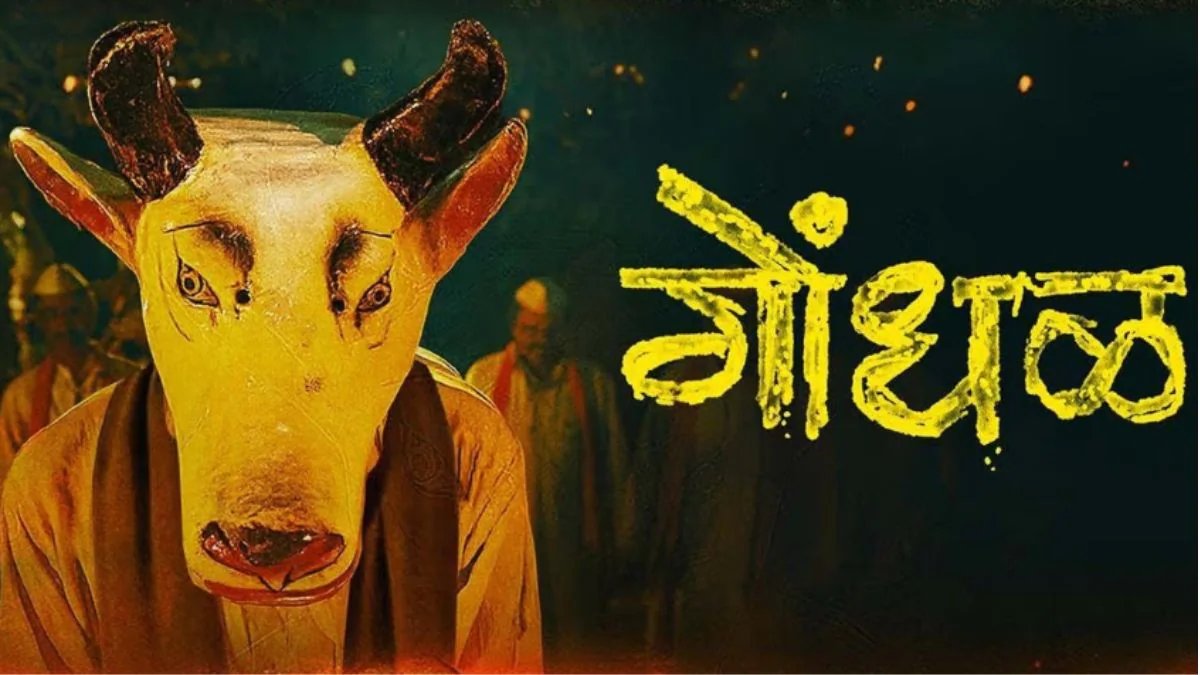
The frames look astonishing. The script, however, drags its feet.
Writer-director Santosh Davkhar’s Gondhal, picked as India’s official submission for the 99th Academy Awards, rolled into theatres today in its Hindi-dubbed edition. The drama unfolds across a single, suffocating night in rural Maharashtra. An influential local chieftain hosts a lavish wedding, summoning traditional performers to enact the Gondhal—a centuries-old ritual dance invoking family deities. Behind the clashing cymbals and sacred chants, private rot festers.
Davkhar builds an authentic world. He populates it with veteran performers Kishor Kadam and Suresh Vishwakarma, alongside Ishita Deshmukh, Yogesh Sohoni, Nishad Bhoir, Anuj Prabhu, and Vitthal Kale. Yet atmospheric weight cannot compensate for an anemic narrative engine.
If the picture survives its narrative dry spells, thank cinematographer Amalendu Chaudhary. Chaudhary shoots a village cut off from electricity, relying strictly on available kerosene lamps, flickers of open fire, and oppressive natural gloom. Shadows slice across faces. The visual texture never feels synthetic.
The technical crown jewel arrives immediately. Davkhar and Chaudhary open the film with an unbroken sequence shot stretching roughly 25 minutes. Pulling off a continuous take of that scale demands iron discipline—rehearsing actor blocking, tracking camera rigs across uneven terrain, and nailing live dialogue cues without a single cut. Editor Ashish Mhatre preserves the spatial tension, allowing the choreography to breathe naturally.
Veteran composer Ilaiyaraaja supplies the sonic pulse, leaning hard into rustic percussion and haunting acoustic themes that lend gravity to the nocturnal ritual.
| Production Detail | Specification / Credit |
|---|---|
| Feature Film | Gondhal (Hindi Dubbed Release) |
| Academy Awards Standing | India's Official Entry, 99th Academy Awards (Oscars 2027) |
| Writer, Director & Producer | Santosh Davkhar |
| Original Music Composer | Ilaiyaraaja |
| Director of Photography | Amalendu Chaudhary |
| Film Editor | Ashish Mhatre |
| Key Cast Ensemble | Kishor Kadam, Suresh Vishwakarma, Ishita Deshmukh, Yogesh Sohoni |
| Technical Highlight | ~25-minute continuous opening take |
The cultural framing commands attention. The Gondhal performance serves as a thematic mirror, dragging rural hierarchy, local patriarchy, and simmering grudges to the surface.
Actor Kishor Kadam pointed out that the project draws its creative lifeblood from regional folk customs, projecting Indian grassroots traditions onto an international canvas much like Rishab Shetty’s Kantara. The final act borrows heavily from that exact playbook, ramping up ritual hysteria to force a dramatic confrontation.
And it works—in flashes.
Like Kantara, I feel it will take our Indian folk culture to the global stage," noted Kishor Kadam regarding the film's cultural core and international journey.
The central engine runs cold for far too long. Davkhar spends an hour setting his chessboard, leaving viewers stranded while trying to decipher what central stake actually matters. Pacing slackens. Audiences accustomed to brisk narrative economy will check their watches.
When the drama finally ignites, it walks into well-trodden corridors. Infidelity. Domestic deceit. Petty power grabs. We have watched Indian indie cinema tackle these exact rural scandals for decades. The folk packaging is distinctive, but the emotional core feels recycled.
Worse, Davkhar stumbles into questionable choices with a distressing subplot involving a child. The director clearly wants to expose harsh social truths, but the staging feels gratuitous and unsettling. The script abruptly abandons the emotional fallout for the young victim, sidestepping the trauma in favor of continuing the adult shouting matches.
Gondhal remains an undeniable technical exhibition for Chaudhary's camera and Ilaiyaraaja's rustic score. But as the campaign begins toward the 99th Academy Awards in 2027, its screenplay lacks the lean, devastating punch required to conquer the international circuit.