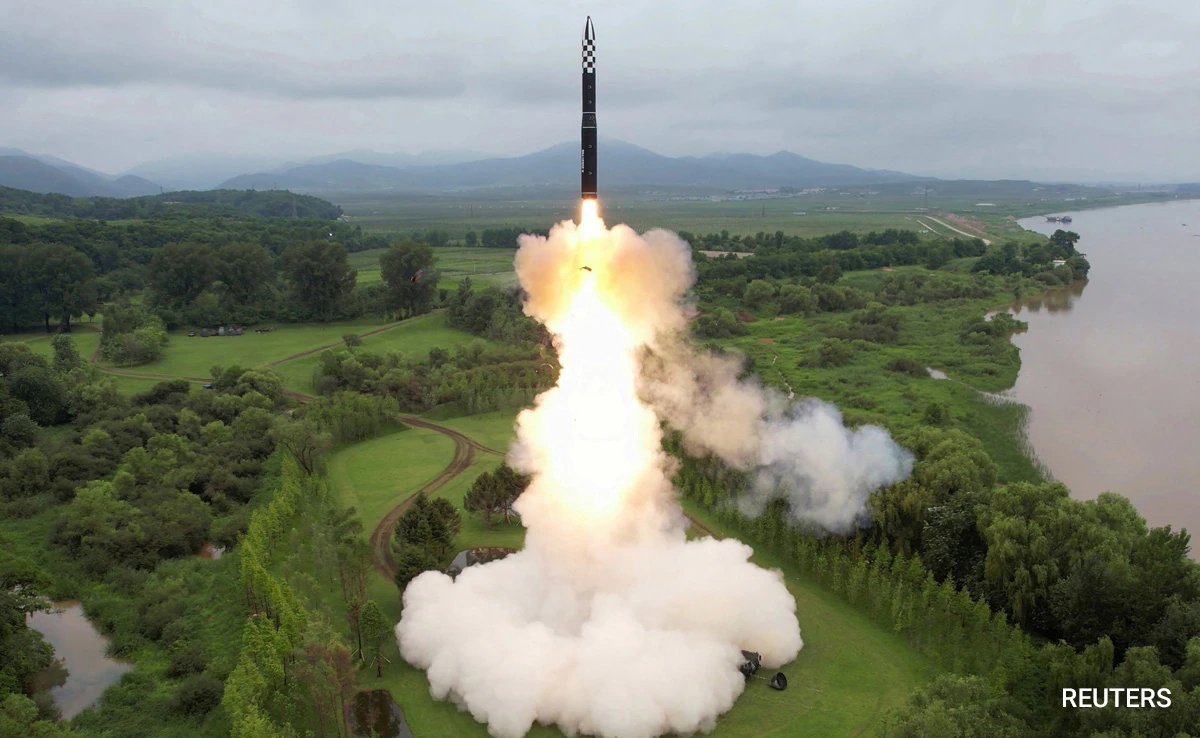
Pyongyang fired two short-range ballistic missiles into the East Sea on Sunday, a direct rebuttal to Washington’s recent diplomatic gestures. South Korea’s Joint Chiefs of Staff confirmed the launches occurred from the Wonsan area, with the first missile traveling 450 kilometers and the second covering over 600 kilometers before impact. The timing is significant—just days after US President Donald Trump ordered a substantial reduction in the annual Ulchi Freedom Shield exercises with Seoul, a move intended to signal openness to Kim Jong Un.
The defiance was explicit. Kim Yo Jong, the North’s senior official and Kim’s sister, had earlier shrugged off the scaled-back drills, labeling them inherently “provocative” regardless of their size. Her rhetoric set the stage for the kinetic response. “Our will to defend our sovereignty will be expressed in clearer action,” she stated, signaling that Pyongyang views military demonstrations as the primary language of negotiation.
The US move was calculated. Trump cited a “good relationship” with Kim as the rationale for toning down the joint exercises, hoping to lower tensions on the peninsula. Yet, the missile launches suggest Kim believes his advancing nuclear arsenal and deepening ties with Russia and China grant him greater leverage. Experts note that North Korea now feels emboldened to push back against what it calls US hegemony in the Asia-Pacific, particularly following the recent “Pacific Vanguard” exercise involving six nations.
Seoul’s reaction was immediate but measured. President Lee Jae Myung, a liberal advocating for improved inter-Korean ties, urged North Korea to halt launches banned by UN Security Council resolutions. Meanwhile, the South Korean military reaffirmed its readiness to repel provocations under its alliance with the United States. Japan’s Defense Ministry detected the missile activity but confirmed no debris landed in its territorial waters.
The next move belongs to Washington. With Trump’s diplomatic window potentially narrowing, the US must decide whether to maintain the reduced exercise posture or revert to full-scale drills. Kim has stated he is open to talks only if the US drops its “hostile policy” and acknowledges North Korea as a nuclear state. Whether Trump will accept those preconditions remains the central question for regional stability.