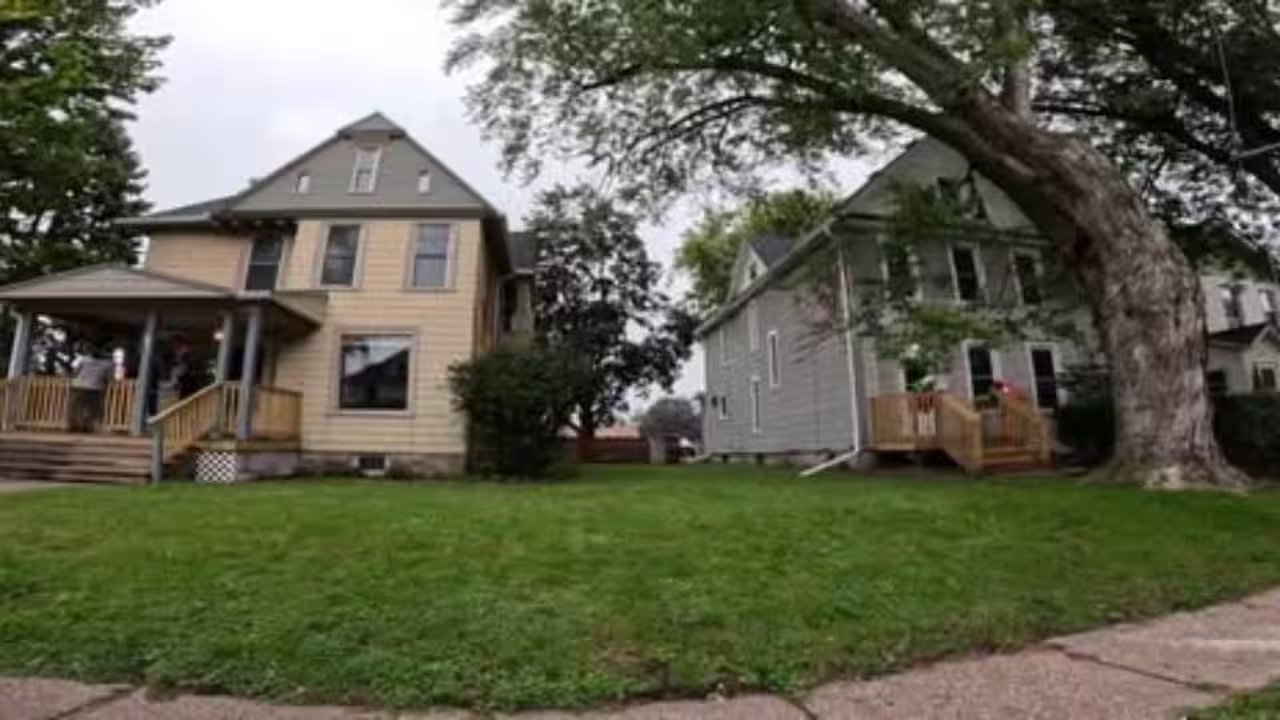
Two century-old structures in central Davenport, Iowa, which faced the wrecking ball, now stand ready to welcome two refugee families. The Foundation of First Presbyterian Church and Tapestry Farms pulled off this pivot after an 18-month collaboration that cost $180,000. It’s a stark contrast to the demolition contract that was originally signed. The shift happened after a Justice Choir of the Midwest concert in March 2025 highlighted the acute housing crisis facing refugee families. The church cancelled the teardown orders and partnered with Tapestry Farms instead. Nancy Chapman, a First Presbyterian member who led the project, noted the irony. “These houses have already been part of this community for more than 100 years,” Chapman said. “Now they have the opportunity to serve our community in a renewed way.”
The renovation was no minor tweak. Falcon Home Improvements, led by director Shawn Manning, tore into the properties. “There’s nothing on these properties that we haven’t touched in order to get it ready and safe for a family to come into,” Manning said. Crews replaced furnaces, ductwork, plumbing, electrical systems, and roofs. They also rebuilt porches and updated kitchens and bathrooms. But the team didn’t strip the character. Ann McGlynn, founder of Tapestry Farms, praised the “good bones” of the homes. “You know, there are fireplaces and there are cabinets that are built into the walls and beautiful woodwork,” McGlynn said. “It was just a matter of uncovering all of that and making it shine again.”
This isn’t just about shelter; it’s about integration. The homes sit near a playground, school, and bank, offering the new residents immediate access to community amenities. Backyards are included, allowing the families to grow their own gardens. Project manager Lupe Morales-Salsido, whose parents immigrated to the U.S., felt a personal stake in the outcome. “It just gave me a lot of pride,” she said. The project serves as a template for others. “In a time when our community is struggling with having enough affordable housing, the renovation of these two homes represents one model of how collaboration can turn viable, yet vacant, housing into beautiful homes,” McGlynn added.
The two families are expected to move in within the next few weeks. The houses will be lived in, cared for, and filled with the everyday moments that make a house a home.