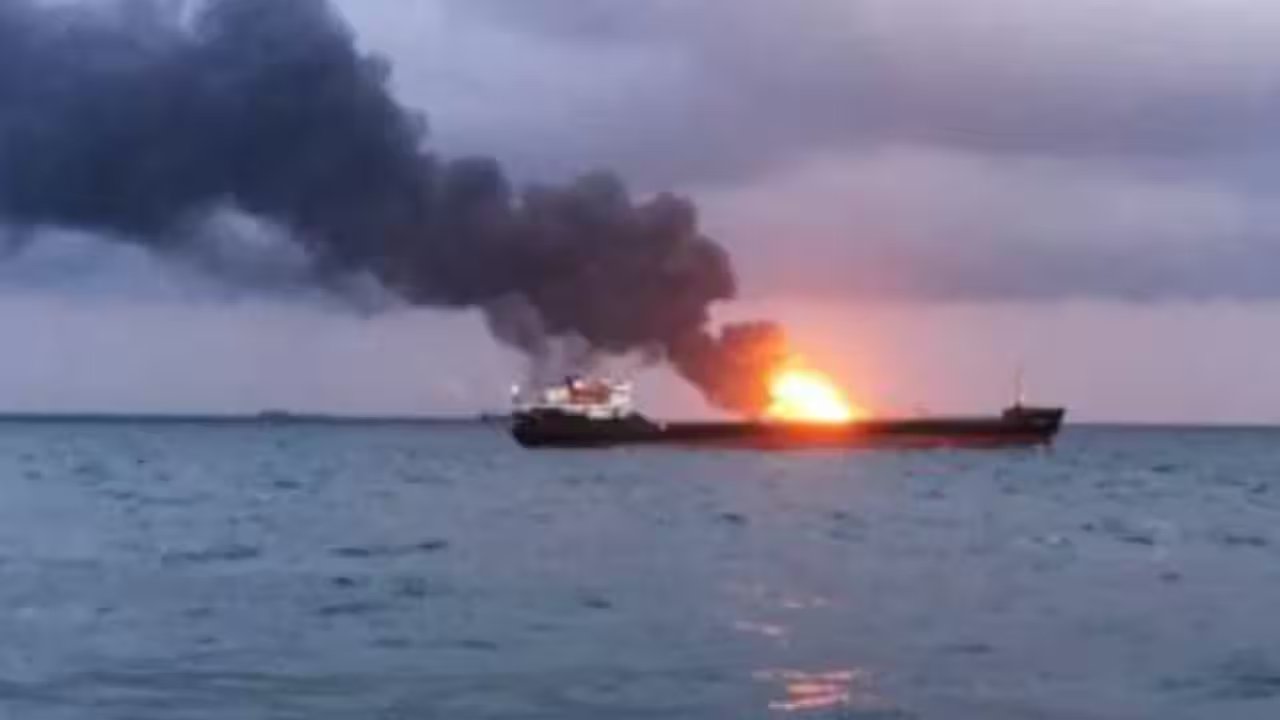
The fires erupted in the 30-kilometer-wide corridor linking the Persian Gulf to the open ocean. Iran’s Revolutionary Guards stated the vessels were 'in violation of regulations' and attempted to pass illegally without seeking Tehran's authorization. Each ship carried more than two million barrels of crude oil.
The Guards released footage of a vessel engulfed in flames during the night, alleging the tankers deactivated their tracking systems with U.S. support to cross the strait. They did not specify the exact location of the blasts or the flag states of the ships. This incident follows reports on Thursday and Friday of two other tankers catching fire in what Tehran designates a 'prohibited zone' in the Gulf of Oman.
Tehran has effectively choked off the strait since the war began in late February, demanding all ships obtain its permission before transiting. The waterway remains the critical artery for global energy, handling roughly 20% of the world's oil consumption. With Iran flanking the north and Oman to the south, the narrow geography leaves little room for error.
Compounding the regional instability, Houthi media in Yemen reported that Saudi airstrikes killed at least 12 people, including three children, in Taiz and Dhamar provinces on Saturday. The Houthis accused Saudi warplanes of using internationally banned cluster munitions against civilian homes. Three people remain trapped under rubble in Taiz, according to local reports.
Energy markets brace for further volatility as the Strait of Hormuz conflict escalates. The next 24 hours will determine whether Tehran expands its naval mine-laying operations or if diplomatic channels can halt the tit-for-tat strikes between the Gulf states and Iran. The fate of the remaining tankers in the waterway remains uncertain.