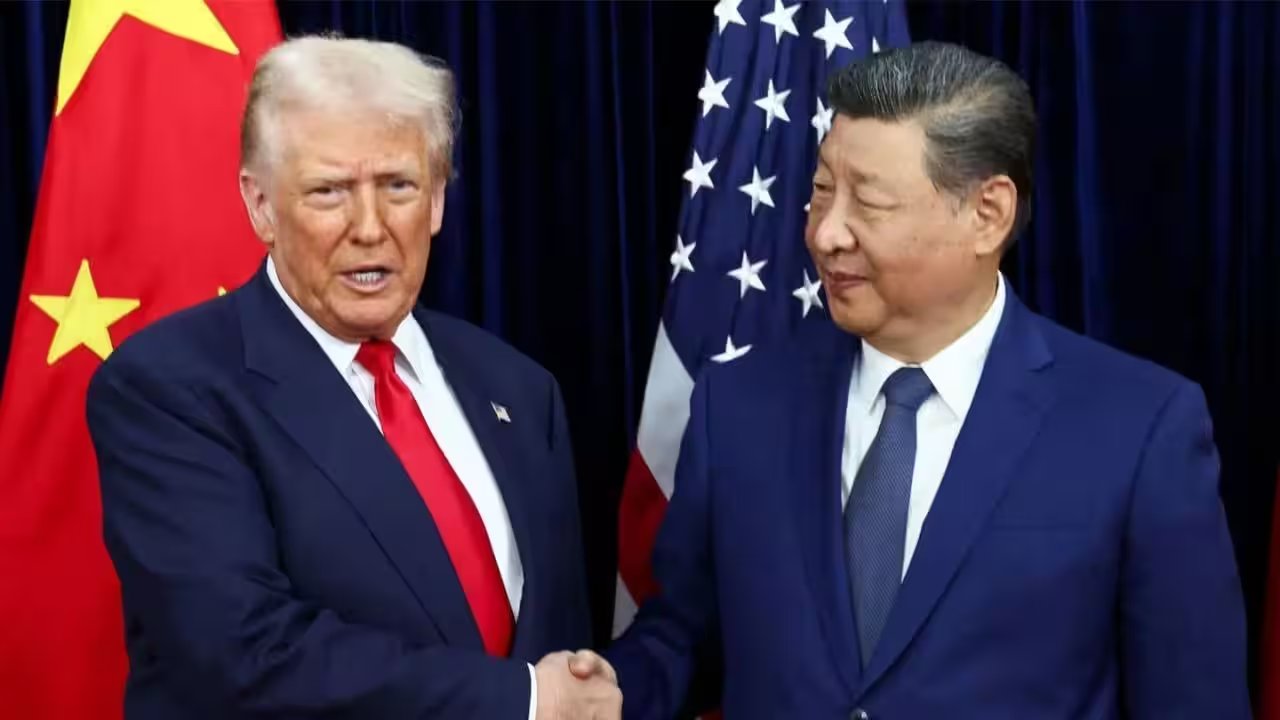
Donald Trump stood in the Oval Office on Tuesday, declaring that the United States is "doing very well with China" just days before hosting Xi Jinping for his first state visit to the White House in more than ten years. The President emphasized the personal rapport between the two leaders, stating, "It's nice that we get along very well... We are going to have a lot of different deals here." This optimism follows a period of intense friction, with Trump recalling that US tariffs on Chinese goods had spiked to 145% before being scaled back. He admitted the high rates were "hurting them badly," a strategic concession he made to preserve the relationship.
The stakes extend far beyond diplomatic pleasantries. The US-China tariff truce agreed at the Busan summit last October expires in November, making this week's talks the final window to secure a longer-term agreement. Officials indicated that Washington will not trade away its export controls on rare-earth flows, but discussions are underway to reduce tariffs on a limited range of "non-strategic" goods. Artificial intelligence is also on the table, with the two sides exploring ideas to preview new AI models and extend oversight to Chinese open-source systems. No firm agreement has been reached, but the potential for a breakthrough looms large over the negotiations.
The guest list for the state dinner in the East Room signals where the real money is. ANI reported that prominent technology and business leaders, including Jeff Bezos, Elon Musk, Sundar Pichai, Jensen Huang, and Sam Altman, are expected to attend. Their presence underscores that this is not just a political summit, but a commercial one, aimed at stabilizing the supply chains that underpin global tech markets. The inclusion of such heavyweights suggests both governments are eager to signal to investors that the trade war is cooling, even as sensitive issues like fentanyl precursors and the detention of American citizens remain unresolved.
For now, the focus is on the arrival ceremony at Joint Base Andrews, where Trump is set to personally greet Xi and his wife, Peng Liyuan. The meeting follows Trump's own trip to Beijing in May, where the two leaders agreed to a "constructive, strategic and stable relationship." Markets will watch closely for any announcement that could alter the outlook for businesses dependent on the two economies. If the talks fail, a renewed dispute over chips or rare earths could inject fresh uncertainty into global markets just as the year ends. Trump and Xi are also expected to meet again at the APEC summit in November and the G20 in December, ensuring this engagement is part of a continued, high-stakes dialogue.