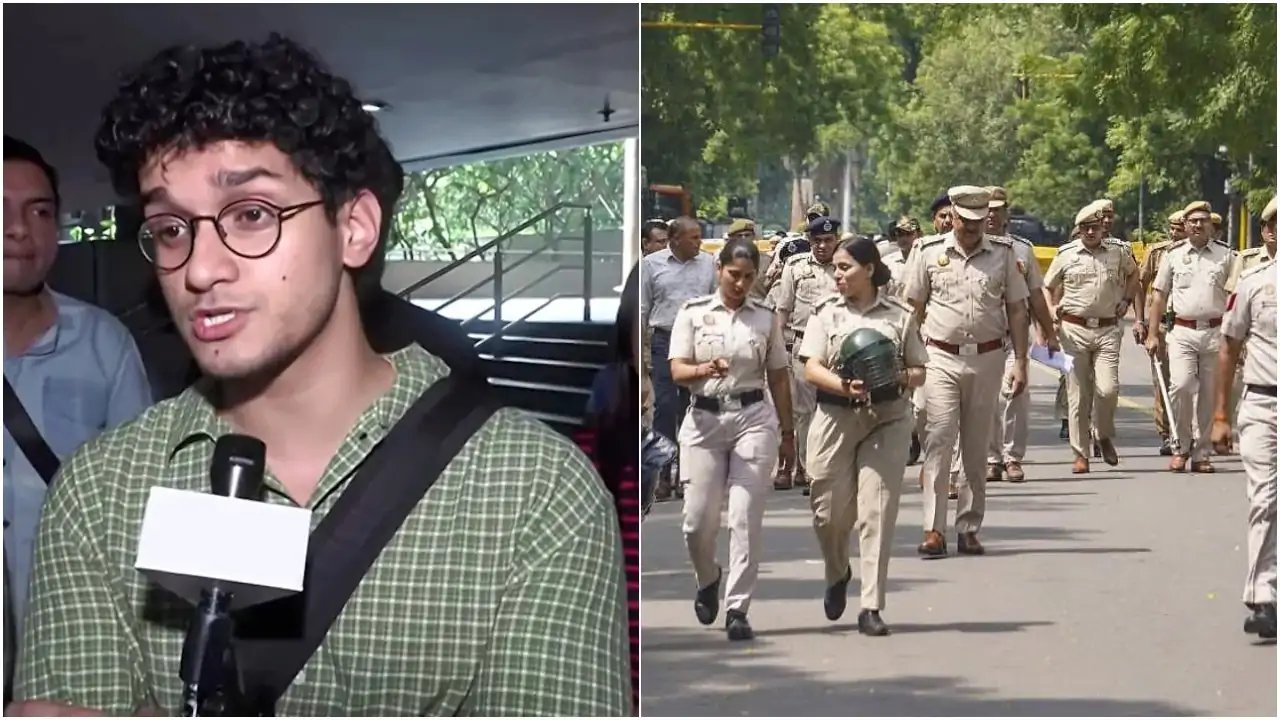
Saurav Das, a spokesperson for the Cochroach Janata Party (CJP), fired a salvo at the Union government on Saturday, labeling the capital’s security measures as an overreach that has effectively turned Delhi into a single, militarized protest zone. "For how long will you stop the trains? Or the flights? Or the buses?" Das wrote on X, arguing that the restrictions have expanded beyond the immediate protest site. "The government has not just ensured entire Delhi becomes Jantar Mantar, but entire India does. All that protesters are asking is that they be heard!"
The security apparatus responding to the CJP’s call is vast. Approximately 25,000 police and paramilitary personnel are deployed across the National Capital Region. More than 120 companies of the Central Armed Police Forces (CAPF) are assisting Delhi Police, with mock drills recently conducted at strategic points to test response mechanisms. The Ministry of Home Affairs (MHA) approved a 24-hour mobile internet shutdown in a four-kilometer radius around the Janpath-Kartavya Path area, effective from 10 pm Friday to 10 pm Saturday. This digital blackout aims to disrupt coordination among large-scale mobilizations, a tactic becoming increasingly common in high-stakes political unrest.
Transport networks have been severely disrupted, though not as drastically as initially planned. The Delhi Metro Rail Corporation (DMRC) had proposed closing 57 stations, but the Supreme Court intervened on Friday, directing the Centre and Delhi Police to lift blanket restrictions on metro and railway services. Consequently, 45 metro stations now face entry and exit restrictions rather than full closures. Surveillance has intensified at railway stations, bus terminals, and city borders, with police vigil stepped up to prevent unauthorized assemblies at Jantar Mantar.
The protest stems from allegations of irregularities in the Special Intensive Revision of electoral rolls, a process that CJP and allied student groups claim has left eligible voters off the rolls. The movement demands the resignation of Chief Election Commissioner Gyanesh Kumar, arguing that the integrity of the electoral process is compromised. Opposition parties, including the INDIA bloc, have joined the criticism, transforming the issue into a broader political battle over electoral transparency and voting rights.
The immediate focus shifts to the ongoing demonstrations at Jantar Mantar, where the CJP expects to gather significant numbers despite the heavy security posture. The Supreme Court’s order to maintain transport access adds a layer of complexity for Delhi Police, who must balance the mandate to prevent unrest with the constitutional right to assemble. As the weekend progresses, the tension between the state’s heavy-handed approach and the protesters’ demand for accountability remains the central flashpoint in New Delhi.