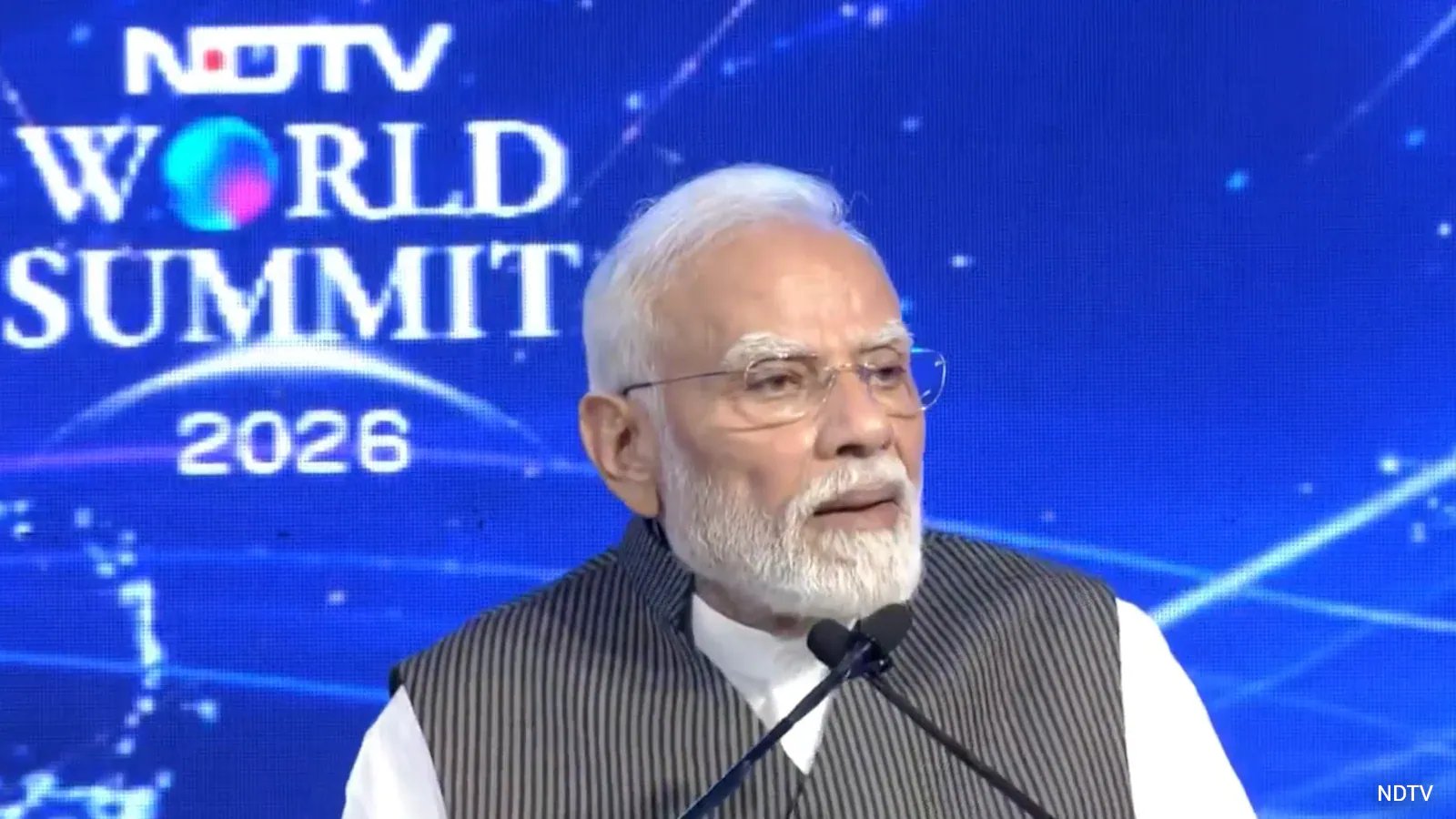
The global power dynamics are shifting, and New Delhi is positioning itself at the center of that change. Prime Minister Narendra Modi declared on Thursday that the international community no longer views India merely as a cost-effective outsourcing destination but as a strategic partner in high-level decision-making. Speaking at the NDTV World Summit 2026, he described this transition as a move from 'brainpower' to 'mindpower,' signaling a deeper integration of Indian expertise into global governance and economic strategy.
Modi framed this shift against a backdrop of geopolitical instability, noting that trade routes and technology are increasingly being weaponized. He referenced the ongoing conflict between the United States and Iran as a case study in how traditional safety nets for global commerce are eroding. In that volatile environment, he argued, nations require partners who contribute to solution-building, not just labor execution. "The world that once relied on India's brainpower now trusts India's mindpower as well," he said, emphasizing that India is now operating as a 'brain office' alongside its traditional 'back office' role.
The argument rests on concrete policy shifts rather than just rhetoric. Modi pointed to the pharmaceutical industry as the primary example of this strategic self-reliance. Historically, India’s dominance in finished medicine production masked a critical vulnerability: heavy reliance on imported raw materials. That dependency is now being dismantled. The government is actively investing in domestic raw material production to insulate the sector from future supply chain shocks, a move Modi described as essential for preparing for crises before they escalate.
This approach extends across all sectors, he noted. Every policy formulation and investment decision now weighs three questions: which capabilities must be built domestically, where can dependency on other nations be reduced, and how can the country prepare for future disruptions today. While some investments may not yield immediate returns, Modi insisted they are critical for long-term sovereignty. "Bharat is motivating the world toward collective development," he stated, rejecting the narrative that India’s rise is a zero-sum game.
The summit, attended by global business and political leaders, served as a platform to reinforce India’s status as the fastest-growing major economy. As international institutions like the United Nations struggle to adapt to these rapid changes, Modi’s address suggests India is stepping into a vacuum of strategic leadership. The next phase of this strategy involves concrete milestones in reducing import dependence, with the pharmaceutical sector serving as the immediate test case for this broader national reorientation.