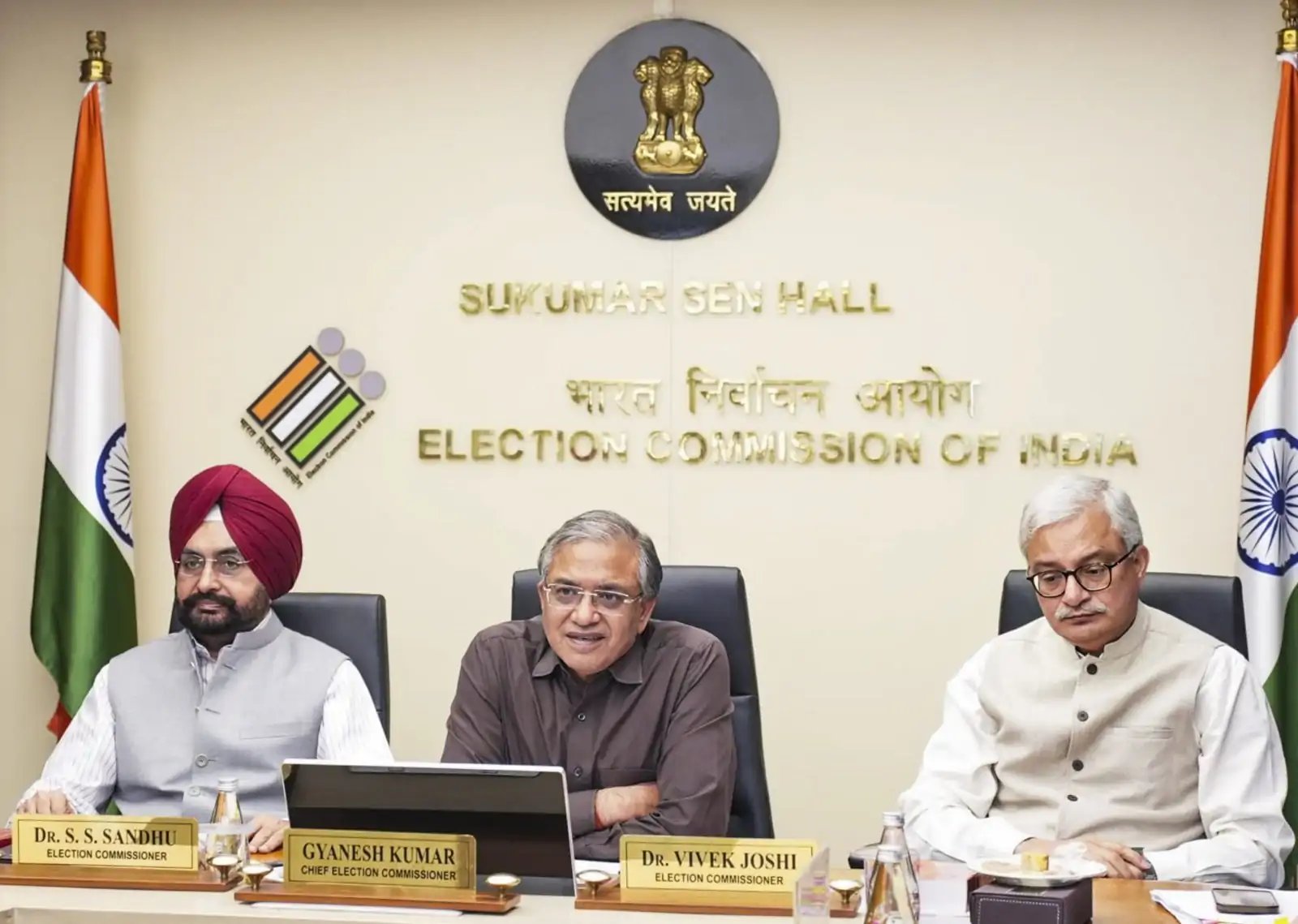
The Election Commission of India (ECI) issued a clarifying statement on Saturday, asserting that every order related to the Special Intensive Revision (SIR) of electoral rolls received the unanimous consent of all three commissioners. This response directly addresses the Indian Express report alleging a significant internal fracture between Chief Election Commissioner Gyanesh Kumar and his two colleagues, Sukhbir Singh Sandhu and Vivek Joshi. The poll body’s claim of unity stands in stark contrast to the newspaper’s assertion that Sandhu and Joshi had objected on record at least 14 times over the past 10 months to decisions made without their prior knowledge.
The core of the alleged dispute centers on a work allocation order that critics argue concentrated the power to add or delete names from voter rolls at the central level, bypassing state-level officials. The ECI statement clarified that the letters sent by Sandhu and Joshi to Cabinet Secretary TV Somanathan concerned a specific officer on deputation and were unrelated to broader policy decisions or the IT division’s operational control. The Commission emphasized that the work redistribution orders were never implemented following directions from the two Commissioners, a detail that attempts to neutralize the narrative of a unilateral power grab by the CEC.
Beyond the internal power dynamics, the ECI highlighted several voter-centric decisions made during their first meeting following the reports of discord. These include extending deadlines for document submission in Delhi and Maharashtra and introducing doorstep collection of documents for voters who received notices. The Commission also noted that the Supreme Court had upheld the changes made to Form 6 for voter enrolment, a move intended to address complaints from voters who were excluded from electoral rolls or received unexpected notices. This legal backing provides a shield for the Commission against accusations of procedural overreach.
To restore institutional credibility, the ECI announced a series of procedural safeguards. A Committee headed by a Senior Deputy Election Commissioner (DEC) and an independent expert from an IIT or IIIT will review the ECINET database to ensure compliance with existing Acts and Rules. Furthermore, the Commission committed to circulating meeting agendas in advance, issuing minutes, and completing Annual Performance Appraisal Reports by December 31. The Deputy Election Commissioner’s oversight of the IT division, a point of contention in the allegations, remains intact, according to the statement.
The political fallout, however, shows no signs of abating. The opposition has already demanded the sacking of CEC Kumar and the immediate scrapping of the SIR process, viewing the Commission’s actions as an attempt to manipulate the electoral roll for political gain. With the next round of state elections approaching, the integrity of the voter list is a battleground that extends far beyond administrative protocols. The CEC’s office will likely face a barrage of questions in the coming weeks, both in the courts and in the parliamentary corridors, as the opposition seeks to hold the Commission accountable for what they term a breach of democratic norms.