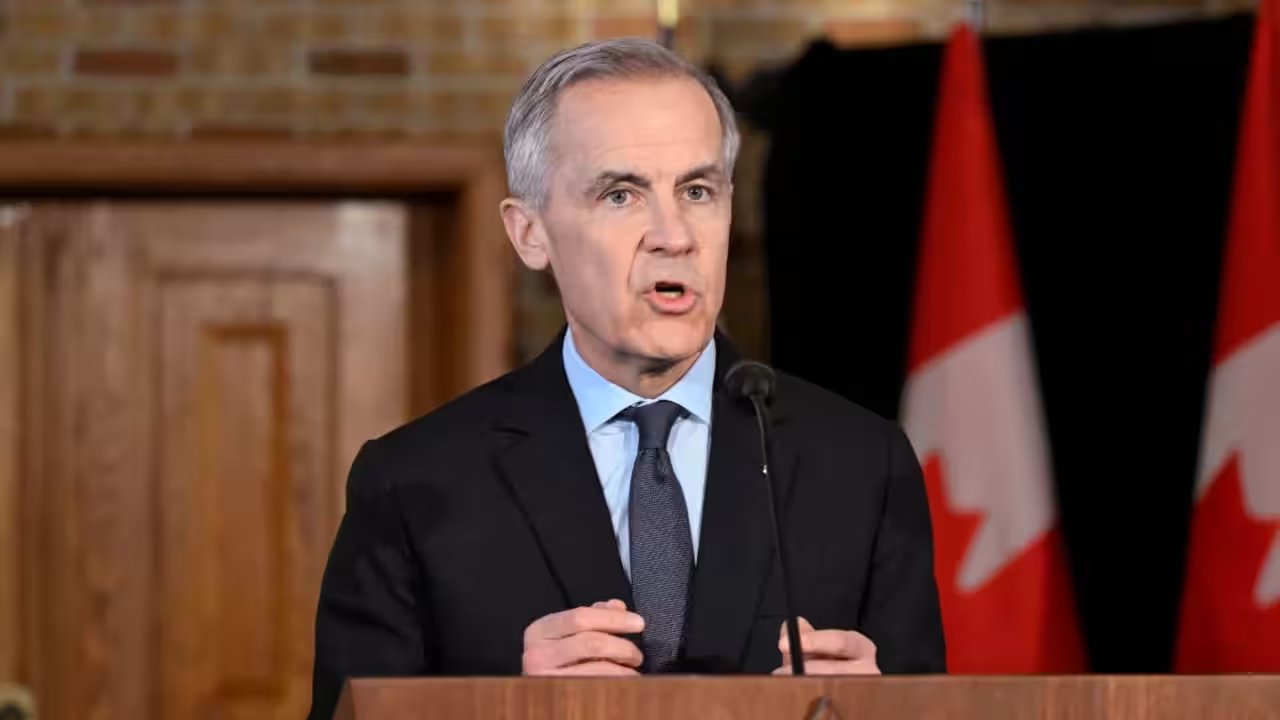
MANILA — Canada and the United States are edging toward a bilateral trade breakthrough after months of retaliatory tariffs, Prime Minister Mark Carney announced in Manila on Saturday.
Yet a final accord remains elusive. Speaking to reporters ahead of a regional summit, Carney revealed he held an extended discussion with US President Donald Trump, US Trade Representative Jamieson Greer, and White House Chief of Staff Stephen Miller shortly before departing on his diplomatic tour through Europe and Asia.
Bargaining tables had collapsed in August after Ottawa balked at late US conditions. Washington struck back by slapping 50% duties across approximately $20 billion in Canadian exports, triggering reciprocal retaliatory tariffs from Ottawa in September. While talks have since resumed to relieve pressure on critical steel and aluminium producers, Carney drew a hard red line around domestic car plants. Ottawa will not sign any pact that undermines its automotive manufacturing corridor.
The White House has already walked back several contentious demands. Washington dropped provisions targeting Canadian cultural policies, protections for the French language, and Canada’s statutory right to negotiate trade treaties with other foreign governments.
Political crosswinds inside Washington have shifted the playing field. Following recent midterm elections where Democrats campaigned aggressively against tariffs—blaming the import taxes for driving up consumer prices—Ottawa faces an altered strategic calculus. Canadian negotiators must now determine whether to lock in immediate, partial tariff relief or press for broad free-trade guarantees as a newly elected US Congress prepares to challenge Trump's protectionist trade orders.
We are making progress. There is the possibility of a deal, a bilateral deal. But we’re not yet there.
Mark Carney, Prime Minister of Canada
While hammering out terms with Washington, Carney finalized two separate trade agreements designed to curb Canada's structural reliance on the American market. The Canadian government completed negotiations on a comprehensive free-trade agreement with the Association of Southeast Asian Nations (ASEAN) and secured a standalone bilateral trade pact with the Philippines.
Carney has set a mandatory national target: double Canada's exports outside the United States by 2035. The Southeast Asian agreements form the operational foundation of that reorientation.
| Trade Accord | Target Market Scope | Projected Economic Yield | Target Signing Date |
|---|---|---|---|
| ASEAN-Canada FTA | Bloc of ~700 million people | CAD 2B (US$1.4B) GDP lift; ~14,000 jobs | 2026 |
| Philippines Bilateral Pact | >90% of all tariff lines covered | Triple Canadian exports to Philippines by 2035 | 2026 |
The ASEAN pact opens direct, preferential access to nearly 700 million consumers, channeling major export gains directly into Canadian agriculture and heavy manufacturing sectors. In Manila, the bilateral arrangement covers over 90% of tariff lines, establishing legal mechanisms to triple Canadian shipments to the archipelago within a decade.
From Manila, Carney will open a three-day ASEAN leaders' summit on Sunday before departing for the Francophonie summit in Cambodia. His overseas diplomatic swing culminates at the Asia-Pacific Economic Cooperation summit in China, where he is scheduled to hold formal bilateral talks with Chinese President Xi Jinping.