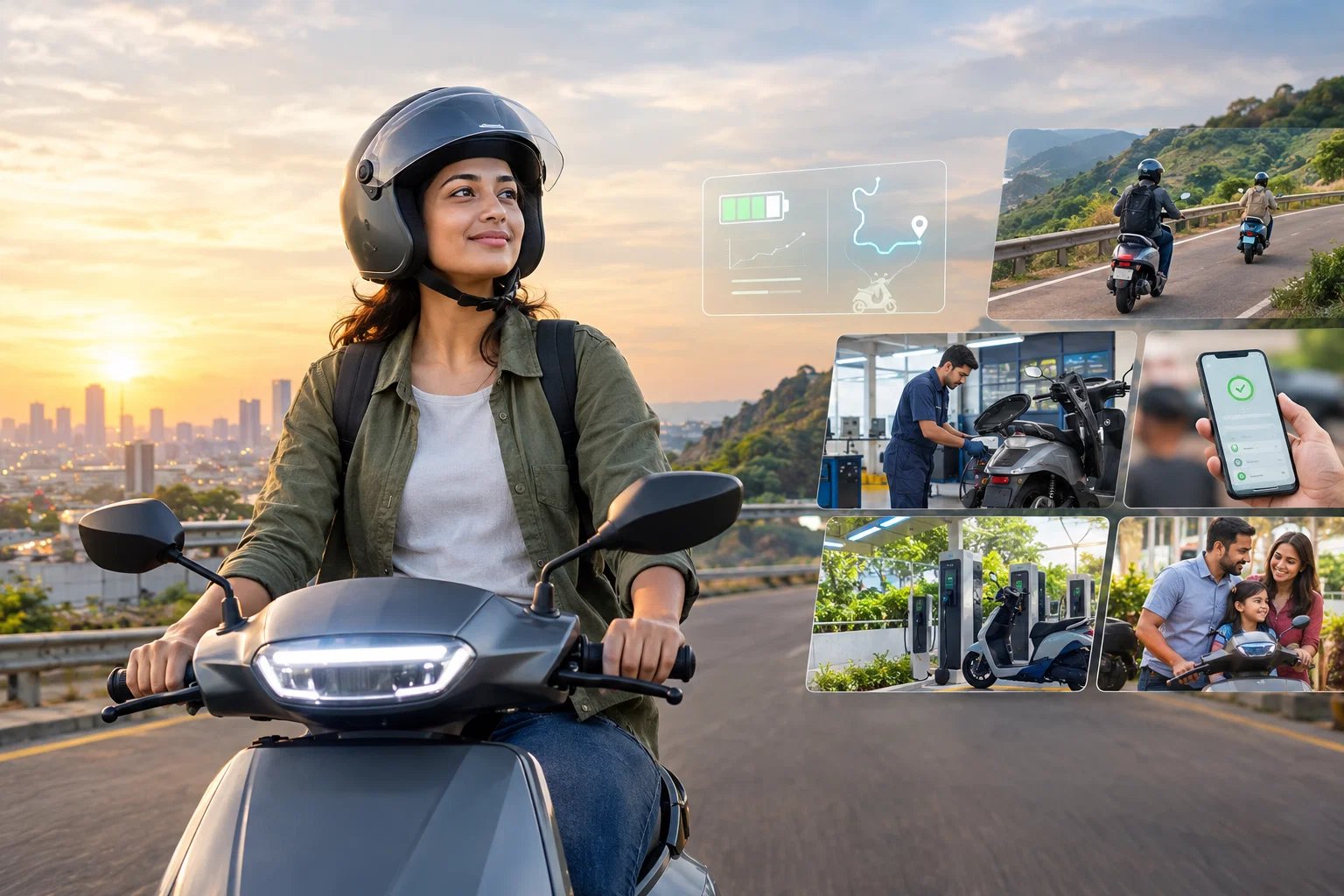
Bajaj's newest electric scooter, the Chetak EV, hit the streets in February 2023. Ex‑showroom price sits at ₹16.99 lakh, and the 0.75‑kWh battery promises 85 km on a single charge. The 7‑kW motor delivers 16 bhp, enough for city commutes and short treks.
Not the first to chase that sweet spot. TVS iQube and Hero Electric offer 75‑km ranges, priced around ₹12.39 lakh and ₹10.99 lakh respectively. Their battery warranties linger at 3 years/12,000 km, similar to Bajaj's 3‑year/12,000‑km promise.
The government’s push for zero‑emission two‑wheelers nudges buyers. A 5% GST on EVs and a ₹1.5 lakh subsidy under the Faster Adoption & Manufacturing of EVs (FAME) scheme make the upfront cost a bit lighter. Still, the battery cost remains a sticking point for many.
What really pulls buyers over the curb is the confidence that a battery will last. Bajaj offers a 3‑year, 12,000‑km warranty, and its service centres are spread across 300+ locations, from Delhi to Kochi. The data‑driven health scans flag issues before they turn into road‑breakdowns.
Chetak EV rolled out first in Delhi and Mumbai, then spread to Bangalore, Chennai, and Hyderabad. By the end of 2023, it was in over 40 cities, with plans to hit smaller towns next year as charging stations multiply.
Next up for enthusiasts: a high‑range variant with a 1‑kWh battery, and more aggressive charging patches. Watch the rollout of the 350‑W fast charger network, and see how battery‑swap support might bite into the resale market.