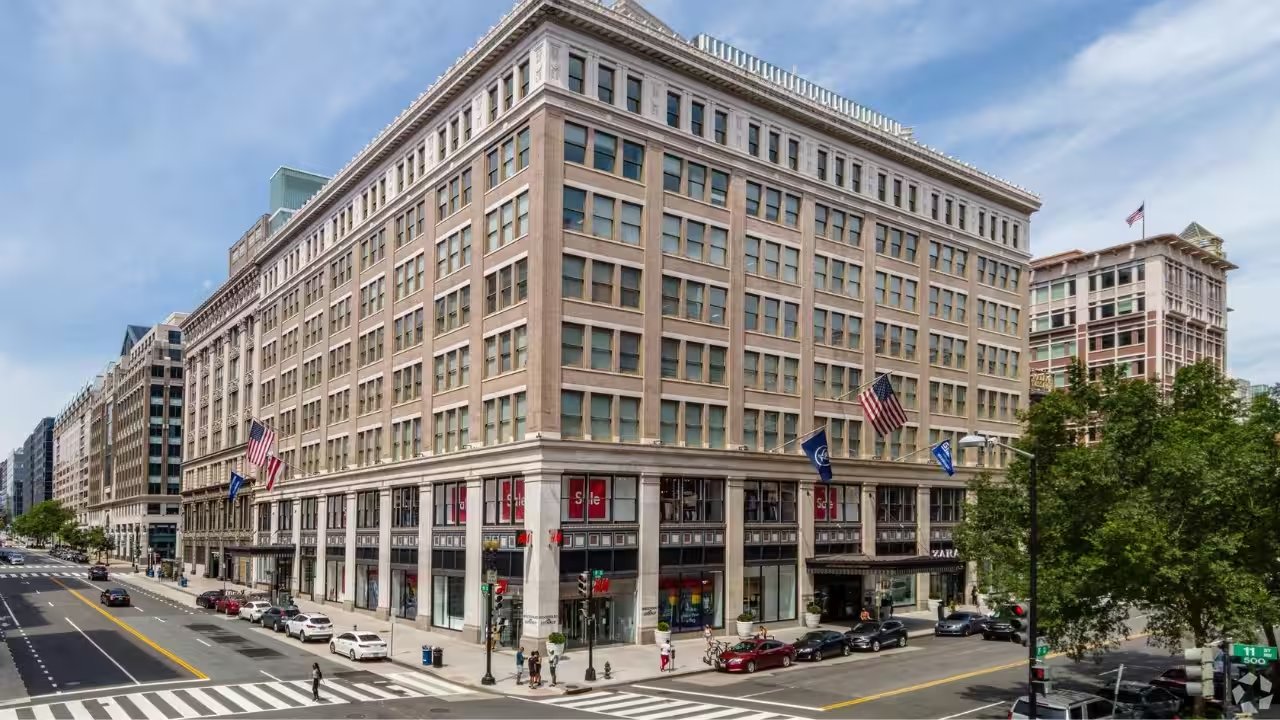
Trigild IVL assumed control of the 10‑storey Woodies Building on September 2, 2026, after a federal judge granted a receiver appointment to address a $221.6 million debt that had ballooned from the original $204.1 million borrowed in January 2017. The court order followed IGIS US Private Placement Real Estate Investment Trust No. 98’s lawsuit, which cited missed loan‑service payments since December 2025 and reserve contributions since March 2025.
The building, which once housed a 200‑000‑square‑foot FBI office, left a vacancy that cost the developers a sizable chunk of potential rental income. The FBI lease expired in November 2025, and the space was removed from the federal leasing database by February 2026, leaving roughly 200,000 of the building’s 500,000 square feet unoccupied.
Despite the vacancy, the property has attracted high‑profile tenants: Barnes & Noble occupies 16,000 square feet of ground‑floor retail space, Netflix has signed a 19,000‑square‑foot lease for an entertainment hub, and Nvidia secured a 27,600‑square‑foot sublease. Together, these deals cover 62,600 square feet—about a third of the former FBI footprint.
The future of the Woodies Building hinges on how the $221.6 million debt is resolved. Trigild IVL will oversee day‑to‑day operations while the lender’s trustee, IGIS Asset Management, pushes for either a debt restructuring or a foreclosure sale. The outcome will ripple through Washington’s office‑market, potentially setting a precedent for other distressed properties in the capital.
A former FBI clerk, now a small‑business owner, told a local entrepreneur network that the uncertainty has stalled her plans to lease the vacant space for a coworking hub. "The lease talks have hit a wall," she said, "and the whole building feels like a limbo zone right now."
The next court hearing on the receiver’s authority is scheduled for October 15, 2026, after which Trigild IVL will file a detailed financial plan. The plan will outline whether the property will be sold, restructured, or remain under court control, a decision that could set the tone for Washington’s handling of large‑scale real‑estate defaults.