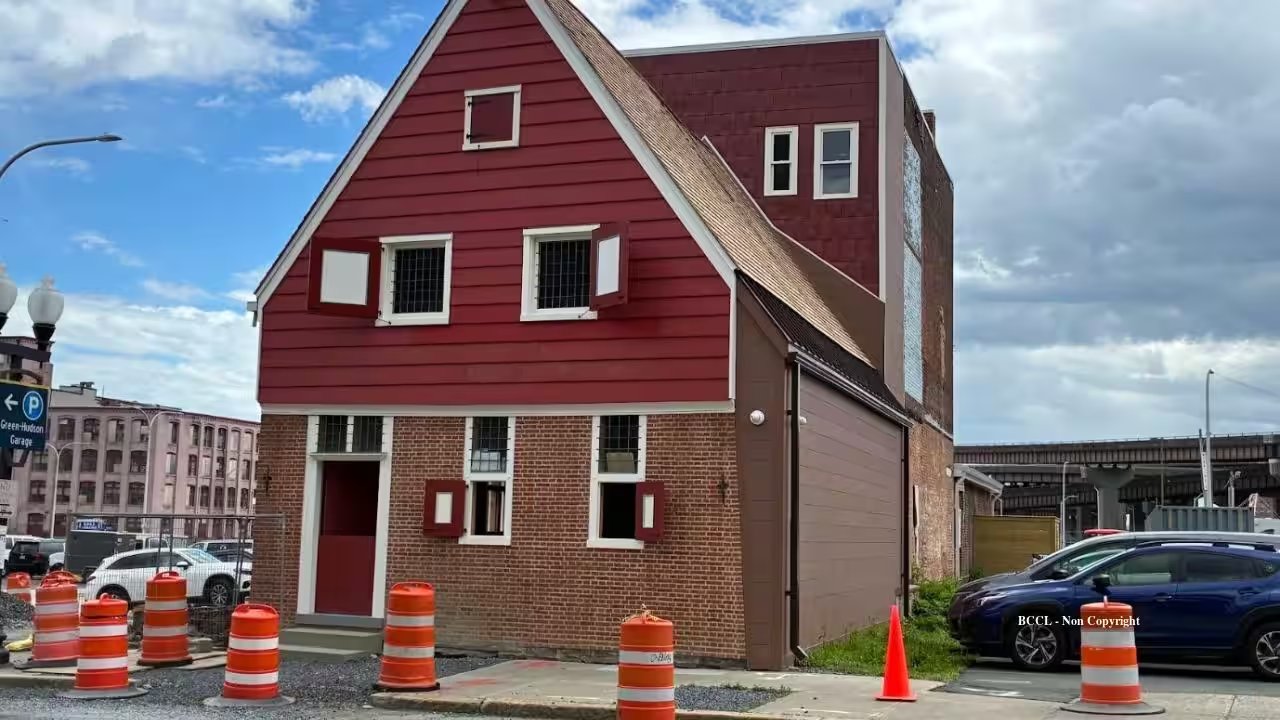
The Van Ostrande-Radliff House, a 1728 timber-frame structure at 48 Hudson Avenue, officially reopened to the public after a 13-year restoration effort that cost more than $3 million. The Historic Albany Foundation now operates the property as its headquarters, marking the end of a long campaign to save Albany’s oldest surviving Dutch urban home.
For centuries, the house existed in obscurity. Built by alderman Johannes Van Ostrande just a few hundred yards from the original Fort Orange, the 23-by-33-foot home was gradually swallowed by later commercial additions. Jared Holt added a three-story brick extension for his leather goods business in the 19th century, and George T. Stoneman attached further structures at the rear. By the 20th century, the original Dutch architecture was buried behind the facades of tenants like Kibbe’s Candy and Saul’s Restaurant Supply, which occupied the space until the late 1990s.
The building’s true age was exposed by accident. When neighboring structures were demolished in the 1980s, the front-gabled roof—hidden since the 1930s—became visible. Preservationist Brian Parker bought the property in 2006 from the estate of Eva Saul and gifted it to the Historic Albany Foundation in 2013. The move proved critical; three years later, the adjacent building at 50 Hudson Avenue collapsed and was demolished, leaving the Van Ostrande-Radliff House standing alone.
Restoration work went beyond cosmetic fixes. Crews stabilized the structure with new foundation walls, restored the historic timber framing, and lowered the Dutch roof to match original proportions. The front wall was rebuilt using custom Dutch-dimension bricks. Grants from the New York State Office of Parks, Recreation and Historic Preservation, Empire State Development, and private donors funded the project.
Schuyler Bull, a board member of the Historic Albany Foundation, emphasized that the goal was preservation, not imitation. Visitors can now see the physical evidence of the house’s age, including the original timber framework and the way later additions wrapped around the core structure. The building stands as a rare, authentic survivor of Albany’s colonial past.