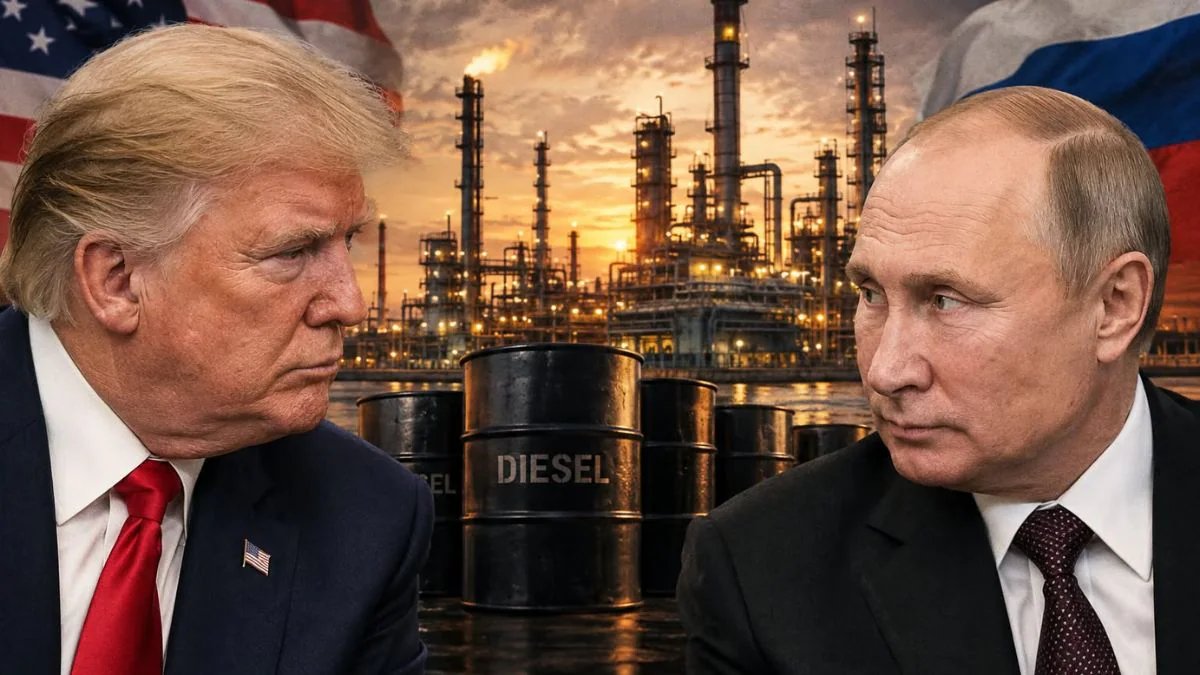
On October 9, President Donald Trump announced that the United States would receive more than 300,000 tonnes of diesel from Russia, with the first shipment scheduled for immediate arrival. The White House said the deal aims to curb soaring fuel costs for consumers, farmers, and truckers amid the high‑price environment triggered by the war in Ukraine. A Midwest trucker, Jack Miller, told reporters the new diesel will help keep his delivery margins afloat.
Trump’s announcement comes on the heels of a 25% tariff imposed in 2025 on Indian goods linked explicitly to Russian oil purchases. The tariff, announced by the Trump administration, was justified as a measure to deter support for Moscow’s war effort. India, which imports roughly 90% of its crude, has repeatedly defended its energy choices as sovereign and driven by national interest.
In the same week, the U.S. Congress passed the Lindsey O. Graham Sanctioning Russia and Iran Act of 2026, empowering the administration to impose tariffs of up to 100% on countries that continue buying Russian oil and gas. The law now places India, a major buyer, at risk of additional punitive duties if it continues to import Russian crude.
Indian External Affairs Minister S. Jaishankar criticized Washington’s double standard, noting that the United States had urged New Delhi to purchase Russian oil in 2022 to stabilize markets, only to later punish those purchases. “The very nations that criticize India are themselves trading with Russia,” Jaishankar said at the Kultaranta Talks in Finland.
Ukrainian President Volodymyr Zelensky condemned the diesel deal on social media, calling it an investment in Moscow’s war machine. He warned that the revenue would enable Russia to continue its military campaign and urged the United States to stand firm against Russian energy exports.
The next week, the White House is expected to issue a formal statement clarifying how the diesel imports align with U.S. sanctions policy, while the Senate prepares to vote on potential enforcement of the new tariffs against Indian imports.