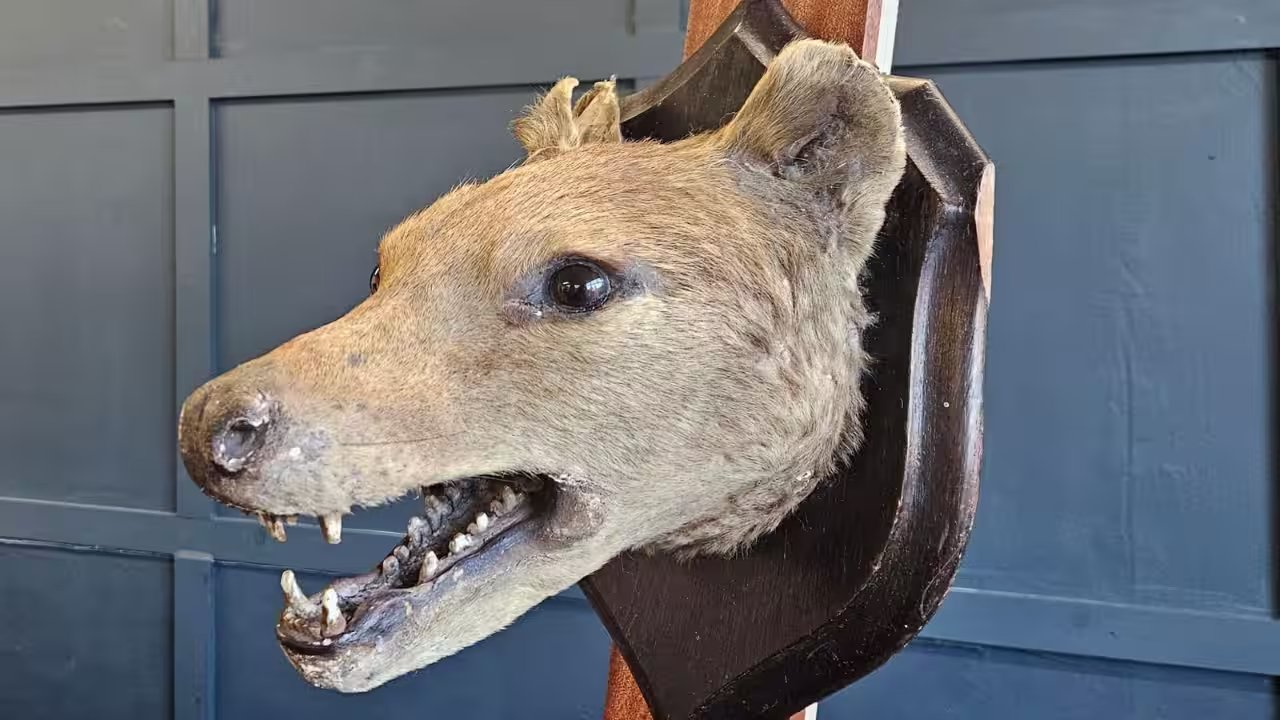
A wooden box forgotten under a bed in a London home held a biological treasure: a mounted head of the extinct thylacine. The family, who had no idea what was inside, brought the item to Auctioneum after seeing news about a similar sale. It turns out they were holding one of only three known complete mounted heads of the Tasmanian tiger in existence. The specimen, nicknamed "Trevor" by auction staff during its examination, is currently listed for an estimated £30,000 to £50,000.
The find is scientifically significant, not just financially. X-ray scans confirmed the original skull remains intact inside the taxidermy mount. Andrew Stowe, from Auctioneum, emphasized the rarity of the find: "It is unbelievably rare. To find a complete item like this is almost unheard of, especially here in the UK." Unlike a previous specimen sold by the same house—which had been modified with plastic googly eyes by a prior owner—this head is in pristine, unaltered condition. It has been officially added to the global database of known surviving thylacine remains.
The thylacine, a carnivorous marsupial, vanished from mainland Australia roughly 2,000 years ago. A Tasmanian population persisted until European settlement, but government-sponsored hunting bounties, habitat loss, and introduced diseases wiped them out by the early 20th century. The last known living thylacine, Benjamin, died in captivity at Hobart Zoo in September 1936. Today, only 756 physical specimens are known worldwide, with just 101 being taxidermy mounts. Complete heads are the rarest category of all.
Market demand for such items is driven by strict export laws and the dwindling supply. Only a handful of institutions or wealthy collectors can legally acquire these historic remains. The upcoming auction on Thursday, November 26, is expected to attract bids from natural history museums and private collectors. Given that a previously modified specimen sold for £60,000 (including fees) after being bought for just £50 at an antiques market, this authenticated, pristine head is poised to break that record.
The auction concludes on November 26. Bidder registration closes shortly before the sale, and international shipping regulations will dictate who can ultimately take possession of the relic. For the London family, the discovery transforms a forgotten box into a significant piece of natural history, potentially fetching up to £50,000 for an animal that has been extinct for nearly 90 years.