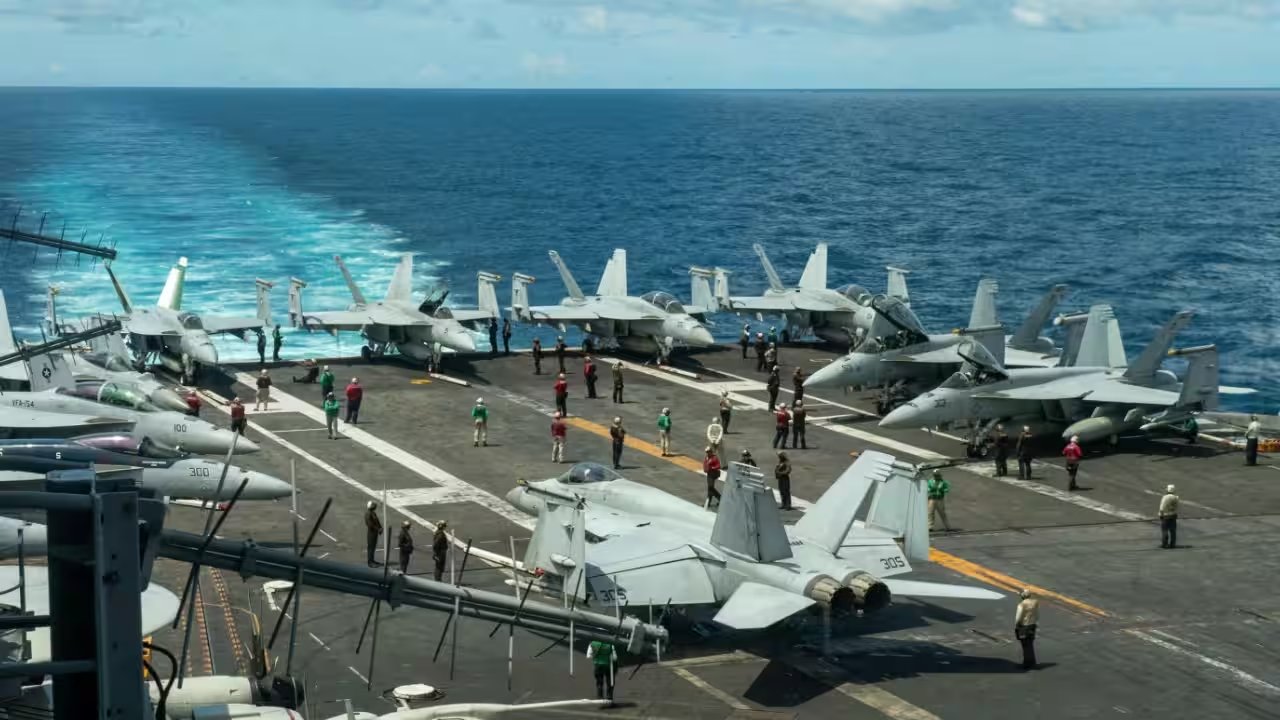
The USS Theodore Roosevelt left San Diego on 27 October, followed by the USS Makin Island Amphibious Ready Group the next day, as reported by The Wall Street Journal. 3,000 Marines from the 13th Marine Expeditionary Unit are aboard, bringing the total U.S. presence in the region to roughly 60,000 troops, said a senior Navy official.
The existing carriers, USS George H.W. Bush and USS George Washington, have been patrolling the Gulf of Oman for months. With the Roosevelt’s arrival, Washington may depart for Japan, but the U.S. would still maintain three carriers there for the first time since April, adding a force multiplier that could be called upon at a moment’s notice.
In addition to the carriers, the deployment includes the Boxer Amphibious Ready Group, air‑defence units designed to counter Iranian missiles and drones, and the Army’s 82nd Airborne Division, which can secure airfields and deploy into hostile territory. The Pentagon has stretched its logistics chains to support these assets, a strain highlighted by recent supply shortages.
President Donald Trump has publicly signalled that he may resume bombing Iran in November if no deal materialises, an assertion he made in a TIME interview after rejecting Iran’s seven‑day ceasefire proposal. The proposal called for reopening the Strait of Hormuz and resuming nuclear talks in exchange for lifting the U.S. blockade.
The Strait of Hormuz remains a flashpoint, carrying about one‑fifth of the world's oil. Iran has fired ballistic missiles at U.S. warships in recent weeks, heightening the risk of a sudden flare‑up.
The deployment will stay in place until after the November midterm elections, when the Trump administration may decide whether to lift the blockade and resume strikes on Iran. Washington’s next move could catalyse a new round of hostilities or, if diplomacy prevails, a cautious de‑escalation.