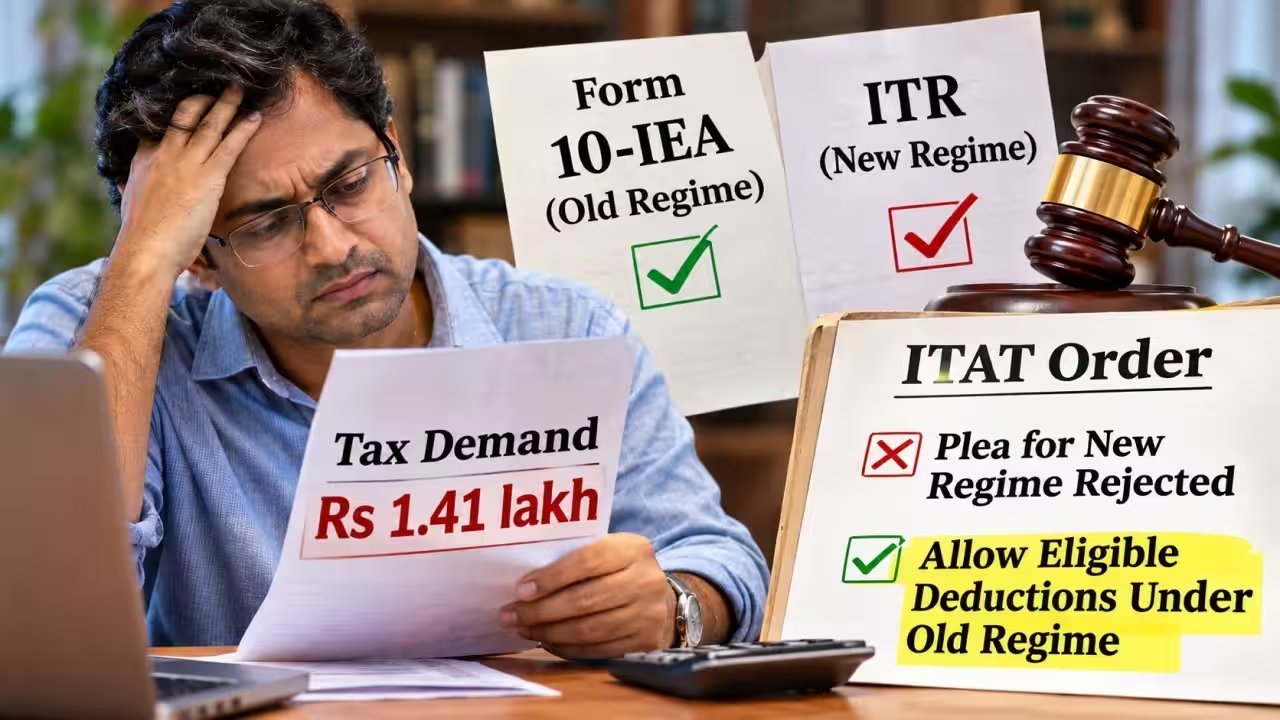
A taxpayer cannot override a formal statutory election to exit the new tax regime simply by ticking a conflicting box on their return.
The Income Tax Appellate Tribunal in Mumbai delivered that binding verdict, rejecting an assessee's plea that his income tax return should trump an earlier Form 10-IEA filing. The tribunal held that statutory forms filed under Section 115BAC govern an assessee’s tax status. But the bench handed the taxpayer a critical financial reprieve. It ordered the Assessing Officer to recalculate his liability and grant ₹2.5 lakh in deductions claimed under the old tax regime.
The dispute centers on an individual return filed for Assessment Year 2025-26. The assessee, identified in tribunal records as Joshi, had opted into the concessional new tax regime during the preceding Assessment Year 2024-25. On August 31, 2025, he reversed course. He filed Form 10-IEA to opt out of the new framework and return to the old tax regime.
Then came the clerical blunder.
When the taxpayer filed his annual income tax return on September 16, 2025, declaring a total income of ₹33,88,170, he ticked a box stating that he did not wish to opt out of the new regime. The two filings collided inside the revenue machinery.
The Central Processing Centre processed the return under Section 143(1) of the Income Tax Act, 1961, on January 29, 2026. The processing center ignored the return's tick box, enforced Form 10-IEA, taxed him under the old regime, and slapped him with a tax demand of ₹1,41,480. The department stripped away his old-regime deductions because his return had selected the new regime. Joshi filed a rectification plea under Section 154 to reverse the assessment. The CPC dismissed it on February 17, 2026. The Commissioner of Income Tax (Appeals) subsequently sustained the CPC's adjustment, ruling that the contrary selection in the return constituted an invalid claim.
Before the Mumbai ITAT, the taxpayer’s counsel fought to invalidate the assessment. He argued that the CPC had an obligation to honor the selection made in the return itself, citing a Pune ITAT precedent in Akshay Nitin Malu v. Income Tax Officer. The taxpayer also challenged the order under a Bombay High Court ruling in Rallis India Ltd v. Central Processing Centre, arguing the CPC pushed through the adjustment without prior intimation.
Both arguments crumbled before the bench.
The tribunal pointed out that taxpayers earning business or professional income face strict statutory limits under Section 115BAC regarding how and when they can enter or exit the new regime. Form 10-IEA constitutes the sole legal mechanism to abandon the new tax framework. A mischecked box in an electronic return cannot unseat a formal statutory notification.
In our opinion, once a specific form has been prescribed for opting out of the new tax regime, the assessee cannot be permitted to choose for the new tax regime otherwise than filing said form under the provisions of the Act.
ITAT Mumbai Bench
The tribunal tore down the taxpayer's legal citations. In Akshay Nitin Malu, the taxpayer had consistently chosen the old regime across both the statutory form and the return. In Joshi's case, the documents stood in direct contradiction. The bench also discarded the Rallis India challenge after the taxpayer failed to produce portal audit logs or email records proving the department failed to issue an adjustment notice.
| Case Parameter | Official Filing & Adjudication Detail |
|---|---|
| Assessment Year | AY 2025-26 |
| Total Declared Income | ₹33,88,170 |
| Form 10-IEA Filing Date | August 31, 2025 (Opted out of new regime) |
| ITR Filing Date | September 16, 2025 (Selected new regime box) |
| CPC Intimation Order | January 29, 2026 (Section 143(1)) |
| Initial Tax Demand | ₹1,41,480 |
Yet the tax department did not walk away with a clean sweep. The tribunal accepted Joshi's alternative plea: the tax authorities cannot have it both ways. If the revenue department binds an assessee to the old regime via Form 10-IEA, it must extend the statutory tax shields that exist under that very regime.
The taxpayer had claimed ₹1.5 lakh under Section 80C, ₹50,000 under Section 80D for medical insurance, and ₹50,000 under Section 80TTB for interest income. The CPC had denied all of them.
The tribunal struck down the revenue's double standard.
If CPC is holding that assessee has opted out of the new tax regime and old tax regime of this is applicable, then the deduction entitled under the old tax regime should be allowed to the assessee.
ITAT Mumbai Bench
The ITAT set aside the Commissioner (Appeals) order on the deduction issue and remanded the case file to the Assessing Officer. The officer must now verify Joshi's documentation under Sections 80C, 80D, and 80TTB to adjust the ₹1,41,480 demand accordingly.
| Section 154 Rectification Dismissal |
| February 17, 2026 |
| Deductions in Dispute | ₹1,50,000 (80C), ₹50,000 (80D), ₹50,000 (80TTB) |
| Final ITAT Ruling | Form 10-IEA stands; matter remanded to AO for deductions |