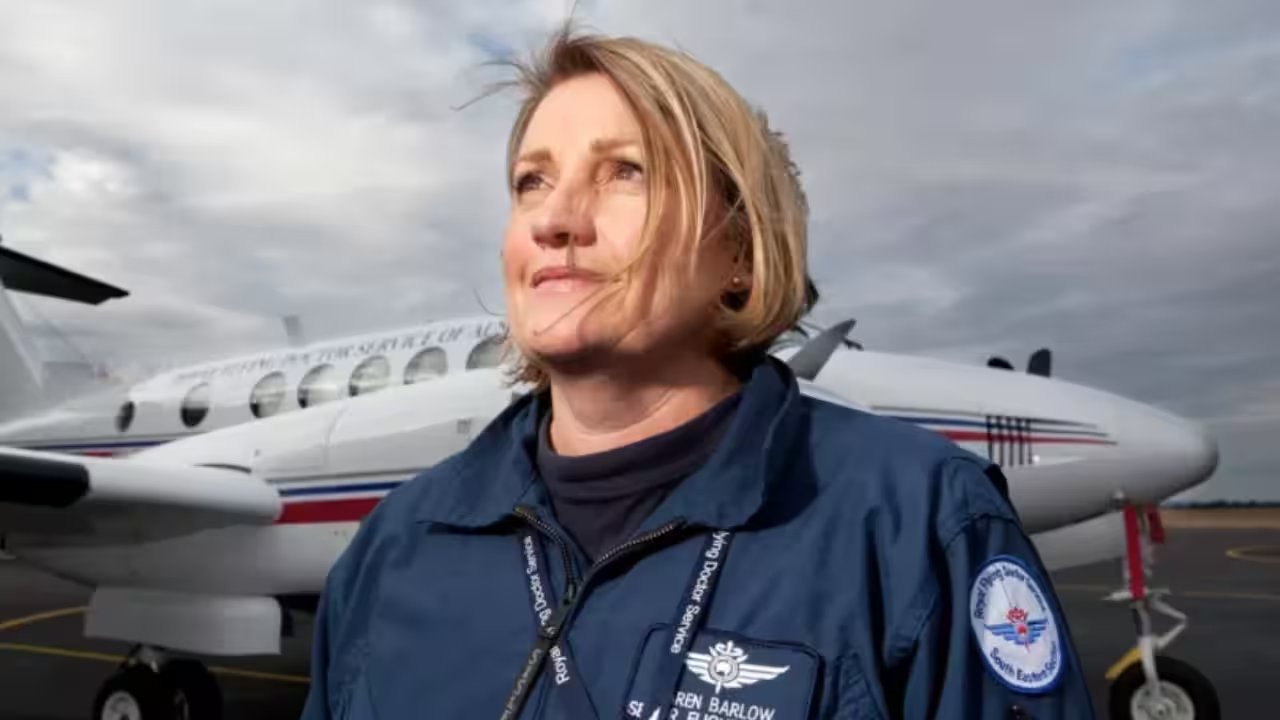
DUBBO — Karen Barlow spent nearly three decades treating critical patients inside the roar of twin-engine turboprops high above the Australian red dirt.
She is stepping down. The veteran aeromedical specialist is retiring after 27 years as a senior flight nurse with the Royal Flying Doctor Service, ending an Outback career that carried emergency medicine into some of the continent's most isolated outposts. Long before satellite telemedicine became common across the bush, Barlow helped pioneer the frontline service's permanent footprint in western New South Wales.
Barlow signed on as a founding member of the Royal Flying Doctor Service operational base at Dubbo, anchoring a vital lifeline for rural townships positioned hundreds of kilometres from tertiary hospital facilities. She brought seasoned medical muscle to the aircraft cabin. Having worked across acute care wards, intensive emergency units, and rural midwifery, Barlow understood the unforgiving geography of remote Australia because she grew up on the land herself. Distance in the bush is measured in survival minutes.
Yet the sheer logistical scale of the operation remains staggering.
The Royal Flying Doctor Service New South Wales division deploys a fleet of 14 aircraft, logging approximately three million flight kilometres every year to deliver roughly 90,000 patient care interactions through emergency evacuations, fly-in clinics, and telehealth links. Nationwide figures show aeromedical teams established direct contact with approximately 345,000 patients across 2023-24 alone, airlifting around 33,000 individuals to metropolitan trauma units.
| Operational Parameter | Royal Flying Doctor Service Annual Record |
|---|---|
| NSW Division Fleet Size | 14 dedicated aeromedical aircraft |
| Annual Flight Distance (NSW) | ~3,000,000 kilometres |
| NSW Healthcare Consultations | ~90,000 instances of clinical care |
| National Patient Encounters (2023-24) | ~345,000 individuals |
| National Aeromedical Retrievals (2023-24) | ~33,000 emergency flights |
| Service Tenure (Karen Barlow) | 27 years |
The work demanded split-second clinical decisions inside vibrating fuselage cabins. But Barlow maintained that technical heroics rarely defined the mission. The enduring memories were quiet gestures—most often terrified parents gripping their sick children's hands as desert landscapes rushed past the window.
One routine flight involved an injured boy who fractured his arm jumping from a bunk bed while playing with his brothers in a remote township. His foster father sat beside the stretcher, holding the boy's hand without breaking contact for the entire air transit to Dubbo as the family worked through the adoption process.
Then came the acute crises. Barlow recalled an urgent evacuation of a young rural girl who suddenly crashed into critical systemic failure, deteriorating so rapidly that flight crews had to place her on life support during the high-speed transfer to Sydney. The girl's stunned father told Barlow that had someone offered him a million dollars the previous day to bet his healthy daughter would end up on a ventilator, he would have rejected it.
The flights also intersected with state history. Barlow met British royalty twice across her career, including an encounter with King Charles and Queen Camilla—then the Prince of Wales and Duchess of Cornwall—during their 2012 tour visit to the Longreach operational base.
Barlow formally hangs up her flight suit this season, leaving behind an expanded aeromedical network that now covers millions of square kilometres of Outback territory daily.