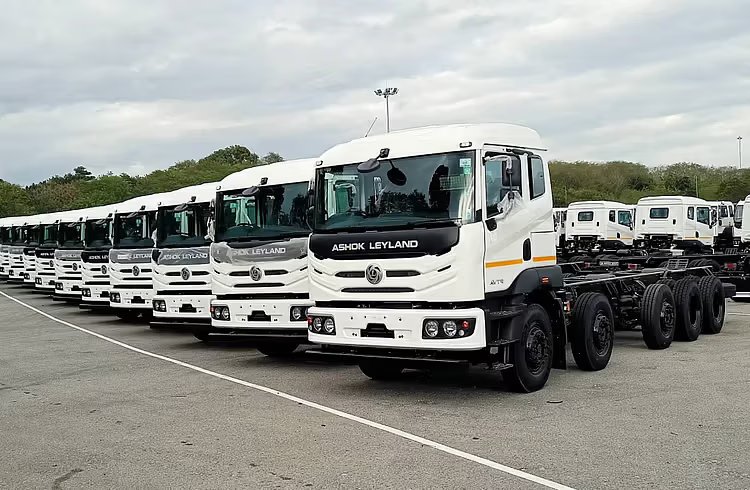
Ashok Leyland’s latest rating update shows the company’s debt instruments totalling ₹7,379.38 crore have retained solid AA+ and A1+ grades—an assurance that the manufacturer’s capital structure is robust.
The reaffirmation covers a spectrum of instruments: a ₹2,000 crore commercial paper program rated A1+, a ₹500 crore non‑convertible debenture tranche at AA+ Stable, and various bank credit facilities—both fund‑based and non‑fund‑based—scoring dual AA+ (Stable) and A1+ marks.
For buyers of commercial buses and trucks, this stability matters. It means Ashok Leyland can secure cheaper financing for new plant expansions or for rolling out electric variants, keeping the cost of ownership predictable.
In the competitive Indian commercial‑vehicle arena, Tata Motors and Mahindra & Mahindra also enjoy strong credit ratings, but Ashok Leyland’s breadth of rated instruments signals a deeper liquidity cushion, especially pertinent as the market shifts toward electrification.
Policy forces—like the FAME‑III incentives for electric commercial vehicles—require sizeable upfront capital. With a solid credit profile, Ashok Leyland is better positioned to tap government subsidies and roll out its upcoming electric truck series by mid‑2027.
Looking ahead, the company plans to launch its next‑generation electric cargo van in Kolkata and Mumbai early next year, with other metros slated for late 2027. Buyers should watch how the firm leverages its ratings to keep leasing rates competitive.