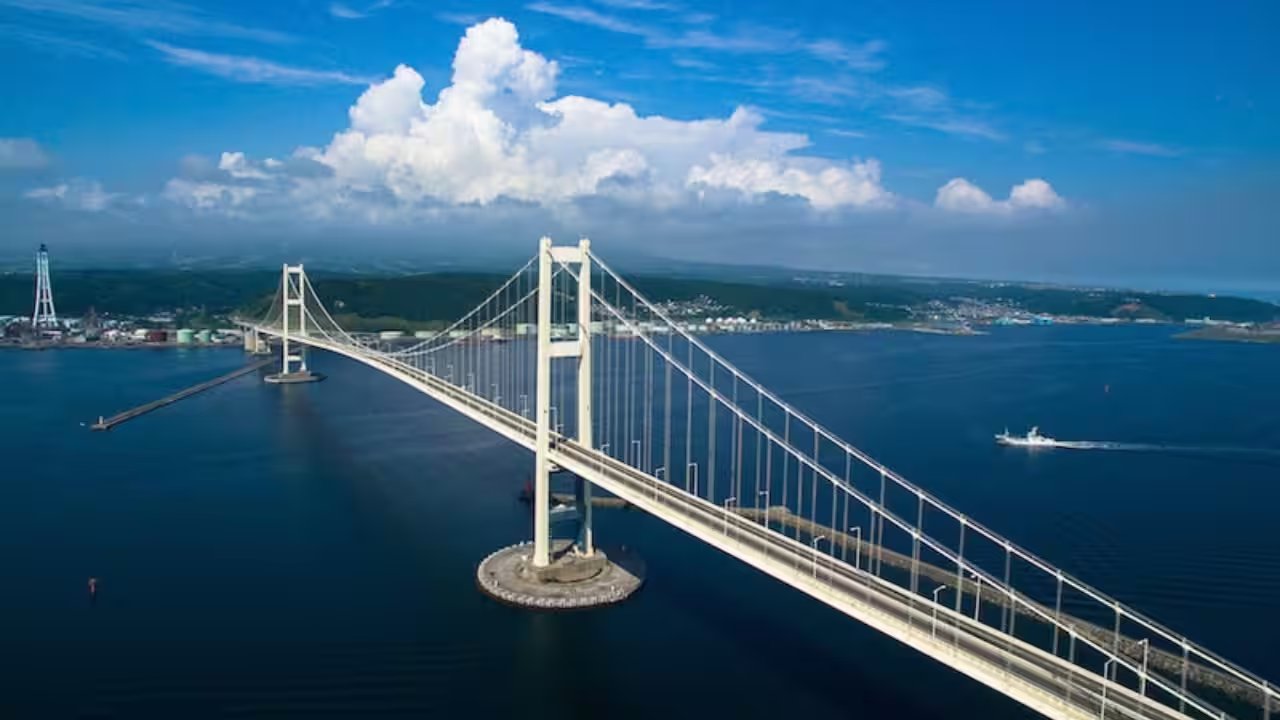
In June 1998, the Hakucho Ohashi Bridge opened over Muroran Bay, Hokkaido, after engineers poured 53,600 cubic metres of a self‑hardening coal‑ash slurry into steel cofferdams to build the tower foundations.
The bridge’s two main towers rested on a soft seabed 14–17 m below the surface, making conventional sand fill impractical because it would have overloaded the cofferdams.
The mixture, comprising 46.1 gigagrams of fly ash, 22.2 gigagrams of volcanic ash and 2.6 gigagrams of cement, flowed underwater and hardened in place, forming 67‑metre‑diameter islands that served as working platforms.
A 1992 study published in the Journal of Materials in Civil Engineering found the slurry produced lower lateral earth pressure than sandy fill, while a 2008 investigation revealed its compressive strength rose steadily for more than ten years, driven by ongoing hydration reactions.
The project demonstrates that industrial waste can be repurposed into durable marine foundations, a finding that could influence future offshore construction in Japan and beyond.
The bridge remains in service, and engineers are monitoring the foundations as part of Japan’s broader push to reuse fly ash in infrastructure projects.