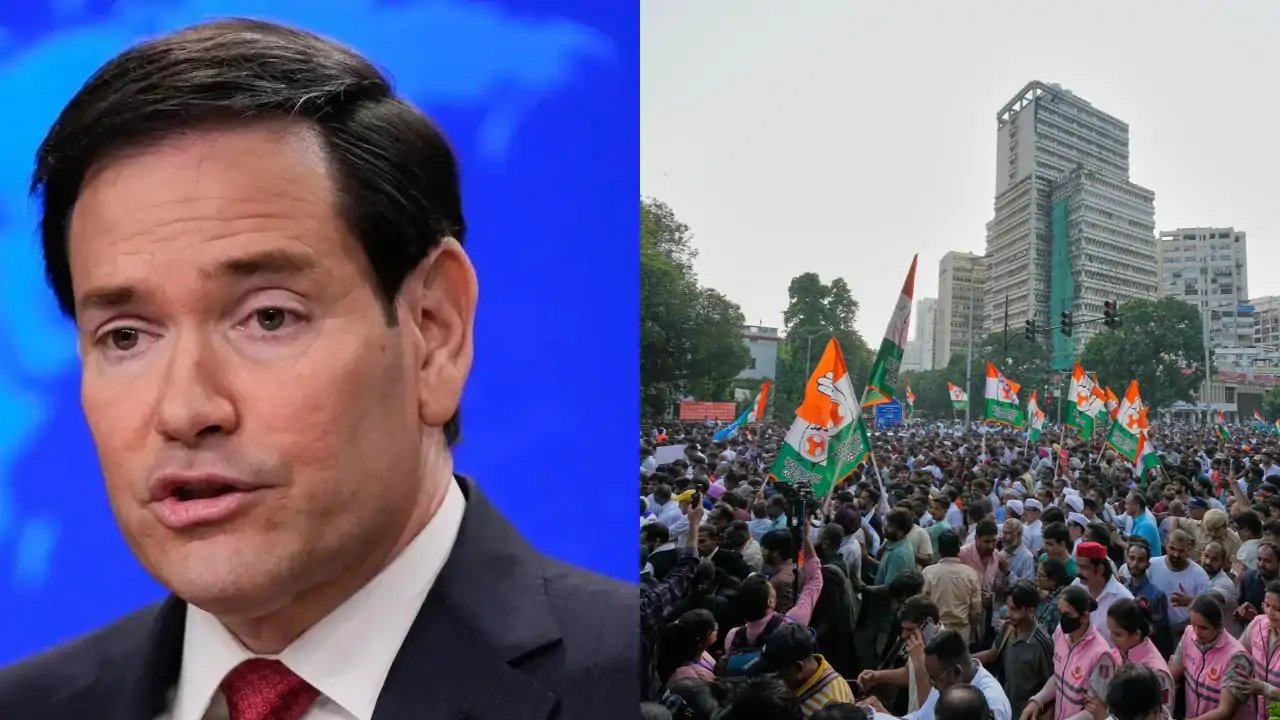
US Secretary of State Marco Rubio refused to engage with international calls for accountability over the recent crackdown on student protests in India, branding the issue an "internal, domestic matter." When pressed by reporters on the United Nations' condemnation of the Indian government's actions, Rubio offered a sharp retort. He described the collective term "UN experts" as an "oxymoron," effectively undercutting the credibility of the international body's intervention in what he sees as another nation's sovereign political struggle. The dismissal was not merely polite; it was a direct rebuke of the global human rights apparatus.
The friction is more than diplomatic posturing. Six US Democratic lawmakers, including Pramila Jayapal and Ilhan Omar, sent a letter to Rubio urging him to raise concerns about the "excessive use of force" used by police in Delhi and other cities. Their letter specifically referenced the protests linked to the Cockroach Janata Party (CJP) and the demand for the resignation of Chief Election Commissioner Gyanesh Kumar. The lawmakers also requested independent investigations into reports that Indian diplomatic missions were surveilling and intimidating protesters on US soil, a claim that could severely strain bilateral trust if verified.
This political standoff sits uncomfortably alongside a massive economic milestone. US Ambassador to India Sergio Gor announced that Washington aims to double bilateral trade with India to over USD 500 billion within the next three years, up from the current record of USD 240 billion. President Donald Trump echoed this sentiment at the Oval Office on Tuesday, asserting that the two nations are "pretty close" to finalizing a trade deal that he characterized as significantly different from previous agreements. "They want to make a deal. We're going to make a deal," Trump told reporters, signaling a priority on economic gains that may overshadow human rights objections.
For now, the US government maintains a hands-off posture on India's domestic politics, citing the country's democratic processes and its own regular internal protests. The next major test for this strained relationship will be the finalization of the trade agreement, where economic interests and political principles will collide on the negotiating table.