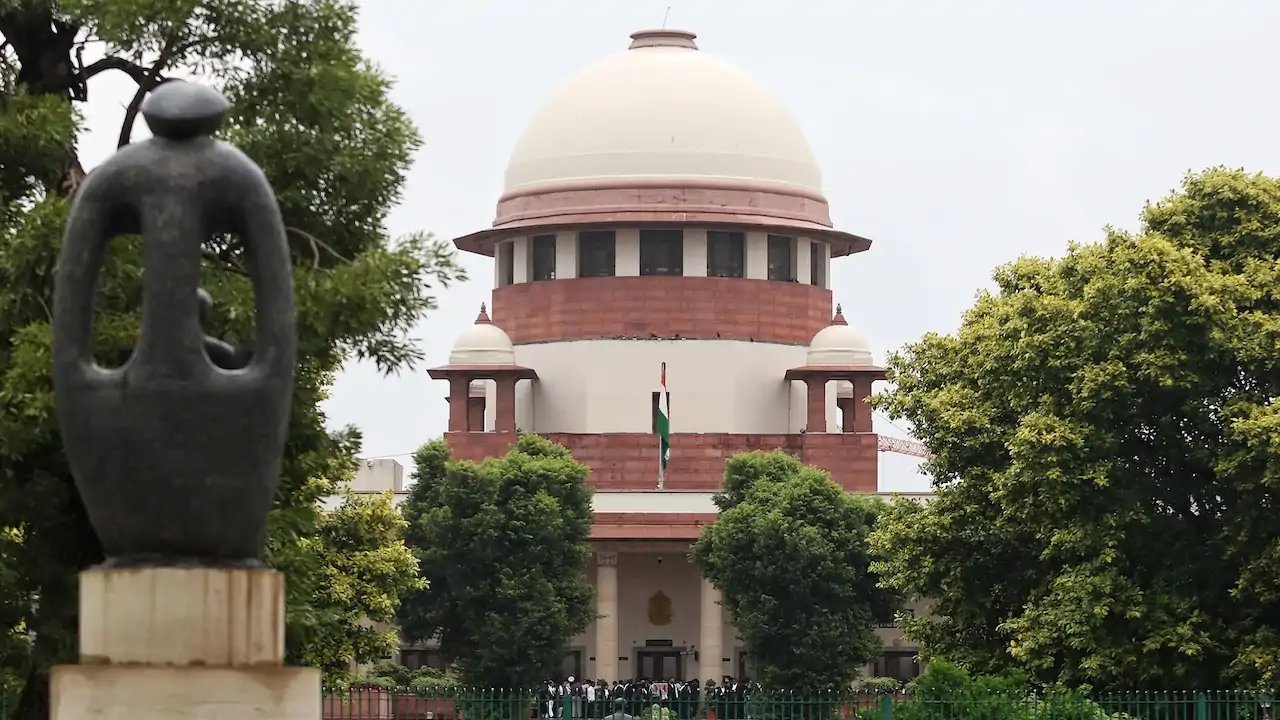
The Supreme Court firmly shut down the media frenzy over the Centre's 'unconditional apology' in a contempt petition on Thursday. A bench comprising Chief Justice Surya Kant and Justice Joymalya Bagchi stated that the court’s proceedings are not for the media and that such coverage is irrelevant to the legal merits. This observation came after Solicitor General Tushar Mehta tried to clarify that the apology was merely a standard legal formality, not an admission of guilt.
Mehta argued that under established drafting norms, every affidavit filed in response to a contempt notice must begin with an unconditional apology, followed by explanations and justifications. He insisted that the Centre, Delhi Police, and DMRC defended their actions in the subsequent paragraphs. However, the CJI cut through the technicality, noting that in light of Mehta’s submissions, the apology appeared qualified, not unconditional. Justice Bagchi added that the court was not taking cognisance of the unqualified apology being touted in headlines.
The underlying case concerns the suspension of Metro and train services in Delhi on October 10, a day after the Supreme Court directed against a 'complete prohibition' of such services for a protest by the Cockroach Janta Party. Union Home Secretary Govind Mohan and Delhi Police Commissioner Anurag Kumar filed affidavits defending the restrictions. Mohan cited a police request to suspend cellular internet within a four-km radius of Raisina Hill from 10 pm on October 9 to 10 pm on October 10, claiming it was proportionate to maintain public order. Kumar justified the measures based on intelligence inputs and the need to prevent mob violence, referencing incidents on October 6, 7, and 8.
DMRC, for its part, maintained that Metro services were not cancelled but only restricted at 45 of its 303 stations—roughly 15% of the network—from 9 pm on October 9 until October 10. The remaining 258 stations operated with full access. The court will now focus on whether these specific restrictions violated its October 9 directions, moving past the semantic debate over the apology.