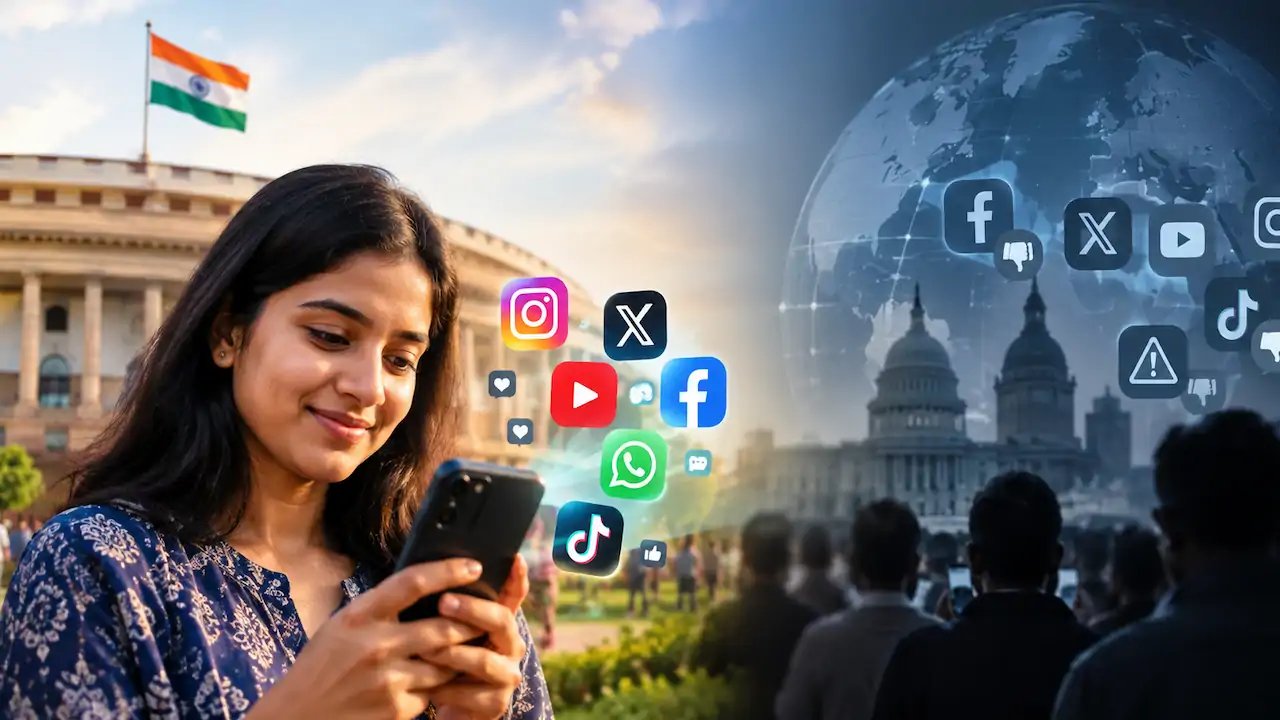
Pew Research’s latest survey of 49,800 respondents across ten major economies revealed that a striking 66% of Indians say social media benefits democracy, compared with just 34% of Americans and 37% of Germans. The study, conducted between March and May 2023, also highlighted that India’s positive perception far exceeds the global median of 55%.
The contrast is stark: while the United States, Germany, and France largely view digital platforms as a threat, India’s majority sees them as a catalyst for civic engagement. This divergence suggests a cultural and structural difference in how citizens interpret online interaction.
Experts point to India’s vast rural population and the scarcity of traditional media outlets as key drivers. In villages across Rajasthan, a farmer named Ramesh Jaiswal uses WhatsApp groups to coordinate harvest schedules, illustrating how social media can mobilize grassroots participation.
Pew’s chief analyst, Dr. Priyanka Shah, noted that the data “reflects a belief that digital connectivity bridges informational gaps in a sprawling, diverse nation.” She added that “policy makers should look beyond the negative narratives that dominate Western media.”
The government is expected to convene a digital‑policy review by June, following the survey’s release. Meanwhile, civil‑society groups have called for a balanced approach that safeguards free expression while mitigating misinformation.
As India positions itself as a forward‑thinking democracy in the digital age, the international community watches closely to see whether this optimism translates into concrete reforms.