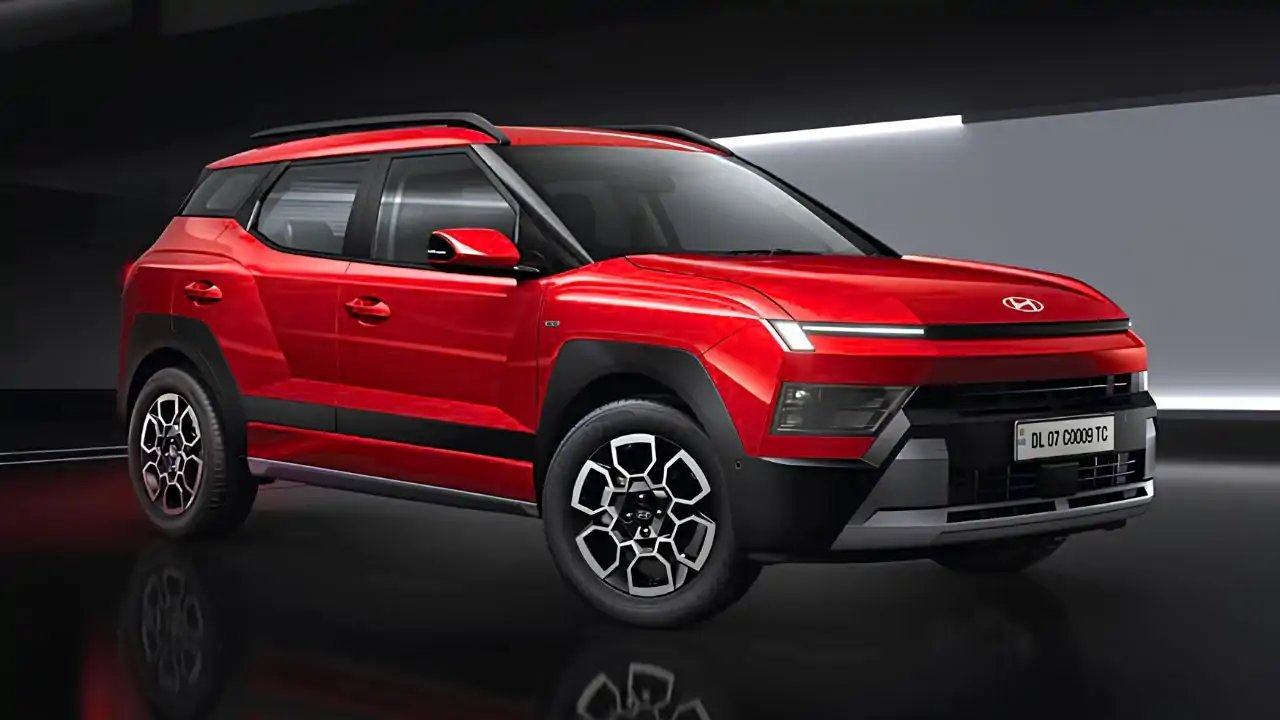
If you are looking for a compact SUV that feels a step up from the Venue without the Creta price tag, the Bayon is your answer. It carries a 1.5-litre naturally aspirated petrol engine producing 113bhp and 144Nm of torque. You can choose between a six-speed manual or Hyundai’s IVT (Intelligent Variable Transmission). No diesel. No turbo. Just a straightforward petrol setup that should keep running costs manageable for city and highway commutes alike.
The cabin is where things get interesting. Two curved 12.3-inch screens dominate the dashboard, one for instruments and one for infotainment. It’s a design cue pulled from Hyundai’s newer models, and it puts the Bayon ahead of some rivals on the looks front. You also get ventilated front seats, a 360-degree camera, an electric sunroof, and Type-C USB ports. Then there’s the generative AI voice assistant, powered by Perplexity for answers and SoundHound for voice recognition. It can handle conversational queries about weather, travel, and local spots. How well it performs in real-world Hindi or English? We’ll know after launch.
Outside, the Bayon sports Hyundai’s Art of Steel design language with split headlamps, slim LED DRLs, and pixel-style alloy wheels. The rear gets vertical taillamps and clear Bayon badging. It’s positioned squarely between the Venue and Creta, which means buyers will compare it against the Maruti Brezza, Tata Nexon, and Honda City SUV. The final dimensions and variant-wise exterior equipment will be the deciding factors for those on the fence.
Prices drop on October 26, 2026, and you can lock your spot with a ₹11,000 booking amount. Wait for the official variant list before assuming a CNG option is on the table. For now, the petrol-only lineup is all we have confirmed. Keep an eye on the safety kit and final pricing as they get closer to launch.