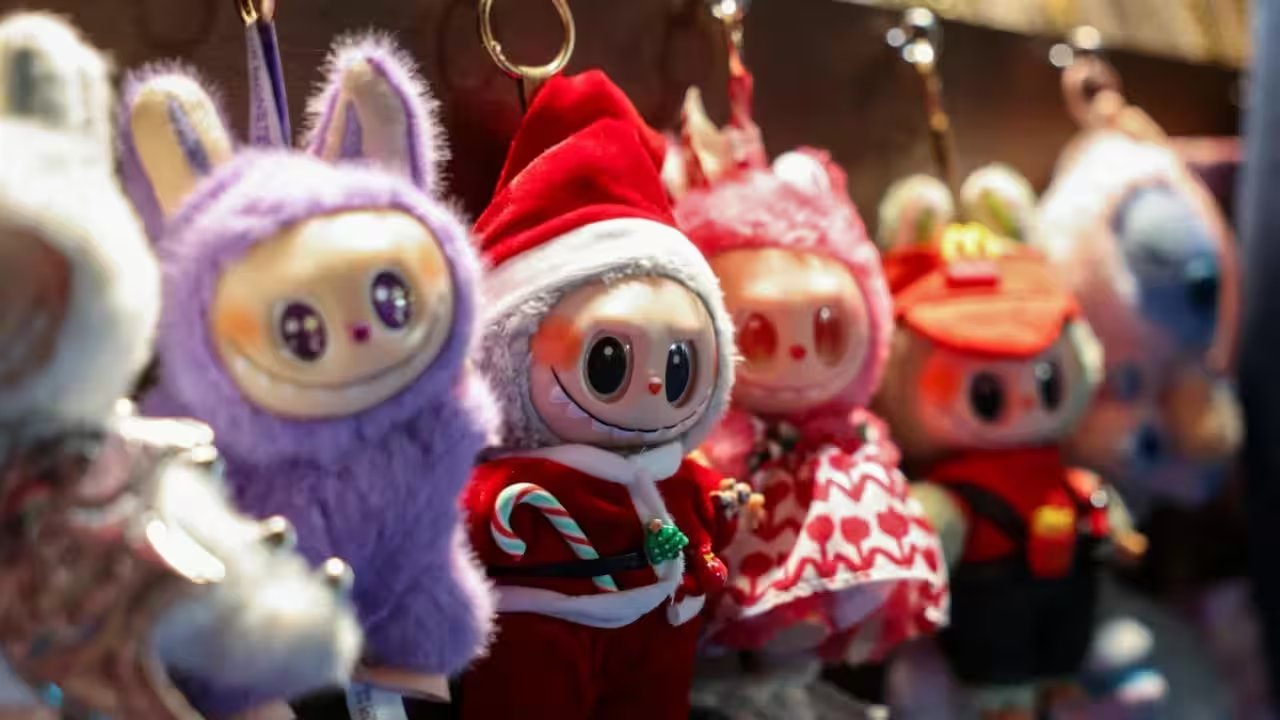
The speculative frenzy surrounding Pop Mart’s furry, fanged Labubu dolls has broken. Global sales for the Beijing-based designer toy firm tumbled by as much as 50% year-on-year in the quarter ending September, while revenue across the United States plummeted by at least 70%. The craze vanished fast. Hong Kong-listed shares of Pop Mart have now retreated more than 50% from last year’s record highs, erasing billions in market capitalisation as overstocked shelves replace the overnight queues that once defined the brand.
Pop Mart, which listed on the Hong Kong Stock Exchange in 2020 and commands a market valuation hovering near $24 billion, had briefly climbed higher than the combined valuations of American toy titans Mattel and Hasbro. That growth engine has stalled. Retail operations spanning more than 670 brick-and-mortar storefronts and 2,800 automated vending machines worldwide are suddenly contending with excess inventory after the manufacturer ramped up factory output to monetize viral social media hype.
First rolled out in 2019, Labubu transformed Pop Mart from a niche Asian collectible shop into an international retail empire. The concept relied on sealed “blind boxes” retailing for $15, which concealed randomized vinyl characters and forced customers into repeat buying runs to secure elusive editions. Wealthy patrons bid upwards of $150,000 at auctions for human-sized editions, while high-profile endorsements from reality star Kim Kardashian and Blackpink’s Lisa turned the jagged-toothed monster into an essential runway accessory. But when supply caught up with hype, exclusivity vanished.
“Now it doesn’t feel that way—I walk into a Pop Mart and there’s a whole series of Labubus sitting there,” said collector Ensito, a North Carolina resident who left his corporate technology position in 2024 to create niche doll content. Ensito spent more than $50,000 assembling a personal vault of 400 dolls and altered his own dental structure to mimic Labubu’s teeth, yet his recent online videos struggle to attract 10,000 views.
Such buyer fatigue reflects a strategic miscalculation in managing manufactured scarcity. Ashley Dudarenok, founder of China-focused market research firm ChoZan, observed that Pop Mart’s aggressive ramp-up of factory production directly dismantled the elusive mystique that justified inflated secondary valuations. When products sat readily available on retail shelves, secondary market margins evaporated.
Samer El Hajjar, a marketing lecturer at the National University of Singapore, noted that investor sentiment has shifted toward caution as the doll's initial novelty fades:
Investors are concerned that its global success may have been driven by a viral moment rather than lasting customer loyalty.
Samer El Hajjar, Marketing Lecturer, National University of Singapore
| Financial & Retail Metric | Official Company Benchmark |
|---|---|
| Three-Month Global Revenue Decline | Down up to 50% year-on-year |
| US Market Sales Drop (to September) | Down at least 70% |
| Equity Performance | Down >50% from 52-week peak |
| Current Corporate Valuation | Approximately $24 billion |
| Global Brick-and-Mortar Network | 670+ physical stores, 2,800+ roboshops |
| Base Retail Blind Box Price | $15 (approx. £11) per unit |
Consumer capital is migrating toward newer novelty offerings. Cherub-styled Sonny Angels, miniature glow-in-the-dark Smiski figurines, and licensed blind boxes from the KPop Demon Hunters and My Little Pony franchises are absorbing floor space once monopolized by Pop Mart. Retail heavyweight Miniso, operating an international network exceeding 8,000 locations from Guangzhou, has ramped up distribution of licensed Disney and Marvel mystery boxes at accessible price tiers.
“Consumers aren’t particularly concerned about where the brand comes from,” said Miniso executive Vincent Huang, outlining the company’s counter-strategy. “They’re more focused on the shopping experience—the designs, value for money, and enjoyment.”
Established legacy entertainment houses present an even steeper hurdle. Analyst Boustani pointed out that Tokyo-based Sanrio, the parent group behind Hello Kitty, delivered record operating earnings through March because its intellectual property maintains generational equity without depending on temporary influencer spikes. Disney and Sanrio spent decades anchoring toys in television and cinematic universes before monetizing merchandise; Pop Mart is attempting to reverse-engineer that narrative pipeline.
Market Context: Designer toy valuations mirror cyclical commodity bubbles whenever demand rests purely on speculative hoarding rather than narrative loyalty. Once production volumes quench collector FOMO, secondary price floors collapse and speculative capital migrates toward the next viral alternative.
Pop Mart is mounting a high-stakes campaign to institutionalize its characters into permanent pop culture assets, committing capital to an operational theme park inside Beijing and greenlighting a theatrical Labubu feature film. The upcoming earnings cycle will show whether Pop Mart's narrative bets can rescue its retail margins before rival novelty brands claim its remaining shelf space.