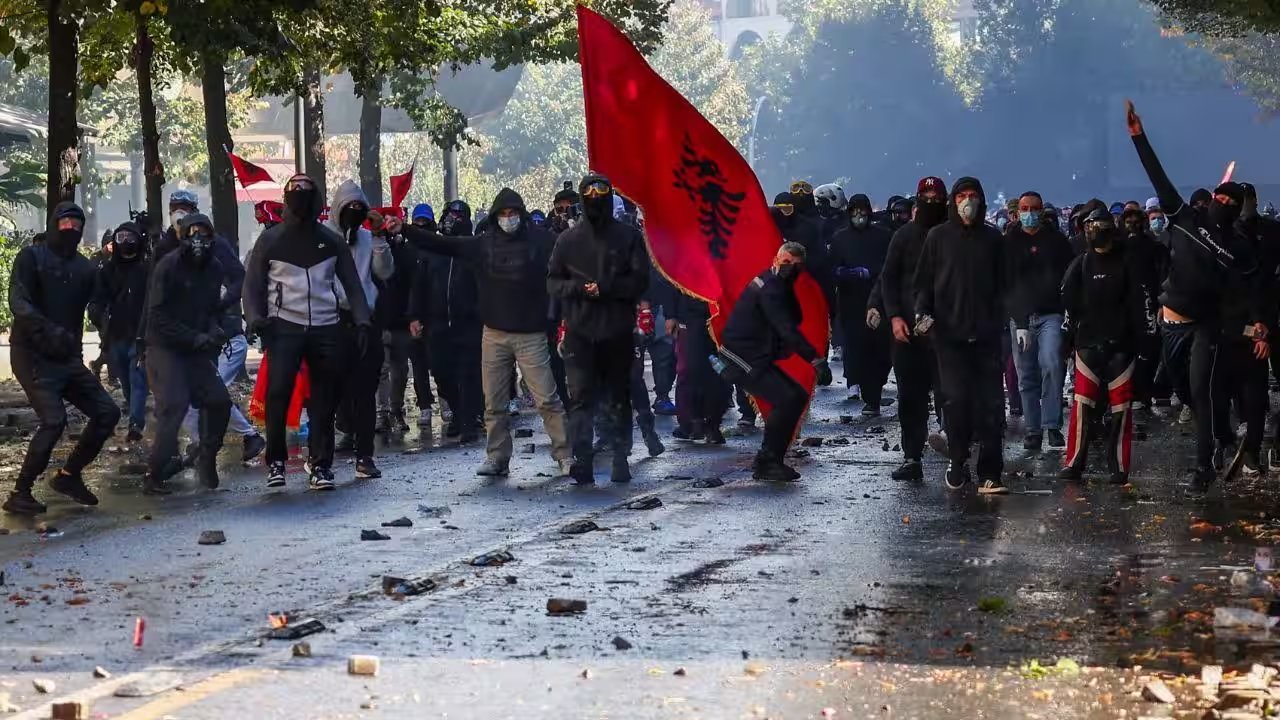
Riot police in central Tirana fired stun grenades and deployed water cannons on Saturday as masked youths hurling rocks escalated the fifth consecutive day of student-led protests demanding Prime Minister Edi Rama’s resignation. The violence marked a sharp turn from the largely peaceful gatherings that began weeks ago, with demonstrators smashing windows and setting fire to government buildings earlier in the week. Police figures indicate around 500 protesters have been detained so far, with 330 subsequently released, while authorities confirmed injuries to 120 officers and 45 demonstrators, a count analysts warn likely underestimates the true toll.
This is the most severe challenge Rama has faced since taking office in 2013, despite his Socialist Party securing a fourth consecutive term in last year’s elections. The unrest traces back to months of opposition against a luxury resort project on Albania’s southern coastline, backed by investors including Jared Kushner, son-in-law of US President Donald Trump. While Reuters found no evidence of wrongdoing by Kushner, villagers claimed their land was sold to a man wanted by prosecutors for drug trafficking, allegations his lawyer denies. The dispute tapped into deeper frustrations over corruption and a youth unemployment crisis that has long plagued the country.
Rama, who denies all wrongdoing, vowed on Saturday to protect the right to protest while refusing to step down. “My responsibility is even clearer during these difficult times... to protect our citizens, guarantee justice, and move Albania forward,” he wrote on Facebook, reiterating his mandate to secure European Union membership by 2030. Albania and Montenegro remain top candidates in the EU accession process, making domestic stability a critical factor for Brussels. The demonstrations in Tirana mirror a broader wave of unrest across Europe, where students in France are demanding better school facilities and Spaniards are protesting soaring rents, issues that have already forced Madrid to call a snap election.
The immediate future hinges on whether Rama’s government can contain the violence without further inflaming the student movement. Legal experts expect a surge in court cases as hundreds of detained protesters seek bail, while international observers will closely monitor the EU accession timeline for any diplomatic fallout. For now, the streets of Tirana remain a flashpoint, with the student movement showing no signs of dissolving despite heavy police presence.