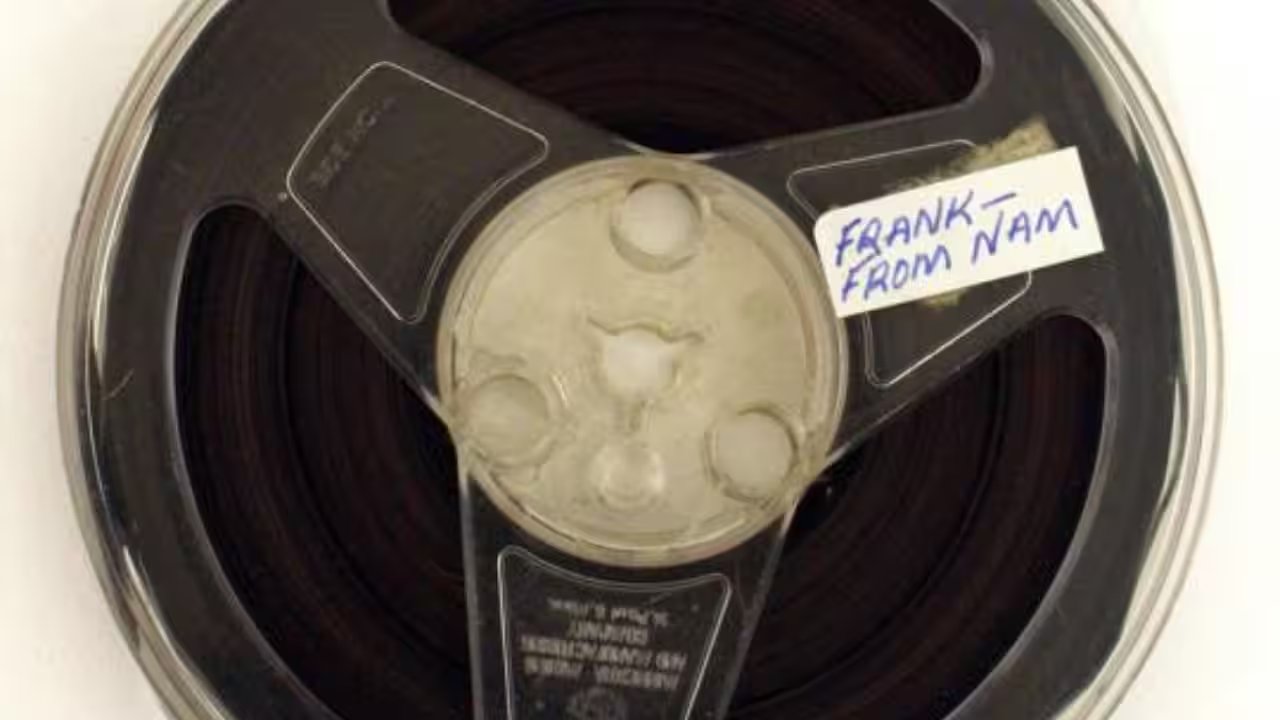
The Smithsonian National Postal Museum in Washington, DC, has added a 43-minute reel-to-reel tape to its permanent collection. The recording features Frank A. Kowalczyk, a 21-year-old U.S. Army private first class, speaking to his mother in Calumet City, Illinois, in March 1969. He was stationed at Long Binh Post near Saigon, serving with the Headquarters, 46th Engineers Battalion, 20th Brigade. Rather than writing, Kowalczyk bought a tape recorder from a fellow soldier and decided to talk. He spoke for approximately 43 minutes, logging more than 8,600 words.
The tape is not a polished military log. It’s a meandering, intimate conversation. Kowalczyk asks his mother about his father’s work schedule. He checks in on his siblings and wonders if the neighbors have married. He talks about the weather, the food, and his frustration with routine duties at the base. He even jokes about the difficulty of stopping speaking Vietnamese after he returns home. But the recording also holds the weight of the war. He describes a fellow soldier who bled to death in a bunker because medical help didn’t arrive in time. He mentions preferring assignments outside the main base, where he felt soldiers were treated with more respect. It’s raw. It’s unfiltered. It’s a young man trying to stay connected while the world around him is actively trying to kill him.
The most striking element isn't the words. It’s the sound. Midway through the tape, Kowalczyk tells his mother to listen. “Right now in the background, you’ll probably hear a chopper flying over,” he says. The low, rhythmic thrum of a helicopter dominates the background. It’s the sound of the war, thousands of miles from Chicago. Manda Kowalczyk, his daughter, told Smithsonian Magazine that the helicopter sound is the most powerful part of the recording for her. “These helicopters are not in Chicago. This is happening in Vietnam,” she said. It’s a jarring reminder of the distance between his home and his duty.
Lynn Heidelbaugh, a curator at the National Postal Museum, highlighted why this tape matters. A written letter can describe a helicopter. It cannot make you hear one. The recording captures the environment, the tension, and the reality of the space Kowalczyk occupied. It’s a piece of history that you can almost feel. The museum’s catalogue notes the recording was made over several sessions in March 1969. While Smithsonian Magazine cites 43 minutes, the museum’s object record rounds the duration to approximately 45 minutes. The discrepancy is minor. The impact is not.
Kowalczyk also asked his mother to record a reply. He wanted to hear the weather reports in Illinois. He wanted to hear the news. He wanted to hear the sounds of home. He suggested that hearing familiar noises would be “strange in the best possible way” because such material was rarely available to soldiers in Vietnam. The American Red Cross operated similar recording facilities in Vietnam and the Pacific, and its “Voices from Home” program allowed families to send audio messages. But Kowalczyk’s tape is a two-way street. It’s his voice, his fears, his boredom, and his love, captured in the moment. The Smithsonian now ensures that moment won’t be lost to time. The next step is for the museum to make the audio available to the public, allowing new generations to hear the war not as a statistic, but as a conversation between a son and his mother, interrupted only by the sound of a helicopter.