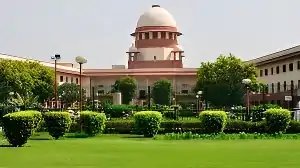
On a Thursday, Justices Dipankar Datta and Sheel Nagu delivered a judgment that lifts a long‑standing restriction on who can sue a candidate for lying in an affidavit. The ruling removes the requirement that the complainant be a public servant, a loophole that had allowed candidates to evade scrutiny.
Section 125A, introduced in 2002, penalises candidates who deliberately provide false details or omit facts in their nomination papers. Section 195(1) of the CrPC, amended in 2006, lists offences that can be pursued only by a public officer; the Court said Parliament had intentionally kept Section 125A outside that list.
The bench heard an appeal filed by Rajkumar Madki, who challenged a Karnataka High Court ruling that dismissed his complaint against Dr Shailendra Beldale, a 2023 MLA from Bidar. Madki alleged that Beldale’s affidavit misrepresented his residential address.
The Court noted that the Representation of the People Act explicitly states that the penalty under Section 125A applies “notwithstanding anything contained in any other law for the time being in force”. The judges concluded that no law restricts filing under Section 125A to a public servant.
With the door now open, private citizens can file challenges that may prompt investigations and, potentially, criminal proceedings against candidates. The Supreme Court is expected to receive a wave of new petitions; the Beldale case will be re‑examined under the new framework.