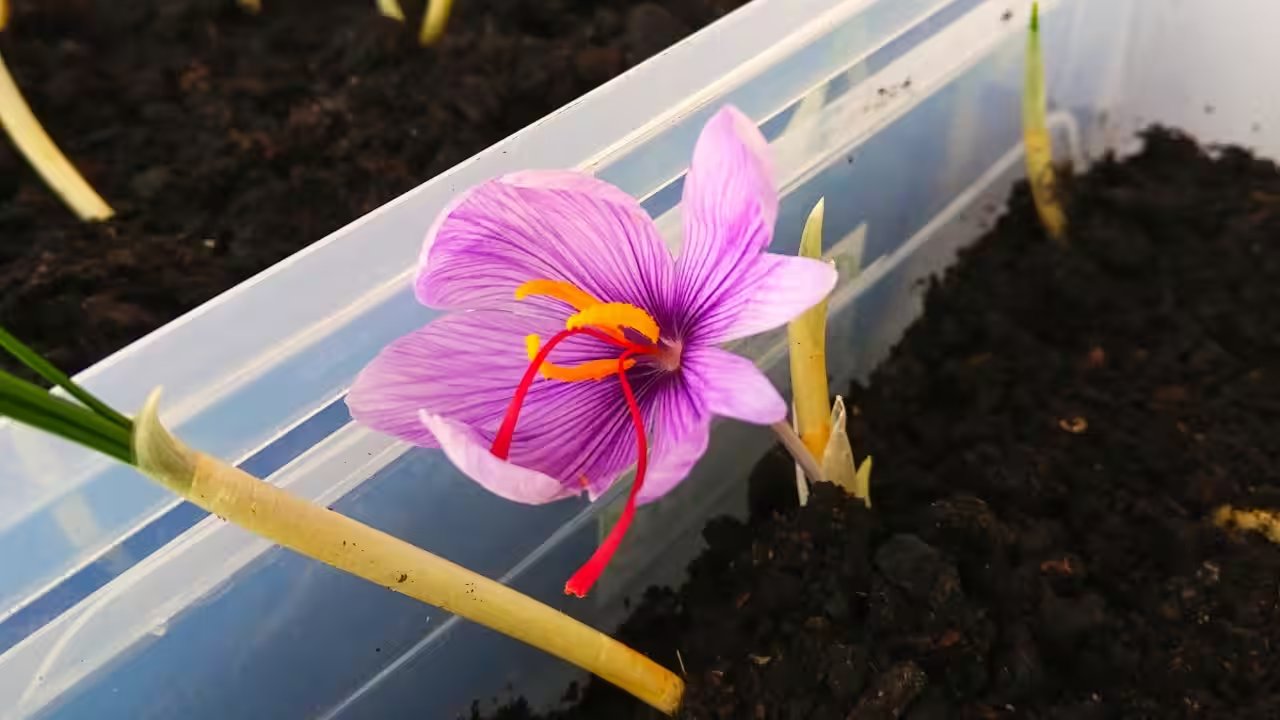
A pinch of saffron transforms plain basmati rice into fragrant, golden perfection. You do not need acres in Pampore to produce it. A sunny balcony and an eight-inch terracotta container will do the job nicely.
But real Kashmiri saffron comes with a steep price tag in grocery stores. The red threads originate from Crocus sativus, a petite autumn-blooming purple flower grown from underground corms. While the vast majority of India's commercial harvest hails from the dry summers and crisp winters of Jammu and Kashmir's Pampore belt, container cultivation requires only patience and sharp drainage.
Size matters when sourcing your starter stock. Steer clear of shrivelled, soft, or mouldy corms from unverified nurseries. Firm corms measuring at least nine centimetres in circumference produce two to four blossoms each, according to University of California master gardeners. Smaller corms often fail to push out blooms in their maiden season.
Drainage makes or breaks this crop. Saffron corms rot swiftly in soggy ground, so select an unglazed terracotta pot at least eight inches (20 cm) deep with ample drainage holes. Heavy clay spells disaster. Build a porous growing medium by blending garden soil, coarse sand, and organic compost in a clean 2:1:1 ratio. Aim for a soil pH hovering strictly between 6 and 8. Skip fresh animal manure and heavy nitrogen feeds entirely—excess nitrogen produces lush green leaves while killing off flower formation.
| Saffron Container Specification | Planting Requirement | Target Metric |
|---|---|---|
| Minimum Pot Depth | Terracotta container with drainage | 8 inches (20 cm) |
| Corm Circumference | Firm, mould-free stock | 9 cm or larger |
| Soil Blend Ratio | Garden soil : Coarse sand : Compost | 2:1:1 mix |
| Soil pH Range | Slightly acidic to slightly alkaline | pH 6.0 to 8.0 |
| Planting Depth & Spacing | Pointy end facing upward | 4 inches deep, 4 inches apart |
| Bloom Maturation Window | Planting to flower harvest |
Plant your corms between August and October. Tuck each corm four inches (10 cm) deep into the gritty mix, spacing them four inches apart with the pointed growth tip facing the sky. Shallow planting leaves the fleshy base vulnerable to scorching heat and dehydration. Water thoroughly once right after burying the corms. Then walk away. Do not add another drop until thin green shoots push above the soil surface.
Sunlight drives growth. Position the pot where it absorbs uninterrupted, direct sunlight throughout the day. Once leaves break out, hydrate the plant only when the top inch of potting soil feels dry to the touch. Summer is the plant's resting phase. Keep the container bone-dry during these warm months to mimic the natural dormant cycle of the Kashmir valley.
Pest & Protection Note: Rodents love digging up dormant corms, while sap-sucking aphids target tender autumn foliage. Secure the container base with a wire mesh barrier to block burrowing pests, and spray diluted neem oil directly onto leaves at the first sign of insect activity.
Purple petals unfurl across October and November. Timing the harvest requires morning discipline. Each delicate blossom produces exactly three crimson stigmas—the saffron threads you use in cooking. Pluck the bright red threads mid-morning, right after the flowers open fully and early morning dew evaporates. Pull them gently between your thumb and forefinger.
Pat the stigmas dry on absorbent paper sheets away from direct heat for two to three days. The dried threads turn brittle, deep scarlet, and richly aromatic. Seal them inside an airtight dark glass jar to block out ambient light and kitchen moisture. Do not toss the dying pot out when the blooms fade. Let the foliage turn yellow and wither down on its own, as those fading leaves feed nutrients back down into the corm for the following year's crop.
| 6 to 8 weeks |