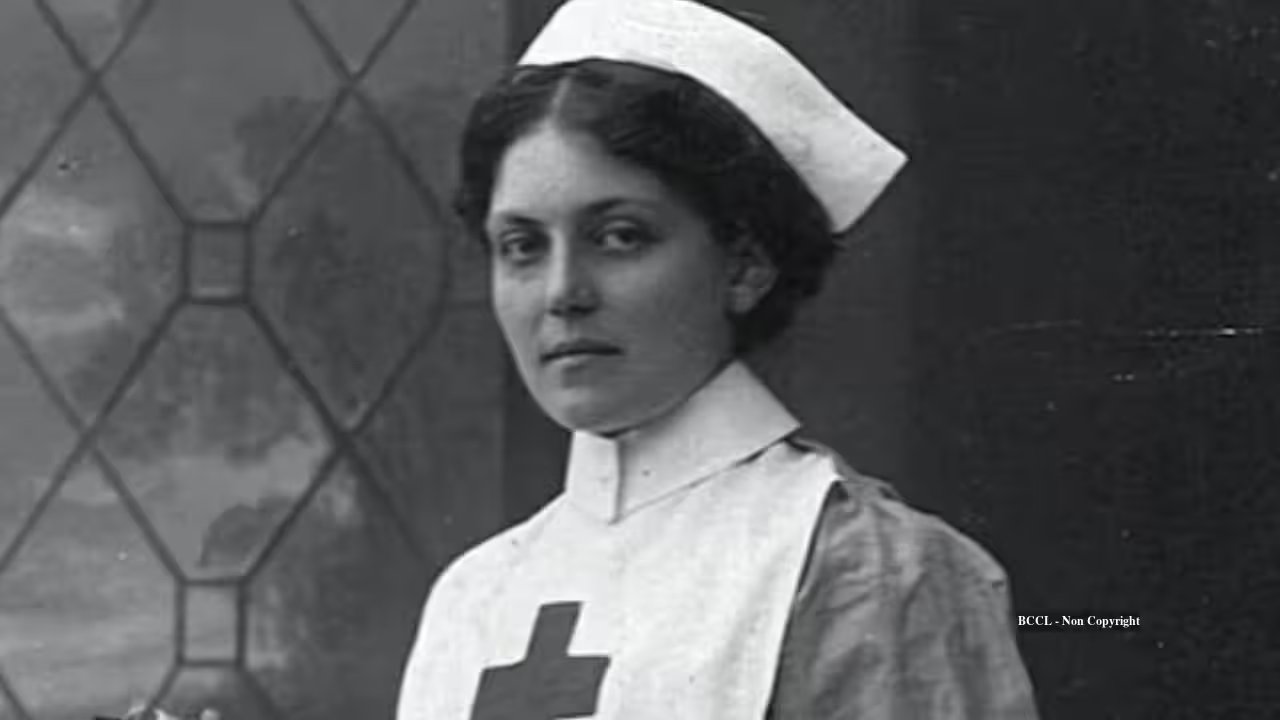
Violet Constance Jessop cheated death at sea three times. The Argentine-born stewardess walked away from the collision of the RMS Olympic in 1911, escaped the freezing North Atlantic waters when the RMS Titanic foundered in 1912, and leaped past churning propeller blades as the HMHS Britannic sank in 1916.
Maritime historians still marvel at her resolve. She did not quit. Instead, the woman dubbed "Miss Unsinkable" spent nearly four decades staffing passenger liners across the globe, returning to the very waters that swallowed over 1,500 of her shipmates.
Jessop entered the world on October 2, 1887, near Bahía Blanca, Argentina, the eldest child of Irish immigrant parents. She was the first of nine children—though only six survived infancy. Early adversity forged her resilience. When doctors diagnosed her with childhood tuberculosis and gave her months to live, she defied their predictions and recovered completely. At 16, family tragedy struck again. Her father died following surgical complications, prompting her mother to pack up the household and move to England.
Jessop enrolled in a convent school, but left her studies early when her mother fell ill. The family needed money. Taking her mother's path, she sought work afloat, signing on with the Royal Mail Line aboard the Orinoco in 1908 at just 21 years old.
In 1911, Jessop joined the White Star Line. Her posting placed her aboard the RMS Olympic—the largest civilian ocean liner afloat and the proud lead vessel of the company's trio of Olympic-class giants constructed in Belfast.
Danger struck fast. On September 20, 1911, the Olympic steamed out of Southampton and collided violently with the British cruiser HMS Hawke in the Solent. The warship sheared into the Olympic’s hull, inflicting heavy structural damage. No one died. The liner limped back into port under its own power, but maritime authorities faulted White Star for the collision, saddling the company with crippling repair costs and lost booking revenues.
Jessop left no direct mention of the incident in her memoirs. She simply stayed at her post on the Olympic until April 1912, when management transferred her to its brand-new sister ship: the Titanic.
Jessop boarded the Titanic at Southampton on April 10, 1912. She was 24 years old. Four nights later, at 11:40 p.m. on April 14, the vessel grazed a massive iceberg in the North Atlantic. Two hours and forty minutes later, the ship slipped beneath the waves.
Officers ordered Jessop onto the boat deck. Her job was to act as an anchor of calm for non-English-speaking passengers who could not comprehend the crew’s shouted instructions. She watched the frantic loading of the early wooden lifeboats until officers ordered her to step into Lifeboat 16.
Right before the crew swung the davits out, Titanic’s sixth officer, James Paul Moody, handed her an abandoned infant bundled in blankets.
He dropped a bundle into my lap—a baby. 'Look after this, Miss Jessop,' he said.
Lifeboat 16 dropped into the black water. Jessop shielded the infant through the freezing night until the RMS Carpathia steamed into sight the following morning, scooping up the survivors and setting course for New York. Aboard the rescue ship, an unknown woman—presumably the infant's distraught mother—dashed forward, grabbed the child straight from Jessop's arms, and sprinted away in tears without uttering a single word.
Nearly 1,500 passengers and crew perished on that April night. Jessop survived without physical injury. Yet instead of seeking refuge inland, she reported back for maritime duty.
When World War I erupted, Jessop volunteered as a nurse with the Voluntary Aid Detachment. The British Admiralty stationed her on the HMHS Britannic, the youngest sister of the Olympic-class fleet, which had been converted into a floating military hospital transporting wounded Allied soldiers from the Gallipoli campaign.
On the morning of November 21, 1916, disaster struck the third sister. The Britannic ran over a German naval mine in the Aegean Sea. The explosion tore a catastrophic breach into the hull. The ship sank in just 55 minutes—nearly three times faster than the Titanic.
| Vessel | Date of Incident | Cause of Disaster | Outcome / Casualties |
|---|---|---|---|
| RMS Olympic | Sept 20, 1911 | Collision with HMS Hawke | Heavy hull damage; 0 deaths |
| RMS Titanic | April 14–15, 1912 | Iceberg collision | Sunk in 2h 40m; ~1,500 dead |
| HMHS Britannic | Nov 21, 1916 | German naval mine | Sunk in 55m; 30 dead out of 1,066 |
Chaos unfolded around the lifeboats. As the stern lifted out of the Aegean, the ship’s giant propeller blades continued spinning at the surface, pulling early lifeboats toward the churning steel and splintering them into driftwood.
Jessop realized she had seconds to act. She leaped into the churning sea. The force of the water dragged her down, and she struck debris, sustaining a severe head impact. Thirty of the 1,066 people aboard lost their lives that morning. Jessop survived, though a doctor would discover years later that the impact had fractured her skull.
She looked back from the water to watch the great hull sink. The ship, she later wrote, "dipped her head a little, then a little lower and still lower" before plunging into the depths.
Following the Armistice, Jessop returned to the White Star Line in 1920. She subsequently joined the Red Star Line and later rejoined the Royal Mail Line, circumnavigating the globe twice aboard the Belgenland. At age 36, she married fellow White Star steward John James Lewis. She retired from passenger service after four decades at sea, living in the English countryside until her death on May 5, 1971, at the age of 83.