The lab results confirmed the worst fears of local poultry farmers.
State veterinary authorities have launched an aggressive culling and containment sweep in Tamil Nadu’s Cuddalore district after the National Institute of High Security Animal Diseases (NIHSAD) in Bhopal confirmed Highly Pathogenic Avian Influenza (H5N1) in poultry samples. The pathogen tore through local sheds with brutal speed. Between October 30 and November 13, sudden bird deaths mounted to 35,647 across a cluster of 15 poultry units.
The epicenter sits squarely in Kattiyankuppam village within Kurinjipadi taluk. District Collector Sibi Adhithya Senthil Kumar confirmed that the virus originated in a local carcass collected on November 5, prompting rapid deployment under the National Action Plan.
As many as 35,647 bird deaths were recorded in the affected belt till November 13, since the first case of sudden mortality was reported from a farm at Thamanampatti village in Thiyagavalli Panchayat on October 30," Senthil Kumar stated.
Now, emergency veterinary teams are clearing every coop within a one-kilometre perimeter.
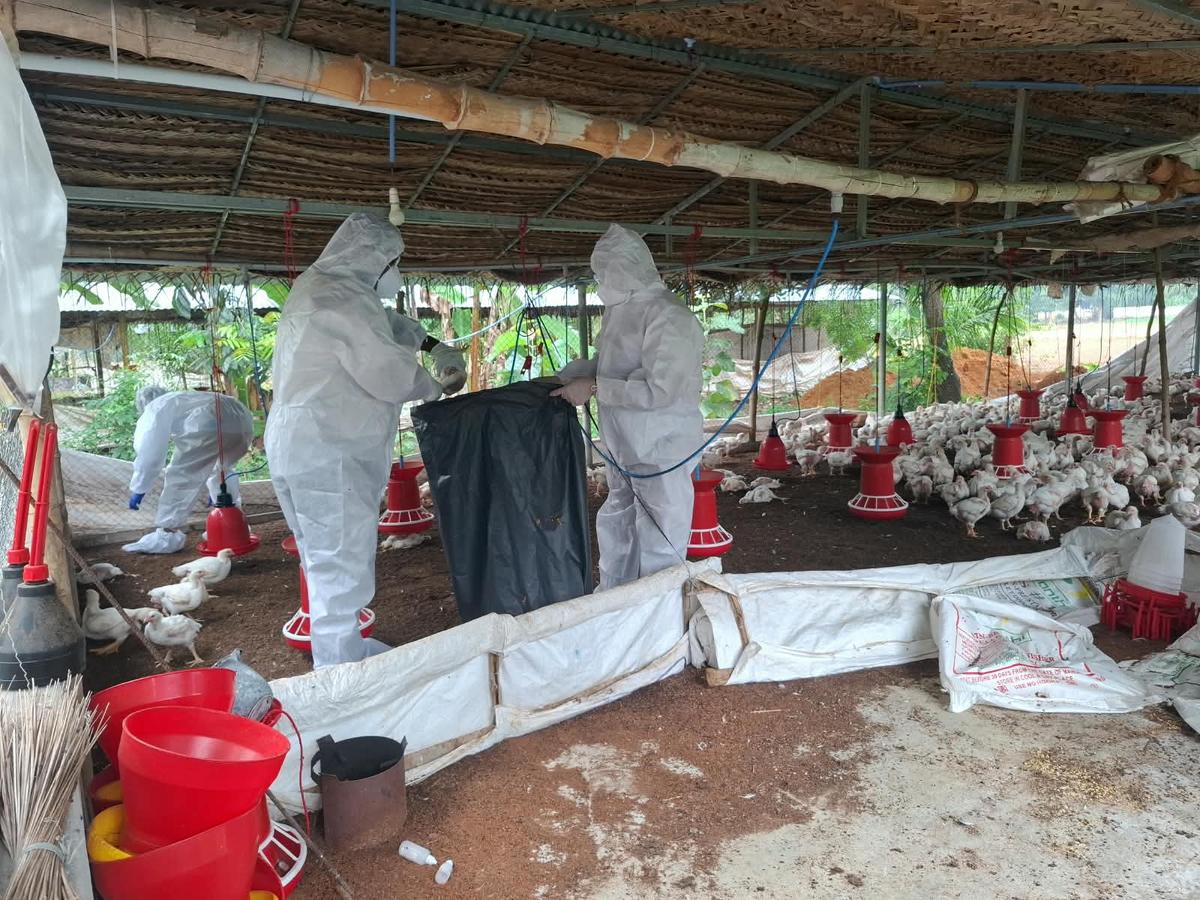
Containment workers face a grim task on the ground. Nine Rapid Response Teams equipped with personal protective equipment have moved across Kurinjipadi taluk to isolate and sanitize the outbreak zone.
Of the 15 farms caught in the transmission zone, 10 saw their flocks entirely wiped out by the virus before cullers arrived. Teams have humanely culled 1,550 birds across the remaining five properties to establish a sanitary barrier, working toward complete depopulation in line with the Government of India's 2021 avian flu containment guidelines.
| Outbreak Metric | Verified Figure / Status |
|---|---|
| Confirmed Strain | Highly Pathogenic Avian Influenza (H5N1) |
| Ground Epicentre | Kattiyankuppam, Kurinjipadi Taluk, Cuddalore |
| First Recorded Death | October 30 (Thamanampatti village) |
| Total Poultry Deaths | 35,647 birds |
| Birds Culled to Date | 1,550 birds |
| Farms Impacted | 15 total (10 wiped out, 5 targeted for culling) |
Carcase disposal follows strict sanitary standards. Field crews transfer dead and culled poultry into designated deep burial pits, layering the remains with industrial bleaching powder to seal against biological leakage. Bird movement into and out of the containment zone remains under total police and revenue blockade.
The diagnostic paper trail reveals how the infection cascaded across state surveillance networks. When chickens began dying mysteriously on October 30 in Thamanampatti village, local veterinary officers rushed preliminary tissue samples to the Poultry Disease Diagnostic Laboratory (PDDL) in Namakkal.
As mortality numbers surged over the following week, parallel batches were routed to the Poultry Disease Diagnosis and Surveillance Laboratory in Erode and the Central University Laboratory at Madhavaram in Chennai. Final molecular confirmation landed from NIHSAD Bhopal on November 13.
Biosecurity crews have blanketed the surrounding poultry network with chemical countermeasures. Handlers are deploying VIRKON-S disinfectant through dual pathways: spraying farm sheds directly and administering the compound orally to live flocks as a prophylactic shield. Village panchayat secretaries and revenue inspectors have stepped in to police compliance.
District authorities have barred poultry farmers in the Cuddalore compartment from restocking sheds for three months. Routine surveillance across bordering taluks continues around the clock, with veterinary posts instructed to treat any sudden bird drop as a potential outbreak until cleared by laboratory testing.
| Rapid Response Teams |
| 9 field units deployed |
| Containment Radius | 1-kilometre depopulation zone |
| Restocking Moratorium | 3 months |