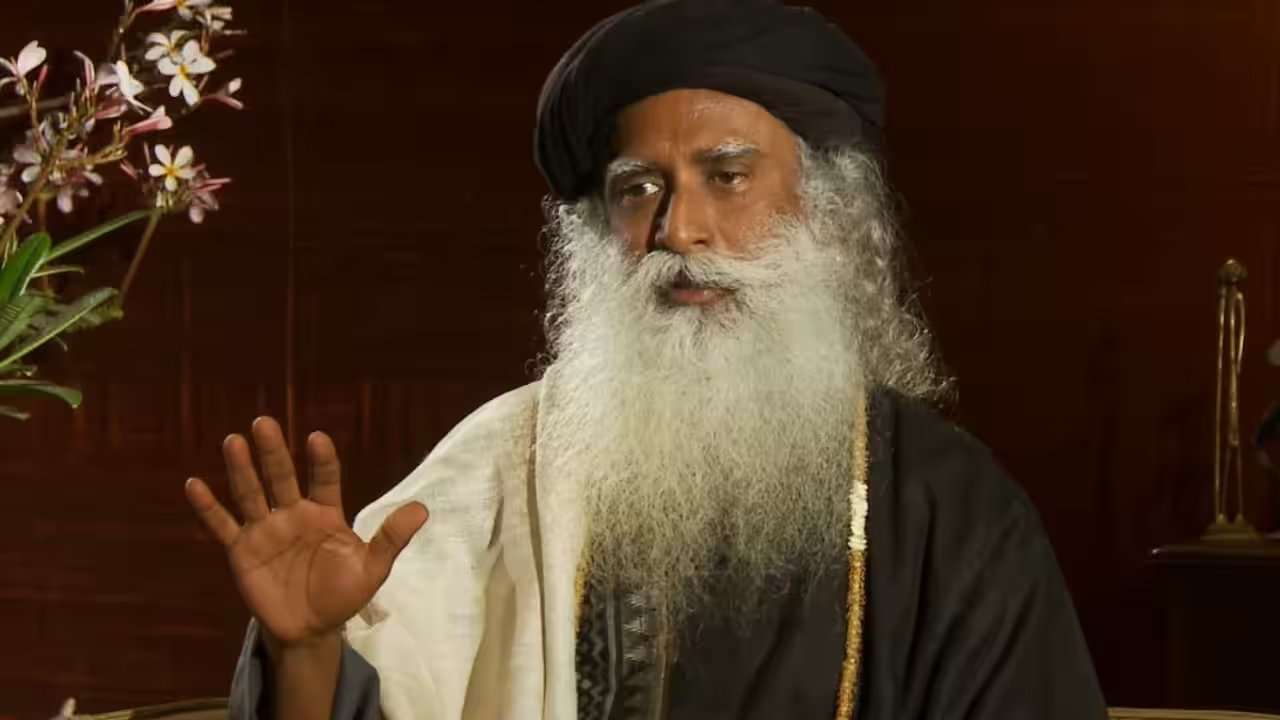
Grief often traps families inside a closet. Sorting through coats, shirts, and shoes left behind by a deceased loved one presents a painful dilemma—whether to preserve them as heirlooms, pack them into storage, or give them away. Addressing a follower whose father had died, spiritual leader Sadhguru pushed back against hoarding a departed relative's garments, outlining a yogic understanding that views death not as a sudden full stop, but as a drawn-out physical untangling.
Death does not strike in an instant. Just as human birth demands nine to nine-and-a-half months to assemble a living form, death operates on a measured exit timeline. “You were not born in one day,” Sadhguru explained. “Similarly, you do not die in one day. You die slowly.”
In yogic philosophy, life functions through five fundamental manifestations of prana, or subtle life energy. These energetic forces do not vanish the moment clinical equipment records cardiac arrest. Instead, they detach in sequential phases.
Samana, the energy responsible for regulating body temperature, begins withdrawing roughly 21 to 24 minutes after death. As it recedes, the physical vessel cools down rapidly—a physiological shift that gave rise to the longstanding folk habit of touching the nose to verify passing. Between 48 and 64 minutes, Prana itself departs. Udana exits between six and 12 hours later. Sadhguru noted that as long as Udana lingers, certain esoteric tantric processes retain the potential to revive the body, though resuscitation becomes practically impossible once that window shuts.
Apana leaves between eight and 18 hours following death. The final force, Vyana—the preservative component that maintains cellular cohesion—lingers far longer. During a natural death, Vyana's complete departure can take anywhere from 11 to 14 days. These timelines stem strictly from yogic metaphysics rather than conventional medical science, yet they form the cornerstone of traditional Indian bereavement protocols.
| Pranic Energy | Primary Function & Role | Exit Window Following Death |
|---|---|---|
| Samana | Regulates core body temperature | 21 to 24 minutes (nose and skin cool) |
| Prana | Fundamental breath and vital force | 48 to 64 minutes |
| Udana | Governs upward movement; tantric revival window | 6 to 12 hours |
| Apana | Excretory and downward vital force | 8 to 18 hours |
Physical matter remembers what touched it. Sadhguru tied the gradual dissolution of energy directly to the objects a person wore daily, noting that fabric absorbs both biological material and subtle identity. “Today, we know that DNA can be extracted from your old clothes,” he observed, pointing out that an individual's physical footprint stays embedded in textiles long after life ends.
And the nose confirms what the eye misses. A trained police hound can isolate a single suspect's jacket from an array of a thousand garments because human scent adheres tenaciously to woven fibers. Belongings, consequently, act as lingering reservoirs of an individual's energetic imprint.
Certain things that have been in very close and intimate contact with the body, particularly underclothes, should be burnt.
To prevent these physical ties from tethering the spirit, ascetic yogis historically stripped their lives to bare fundamentals. A traditional sannyasi carried almost nothing—a spare pair of clothes, a plate, a drinking vessel, and a sleeping sheet. In certain traditions, ascetics went so far as to incinerate the grass huts they inhabited once their physical bodies expired, intentionally erasing every physical footprint.
Yet burning an entire modern wardrobe makes little sense. A contemporary closet holds dozens of shirts, trousers, jackets, and shoes, making mass incineration wasteful and unnecessary. Sadhguru outlined a distinct separation based on intimacy and utility.
Undergarments and items kept in direct, intimate contact with the skin must be burnt. These carry the densest concentrations of biological and energetic residue, making disposal necessary. For everyday outer garments, jackets, and valuable clothing, families should wash every piece thoroughly within the first 10 or 11 days following death.
But do not hand the entire bundle to a single cousin or sibling. Concentrating the deceased's wardrobe in one bedroom simply recreates the energetic weight in a new corner. Instead, scatter the belongings. Give a jacket to one recipient, trousers to another, and smaller pieces to someone else entirely. Distributing the garments breaks the physical concentration, allowing the living to move forward cleanly while honoring the natural dissolution of the departed.
| Vyana |
| Preservative energy maintaining cellular form |
| 11 to 14 days after natural passing |