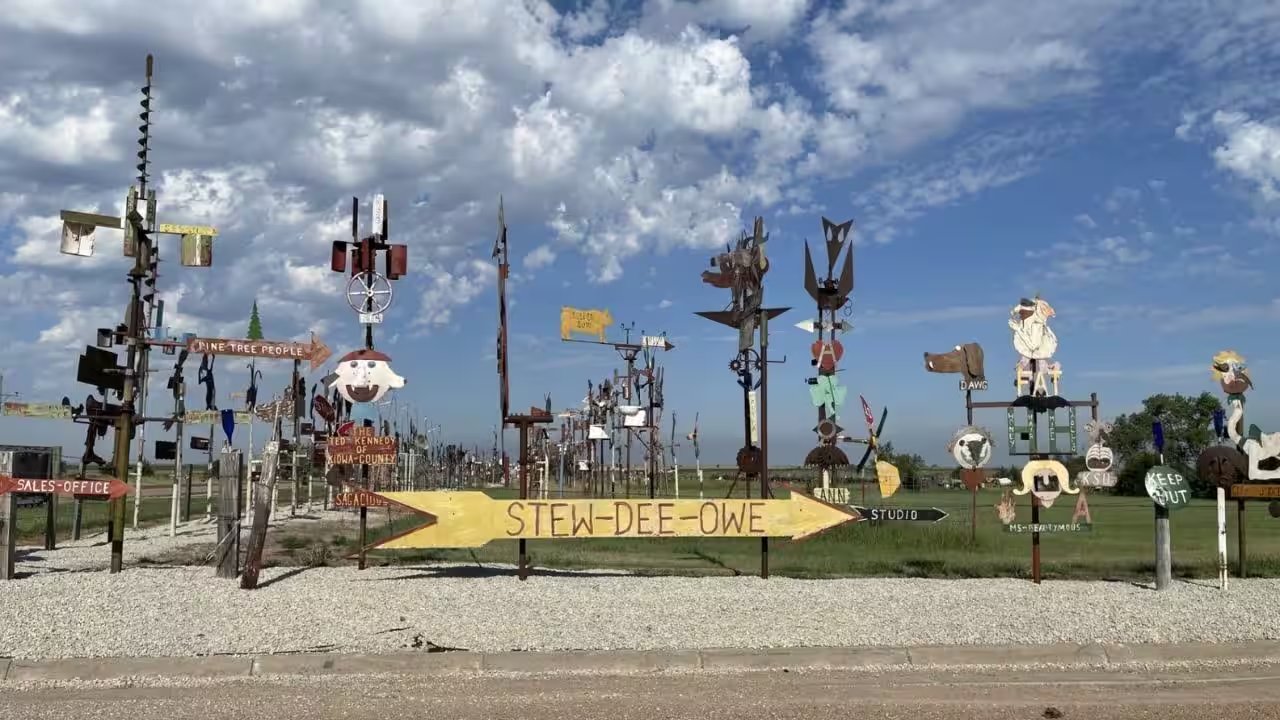
The Kohler Foundation has finished restoring the erratic, wind-battered installation of 600 metal totems scattered across the 70-acre property of M.T. Liggett in Mullinville, Kansas. This isn't a curated museum; it's a chaotic roadside gallery that Liggett built over three decades, welding together tractor parts, road signs, and railway scrap into towering political and personal statements. The project, which began in April 2019, has transformed a roadside curiosity into a preserved cultural landmark.
Liggett, born in Mullinville in 1930, didn't pick up an arc welder until his late 50s. He created his first sculpture, a gargoyle, after a horse died from poisoning, believing the metal figure would repel dark forces. That initial experiment exploded into a career of relentless fabrication. By the time he died on August 17, 2017, he had filled the landscape along US Highway 400 and Kansas Highway 54 with sculptures reaching 20 feet high. Some squeaked in the prairie wind; others stood silent, sharp-edged critiques of politicians and social institutions.
The collection defied easy categorization. Liggett targeted figures from across the political spectrum, using exaggerated forms to mock officials, the justice system, and international leaders. He also welded tributes to his dogs, former wives, and Greek myths. The result was a space that felt simultaneously humorous and confrontational. In 2001, The Wichita Eagle noted that up to 100 vehicles a day pulled over to photograph the site, prompting the Kansas Department of Transportation to install emergency parking signs. The art had become so prominent it was indistinguishable from the town itself.
Preserving the site required more than just rust-proofing. The foundation spent two years conserving the 600 large totems and over 500 smaller pieces, including hearts and abstract figures. They constructed a visitor centre using materials salvaged from Liggett’s original studio. The centre includes a workshop equipped with his tools, allowing for ongoing maintenance of the fragile, weather-exposed sculptures. This ensures the collection doesn't just survive, but remains active in the landscape.
The site is now open to visitors who want to see how one man’s obsession with metal and memory can reshape a rural highway. The next phase involves continuing the conservation work to ensure the wind doesn't claim the totems. For now, the 600 sculptures stand guard over the Kansas prairie, loud and unapologetic.