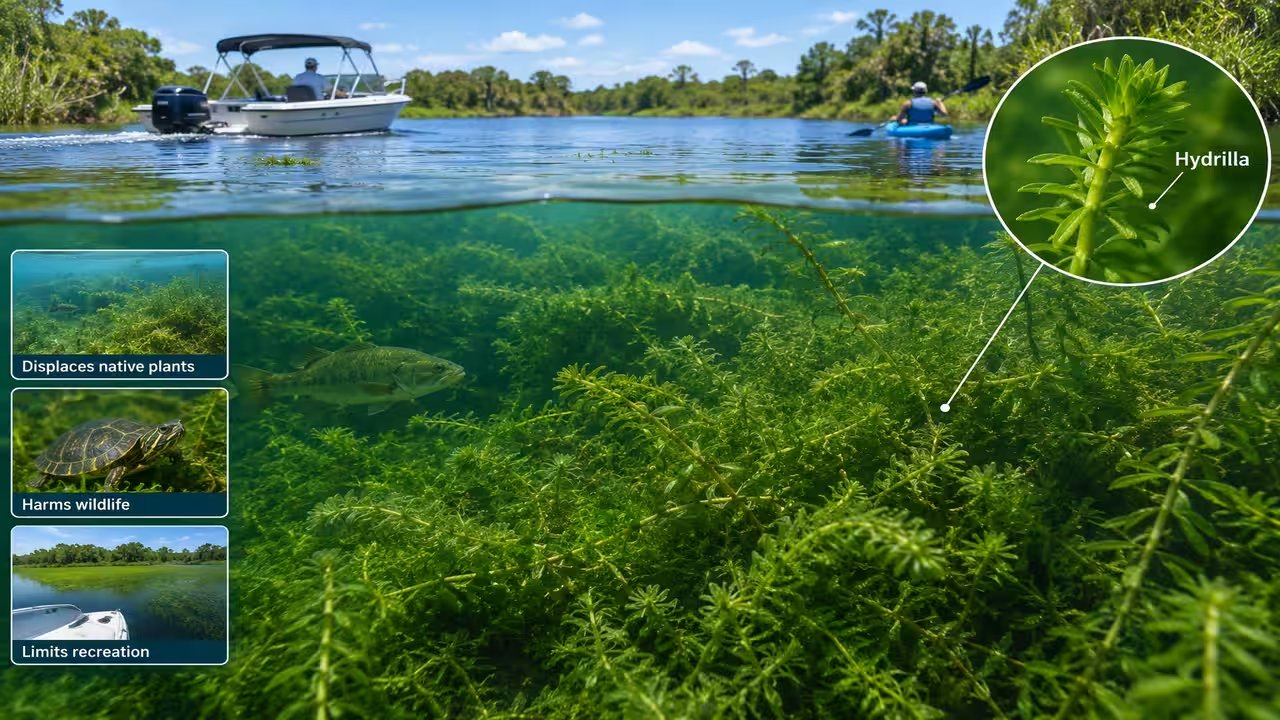
Since its accidental release from an aquarium in 1952, hydrilla has turned Florida's freshwaters into a battlefront, covering 70% of the state's watersheds within four decades.
The plant can grow up to four inches a day, and each fragment or tuber can seed thousands of new clones, allowing it to leapfrog across lakes, rivers, and canals via boats and watercraft. USGS data pinpoints 42 drainage units in Florida already hosting hydrilla, a figure that eclipses earlier estimates.
Dense mats smother native flora, block sunlight, and choke out fish habitats, while the decaying biomass thickens sediments, impairing water withdrawals for irrigation and power plants. A fisherman in Tampa's Newfound Harbor reports losing his bait shop profits as boats can no longer navigate the clogged channel.
Florida was not the first state to wrestle with hydrilla; the species now ranks in 28 U.S. states, Guam, and Puerto Rico, yet its proliferation in the Sunshine State outpaces other regions, where coverage averages 40%.
In response, the Department of Environmental Protection has rolled out an expanded monitoring network and is lobbying for a $150 million federal grant under the Clean Water Act to fund herbicide treatments and mechanical removal.