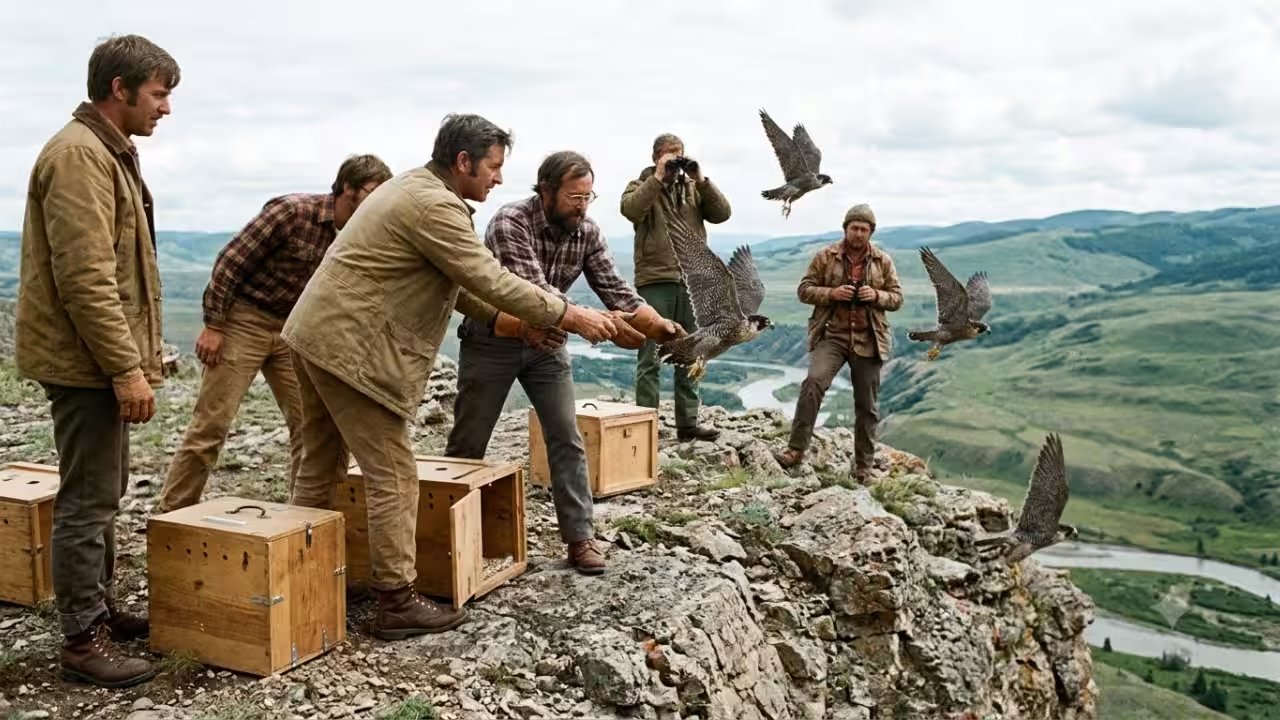
The US Fish and Wildlife Service struck the American peregrine falcon from the federal endangered species list in 1999. It was a quiet administrative victory that masked a decades-long war against extinction. The birds had been listed in 1970 under the Endangered Species Conservation Act of 1969, their populations decimated by DDT residues that thinned eggshells until they cracked under the weight of incubating parents. Now, with the threat neutralized, the species had clawed its way back to health.
The comeback wasn’t just about banning chemicals. It required a hands-on, gritty intervention led by scientists at Cornell University. They developed a technique called 'hacking,' where young falcons were raised in boxes on towers or cliff ledges. Food came through chutes to minimize human contact, forcing the birds to develop their own hunting skills before being set loose. From 1974 onwards, this program released more than 6,000 American peregrines into the wild, a massive logistical effort involving state agencies, The Peregrine Fund, and the Santa Cruz Predatory Bird Research Group.
Not all subspecies needed the same help. Arctic peregrines, which had lost up to 80% of their population, recovered naturally once DDT was banned in 1972 by the EPA. They didn’t need captive releases. By 1994, the US Fish and Wildlife Service delisted the Arctic subspecies, proving that removing the pressure was enough for some populations. But for the American peregrine, the active release program was the difference between survival and extinction.
The results are visible in the field. Biologists monitoring the Yukon-Charley Rivers National Preserve in Alaska recorded just 11 nesting pairs in 1975. Today, surveys in comparable areas document more than 50 nesting pairs. The birds have reclaimed their place in the North American ecosystem, a testament to the effectiveness of combining legal protection with scientific intervention.
The recovery of the peregrine falcon stands as a model for other endangered species. It shows that when governments act decisively—banning harmful chemicals and investing in conservation programs—ecosystems can heal. The next step is maintaining these gains, ensuring that DDE residues and other pesticides don’t creep back into the food chain. For now, the falcons are flying high, and the story is one of triumph.