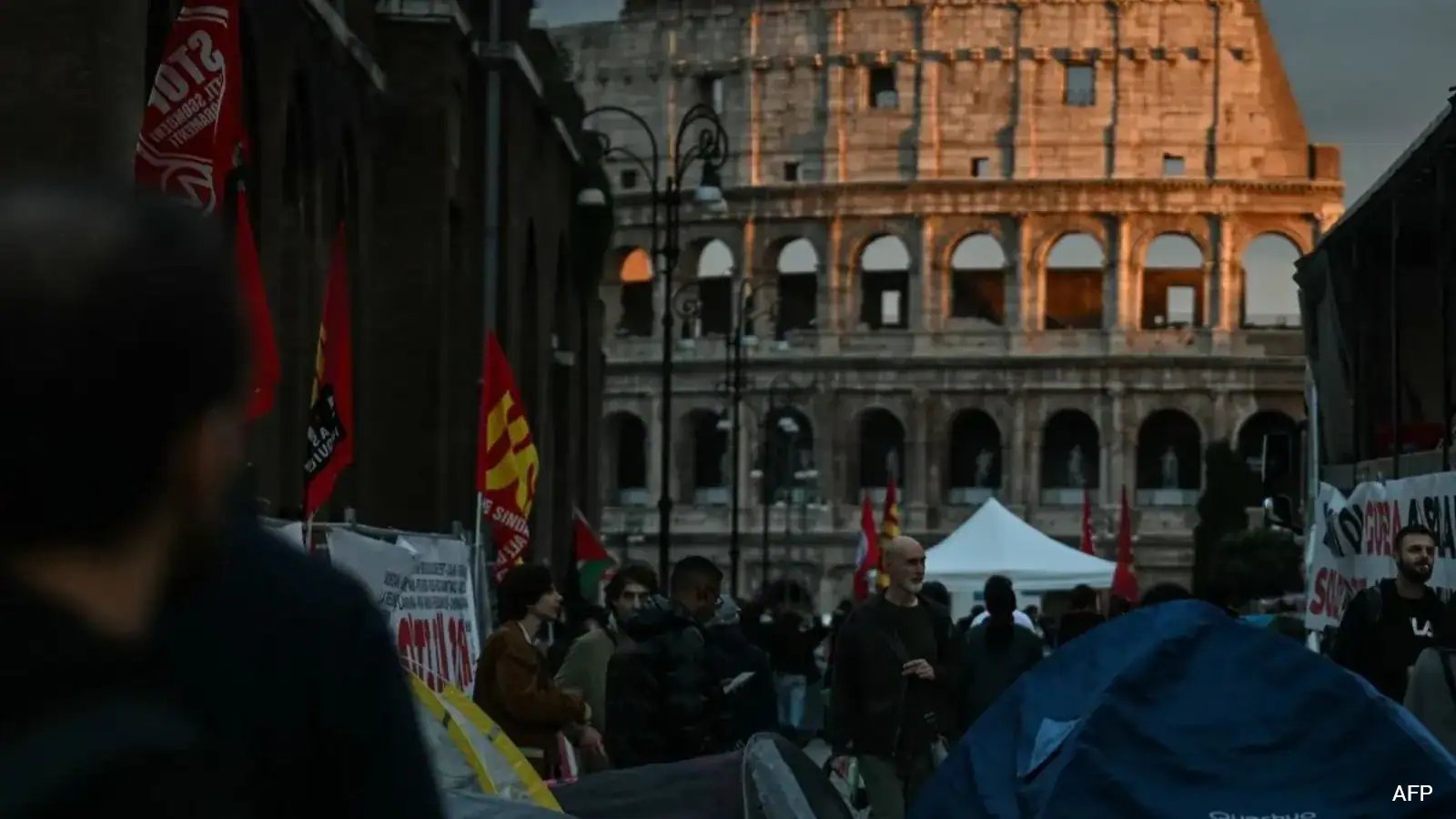
Students flooded city squares, setting up tent camps and occupying schools in Rome, Milan and Turin, demanding safer buildings and lower tuition. Sofia Cataldi, a 16‑year‑old from Rome, warned that windows in her high school were falling and mice roamed the halls, insisting the state must protect their learning environments.
Truck drivers, taxi crews and farmers marched beside the Colosseum, waving flags and chanting "We need more houses, not bombs!" Stefano De Finis, 25, said the protests could lead to lasting change before the next elections, urging the elderly to join the movement.
The strike was met with a mix of resistance and restraint. In Rome, a handful of protesters threw bottles, but the majority remained peaceful; in Turin, police used batons and a water cannon to drive back a smaller group.
Prime Minister Giorgia Meloni announced a €175.2 million aid package for fuel‑price‑hit workers and outlined a draft 2027 budget that would grant a €2,500 annual bonus for workers under 30, signalling a shift toward supporting young families.
The government’s tightening of public‑gathering laws after the Milan clashes adds legal complexity to the protests, as authorities balance civil unrest with new restrictions. The next step will be the parliamentary vote on the 2027 budget in early 2027.