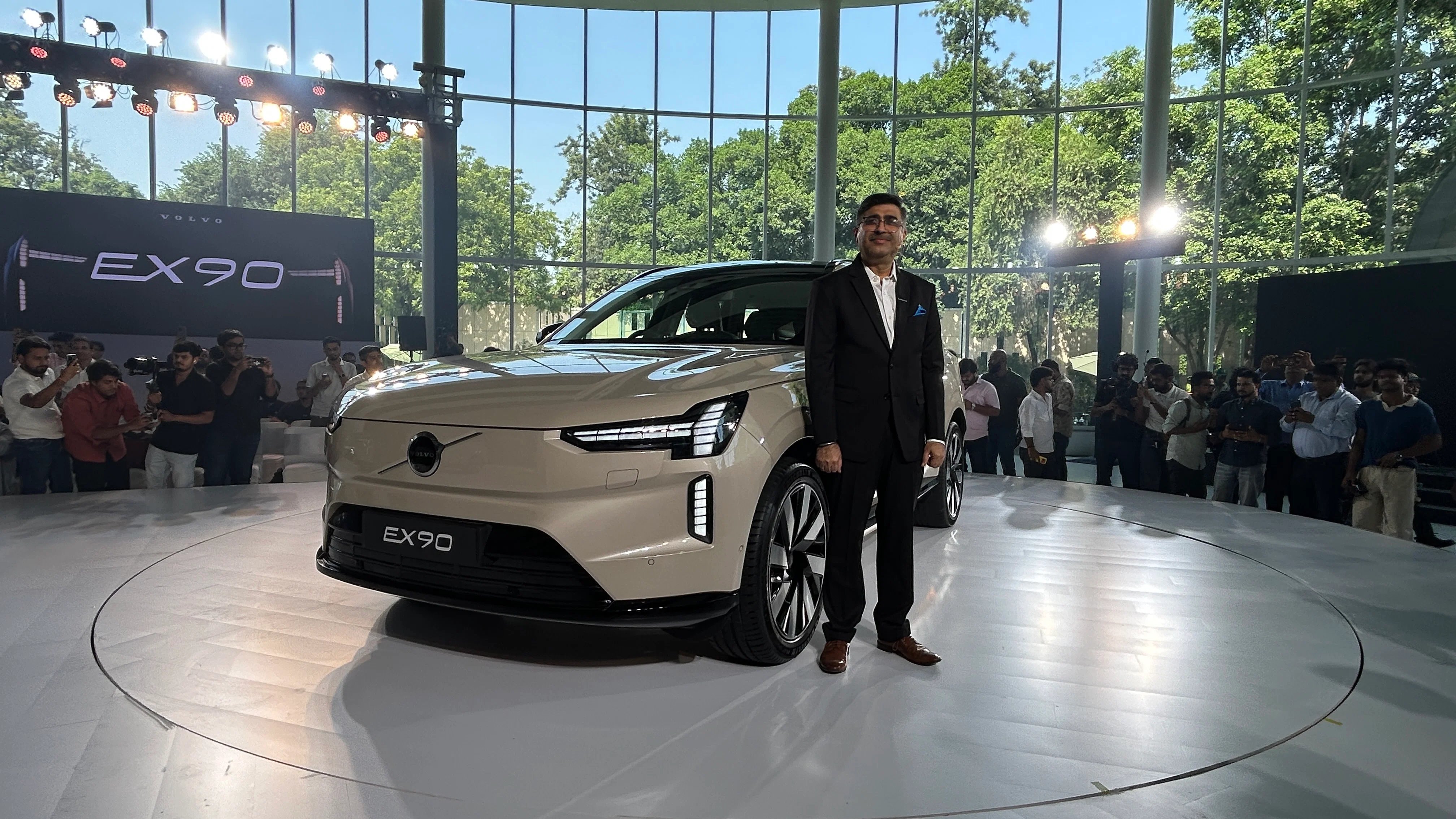
The first thing that hits you when you see the EX90 on a showroom floor is its price tag – ₹1.26 crore – and the fact that it’s Volvo’s flagship electric SUV, replacing the XC90 in the local lineup. It’s the brand’s first all‑electric three‑row model, aiming to bring the same safety and design DNA to a wider, greener audience.
Under the hood, the EX90 packs a 106‑kWh battery and a twin‑motor all‑wheel‑drive system that churns out 456 hp and 670 Nm of torque. Those numbers translate to a 0–100 km/h sprint in 5.5 seconds and a top speed of 180 km/h, comfortably matching the performance of comparable petrol SUVs. Volvo’s WLTP rating of 625 km sits comfortably above the average of the segment, while a real‑world test by Autocar India settled on an efficiency of about 5.5 km/kWh, hinting at an everyday range of roughly 580 km.
Charging is where the EX90 shows its engineering edge. Built on a 800V SPA2 platform, it accepts up to 350 kW DC fast charging, cutting a 10–80 percent charge time to 22 minutes. For home use, the standard 11 kW AC wallbox—bundled in the introductory package—needs about 11 hours to reach a full charge, a figure that lines up with other large‑battery EVs.
In the market, the EX90 sits between the Kia EV9 at ₹1.30 crore and the Mercedes‑EQ S SUV 580 at ₹1.49 crore. It’s ₹4 lakh cheaper than the EV9 and ₹23 lakh below the EQS, positioning Volvo as the more accessible luxury electric SUV in an emerging segment.
Inside, the cabin keeps Volvo’s minimalist ethos: a 14.5‑inch vertical touchscreen feeds most functions, while a 9‑inch digital cluster sits behind it. Two‑tone Nappa leather, brushed aluminium trim and a 25‑speaker Bowers & Wilkins sound system give the space a premium feel. Boot space is 324 litres with all rows up, expanding to 690 litres when the third row folds flat, and a 46‑litre front compartment capitalises on the absence of a traditional engine.
Volvo is sweetening the deal for early adopters: a three‑year service package, an 11 kW home charger and a 65 percent buy‑back guarantee after three years come with the pre‑booking offer, which ends on 31 December 2026. The EX90 is available to book now, with delivery slated for late 2026 across major cities.
What buyers will be watching next are the real‑world range numbers on Indian roads, the adoption of the 800V charging infrastructure, and how the price‑performance balance holds up as more rivals enter the three‑row electric SUV space.