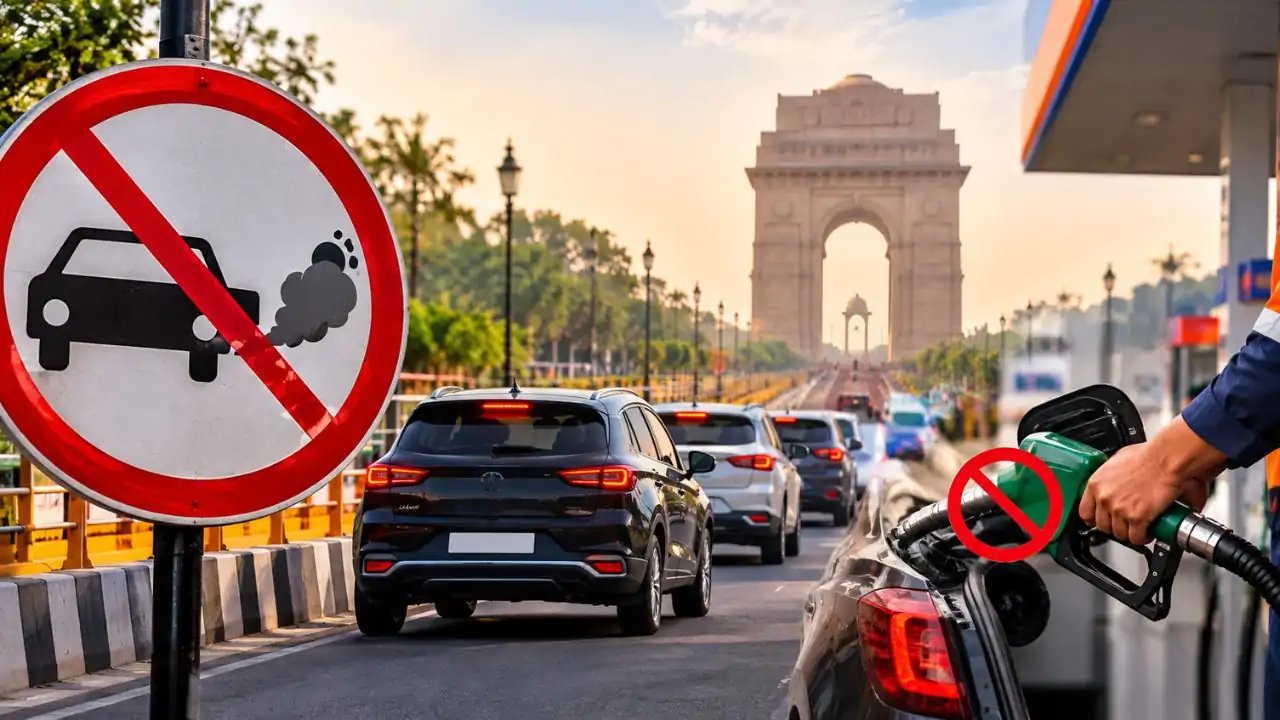
If you drive a petrol or diesel car registered in Gurgaon, Noida, or any other outside zone, your winter commute is about to get complicated. From November 1, Delhi will physically block non-BS-VI vehicles from entering the city. This isn't a soft advisory; it’s a hard curb running until January 31, 2027. The logic is simple: BS-VI became mandatory in April 2020, so any car older than that likely lacks the necessary emission controls. If your registration papers show a pre-2020 date, you are out. Electric vehicles and CNG cars are exempt, but for the rest of us, the border is now a checkpoint.
But getting in is only half the battle. Fuel stations in Delhi will flat-out refuse to pump petrol, diesel, CNG, or LPG if your PUC certificate is expired. It doesn't matter if you're a local or a visitor; no valid pollution certificate means no tank top-up. Given how often PUCs slip through the cracks—usually valid for six months or a year—this is a significant friction point. You can't just stop at a random pump in Dwarka and hope for the best. The enforcement is tied to the station, not just the vehicle's registration city.
The rules also ripple into daily life. Municipal parking fees are doubling, except at Delhi Metro lots. Offices, both government and private, are being pushed into 50% work-from-home models with staggered hours—MCD shifts to 8:30 am–5:00 pm, while Delhi government offices move to 10:00 am–6:30 pm. Construction sites facing heavy dust will be shut down entirely between December 10 and January 20, monitored by AI systems. It’s a coordinated attempt to shrink the traffic footprint, though how strictly these secondary measures stick will depend on local enforcement.
So, what’s the move? If your car is pre-BS-VI, don’t assume you can just slip through. Check your registration documents now. If you’re unsure, plan a backup: use the Metro, switch to a CNG vehicle, or leave the car at home. For those with BS-VI cars, the main hassle is administrative. Keep your PUC valid, budget for the higher parking bills, and adjust your office timings. The entry ban ends in late January, but the PUC rule is part of a broader Winter Action Plan extending to February 28. Keep an eye on official notifications as November 1 approaches; the details on exactly how entry points will scan vehicles are still fuzzy, but the intent is clear. Don't gamble on a guess.