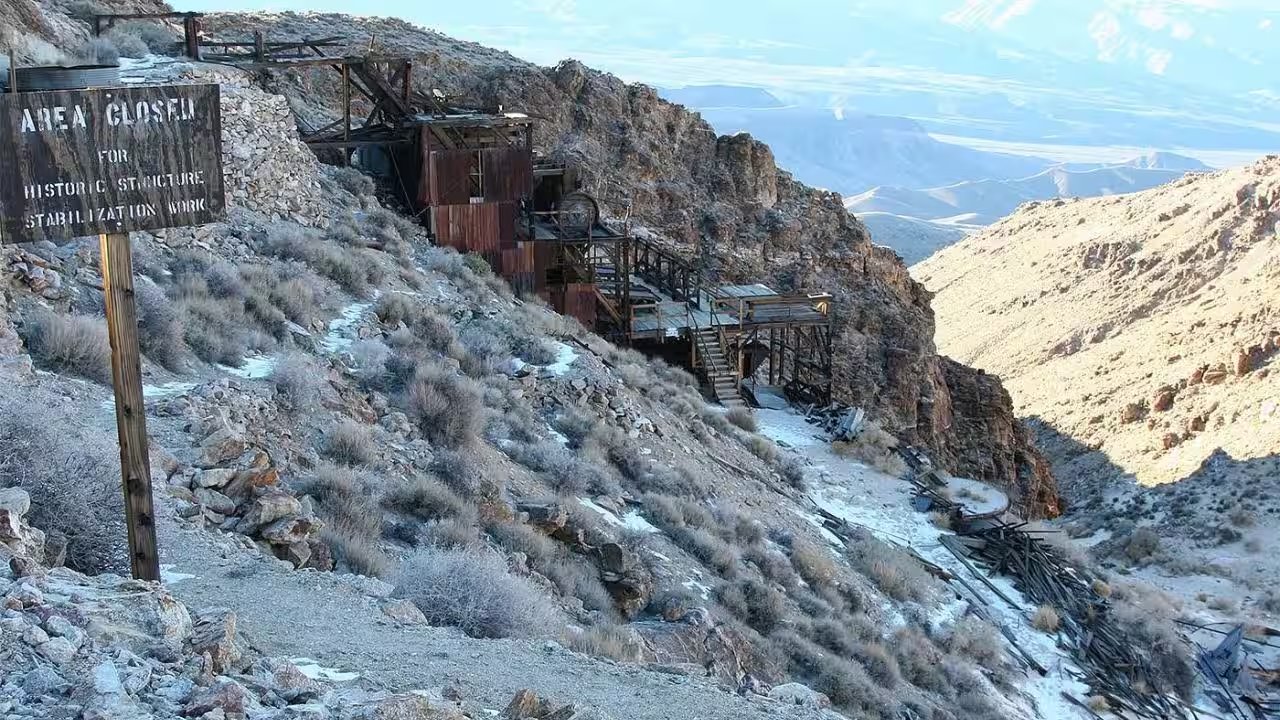
In 1906, two prospectors struck gold on the Panamint Mountains, spurring a rush that swelled Skidoo’s population to about 700 by the following spring.
The boom hinged on a 23‑mile metal pipeline that hauled water from Birch Spring near Telescope Peak to the town’s mill, a feat credited to mine owner Bob Montgomery. The line, erected in 1907, allowed the operation to process ore in an otherwise parched landscape.
The town’s economy exploded: by 1908, the Los Angeles Herald reported gold bricks worth $10,000 arriving in Rhyolite, the equivalent of 15 days’ production. Over its peak decade, Skidoo generated roughly $1.5 million in revenue, a staggering sum for a remote desert camp.
But the prosperity was fragile. By 1917, dwindling ore and rising costs forced most residents to leave, and sporadic milling ceased entirely in 1942, rendering Skidoo a ghost town.
Today the site lies within Death Valley National Park. A former resident’s family, who once ran a boarding house for miners, now tells the story to visitors, turning the echoes of a gold rush into a living memory.