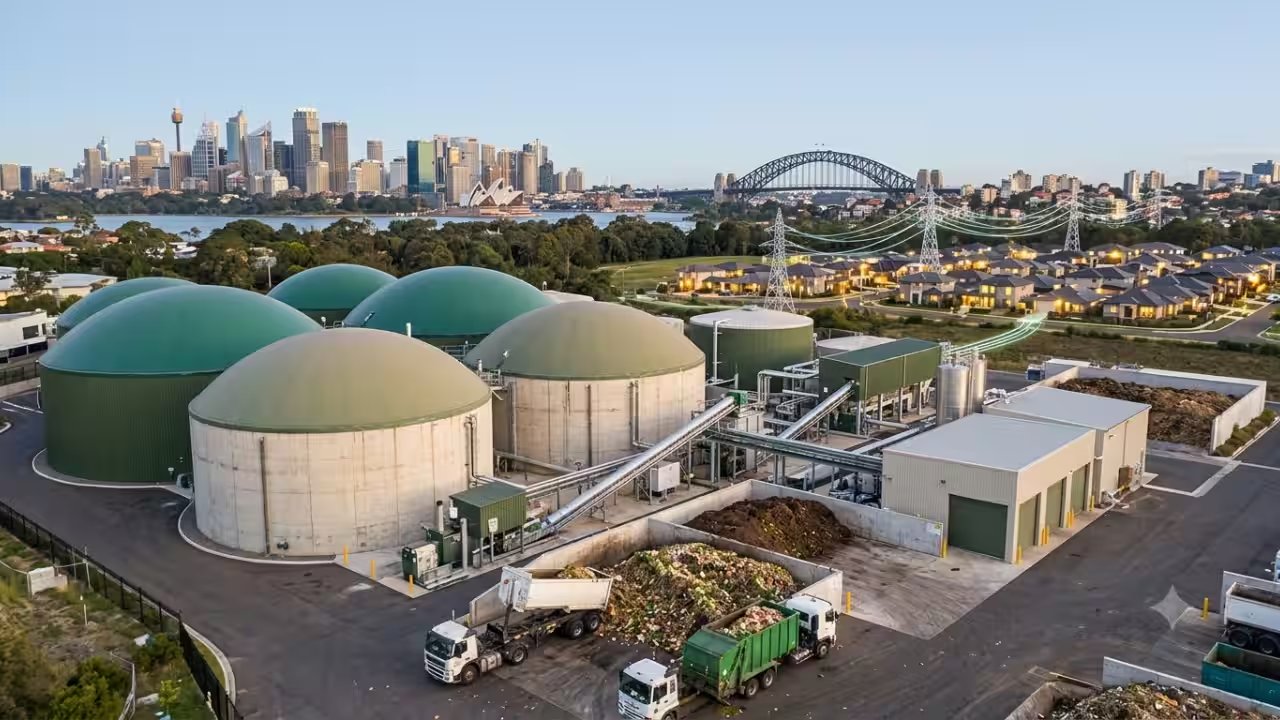
The facility in Camellia now processes 62,500 tonnes of organic material a year, a capacity boost that transforms Sydney's food waste from a landfill burden into a grid asset. Waste Management Review 2025 confirms the upgrade, noting that 65% of the intake is dedicated specifically to food scraps and by-products. This volume generates enough electricity to keep 4,000 Australian homes running.
The mechanism is strictly biological. Two anaerobic digesters house bacteria that break down organic matter without oxygen. They produce biogas, which feeds cogeneration engines to create power. The plant uses its own energy first, then sells the surplus to the grid for domestic and commercial use. It is a closed loop of energy recovery.
The leftovers do not vanish. The nutrient-rich sludge remaining after digestion gets dried using heat from those same engines. EarthPower granulates the dried material and sells it as a soil improver. This second stream yields approximately 1,500 tonnes of agricultural product annually, closing the loop from plate to paddock.
The feedstock comes from the entire Sydney supply chain. Manufacturers, distributors, commercial kitchens, and local government bodies send everything from solid scraps to grease trap waste. This diverse intake allows the plant to handle the messy reality of urban food waste rather than just one clean stream. It keeps putrescible material out of landfills where it would otherwise decompose and release methane.
As Australia grapples with high per-capita waste levels, this model offers a concrete alternative to incineration or burial. The next step for the industry is scaling this 'plate to paddock' approach to other major metropolitan areas. For now, Camellia stands as the proof of concept.