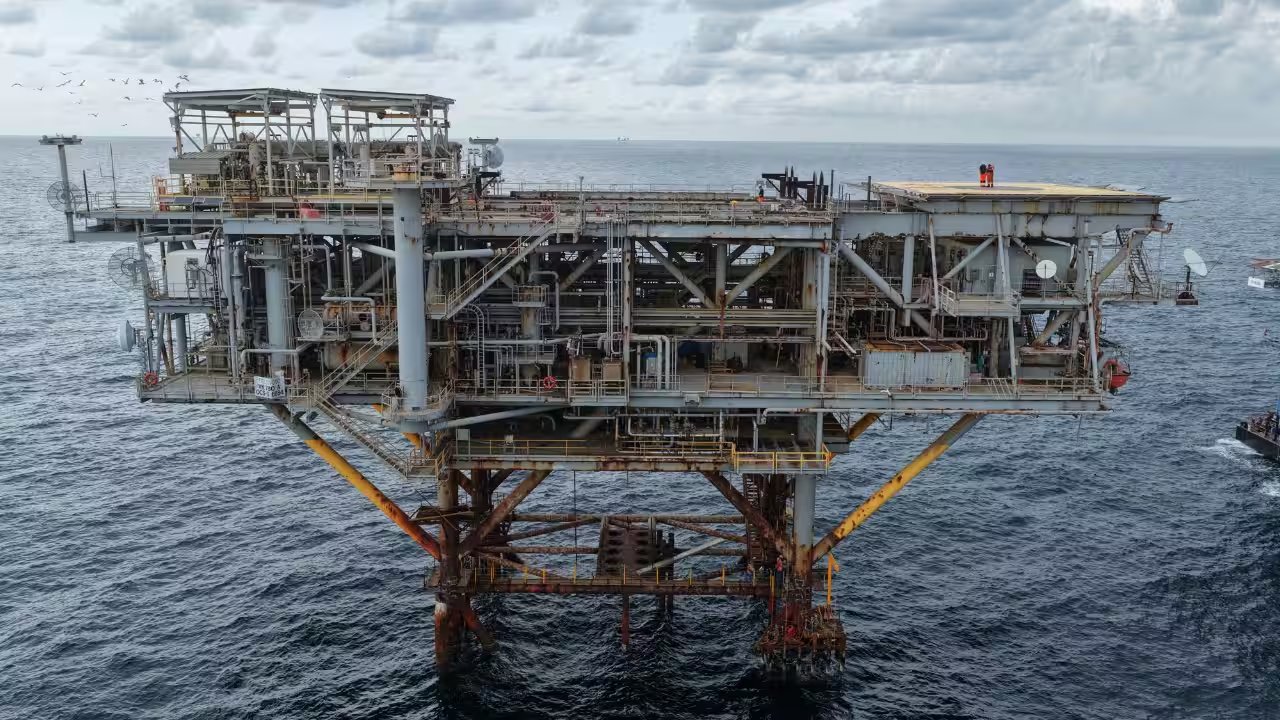
Crews left the massive steel base of the Spirit VK 780A gas rig on the seafloor, creating a 632-foot underwater structure off Alabama's coast. The move, coordinated by the Alabama Department of Conservation and Natural Resources, saves a habitat that has hosted marine life since 1998. Instead of hauling the entire platform ashore, engineers cut the legs 90 feet below the surface.
APA Corporation, the rig's former owner, funded the conversion with a $1.5 million donation to the state's Marine Resources Division. The money supports monitoring and habitat restoration across the Gulf. This donation aligns with the state's Rigs to Reefs program, which repurposes retired energy infrastructure.
The project yields two distinct reef sites. The upper section, VK 780-T, sits in 206 feet of water within the Tatum Winn South zone. It measures 85 by 77 feet and rises 107 feet from the bottom. The lower base, VK 780-B, is the heavyweight. It stands in 722 feet of water, towering 632 feet above the seafloor.
This isn't Alabama's first experiment in underwater recycling. The state established the Marathon Reef and Swingle Reef from retired rigs back in 1983. Both sites remain productive more than 40 years later. Steel surfaces provide attachment points for coral, while the complex framework offers shelter for fish.
The new reefs are designed to last for decades, if not centuries. Marine organisms established on the rig since its operational years now have a permanent home. The state expects these sites to support biodiversity long after the gas extraction era ends.