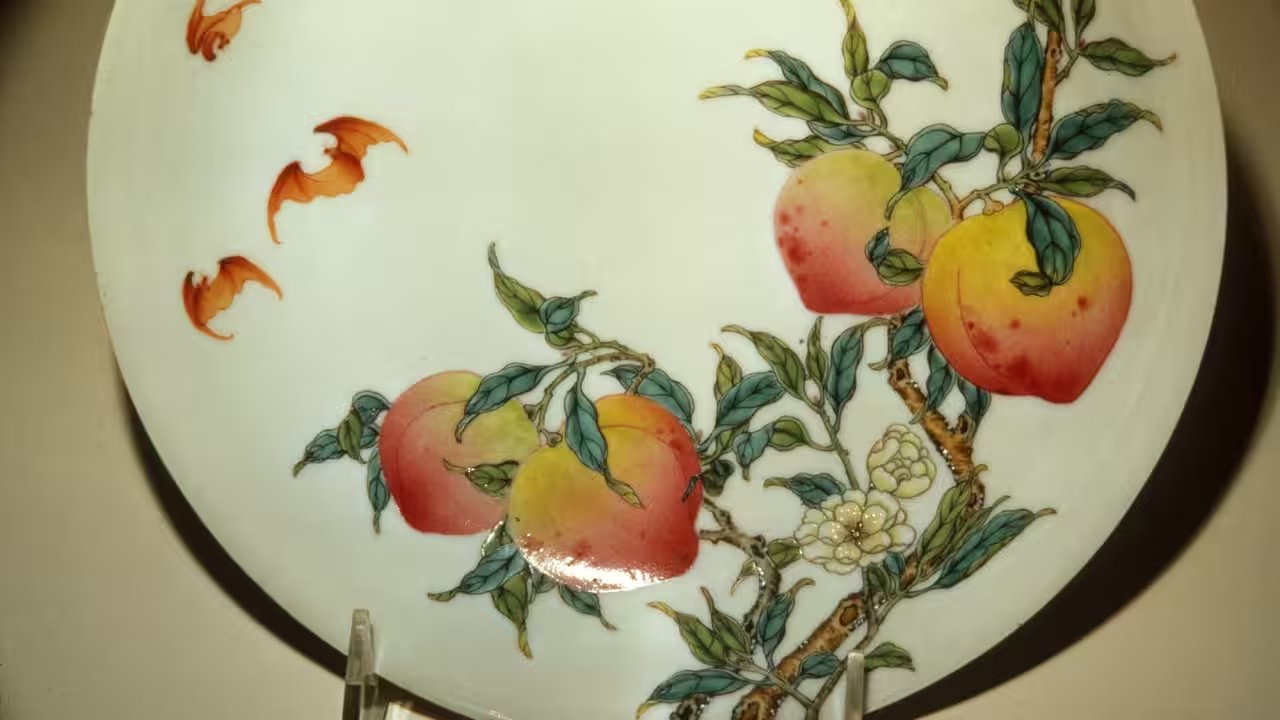
A Qing‑dynasty porcelain bowl, measuring 14.3 centimetres in diameter, fetched $2.048 million at Christie's New York auction during the two‑day autumn series, a price five times its pre‑sale estimate. The bowl, crafted under Emperor Yongzheng’s short reign (1723‑1735), showcases famille rose enamel with guozhihua – a technique that threads a floral motif over the rim onto the interior, impossible on such a small, curved surface.
The design features six ripe peaches and five red bats, symbols of longevity, health, wealth and a peaceful death, hinting the piece might have been commissioned for the emperor’s birthday. Its intricate guozhihua required artisans to blow fine enamel powders onto the glaze before hand‑painting subtle colour shifts from pale green to rose pink.
Ownership traces back to Chinese dealer C.T. Loo, who sold the bowl to Chicago collector Russell Tyson in the early 20th century. Tyson, a patron of the Art Institute of Chicago, donated it in 1939, where it remained for 87 years before the museum listed it to raise funds for its Asian collection.
Christie's head of Chinese ceramics, Vicki Paloympis, noted that the sale underscored buyers’ appetite for imperial works with solid provenance; the Art Institute will use the $2.048 million to acquire new pieces and preserve its existing holdings.