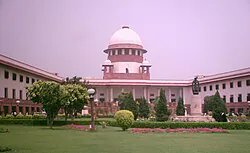
The bench, comprising Chief Justice Surya Kant, Justice Joymalya Bagchi and Justice V Mohana, rejected a plea lodged by advocate K Suthan that sought to overturn a Madras High Court decision permitting six AIADMK legislators to vacate their seats after defying the party whip and aligning with the ruling Tamilaga Vettri Kazhagam (TVK).
The six MLAs—S Jayakumar, Maragatham Kumaravel and P Sathyabama from Perundurai, Madurantakam and Dharapuram, and Esakki Subaya from Ambasamudram—tendered resignations on May 25 and 26, 2026, immediately following a vote that breached AIADMK discipline. Their departure came a day after the party’s whip, Krishamurthy, had already initiated disqualification proceedings against them.
Earlier, the Madras High Court had dismissed a public interest litigation that demanded an "Election Expenditure Security" mechanism, a five‑year disqualification for defectors, and a directive to the Election Commission to enforce a deposit equal to the cost of a by‑election. The court instead upheld the principle that a voluntary resignation cannot be shackled by extra‑statutory conditions.
In its order, the Supreme Court underscored that resignations are part of the democratic process and are governed by the 10th Schedule of the Constitution. It emphasized that the speaker’s acceptance of the resignations was constitutionally valid, even though disqualification petitions were pending.
The ruling leaves the Tamil Nadu Assembly Speaker with a two‑month window to adjudicate the pending disqualification pleas. If the speaker fails to decide, the Madras High Court retains the power under Article 226 to intervene.
For voters in Ambasamudram, the sudden resignation of Esakki Subaya stunned locals who had seen him as a reliable representative. "I never imagined he’d go to TVK," said a resident, illustrating the abrupt shift in political allegiance.
The case highlights how intra‑party conflicts can reshape legislative composition, with the ruling TVK now holding the seats vacated by the defectors.