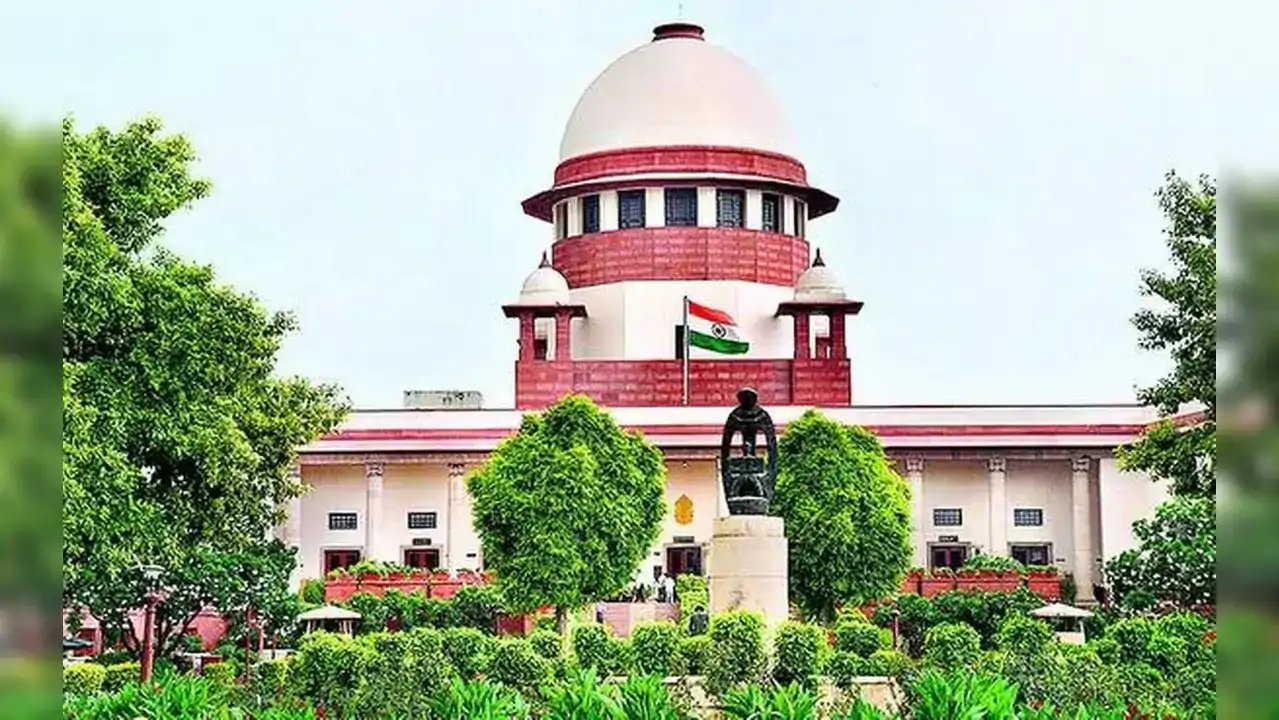
The Supreme Court on Wednesday delivered a fractured verdict on the legal fate of the 2023 law that stripped the Chief Justice of India from the panel selecting the Election Commission’s chief. Justices Dipankar Datta and Satish Chandra Sharma disagreed on the procedural path forward, yet both agreed the matter demands a larger forum. The bench unanimously ordered that the Chief Justice of India consider constituting a Constitution bench of appropriate strength, bypassing a three-judge bench to avoid further procedural delays.
The core dispute centers on the Chief Election Commissioner and Other Election Commissioners (Appointment, Conditions of Service and Term of Office) Act, 2023. This legislation replaced the selection mechanism mandated by the Supreme Court’s March 2, 2023, judgment in Anoop Baranwal. Under the new law, the selection committee consists of the Prime Minister, a Union Cabinet Minister nominated by the Prime Minister, and the Leader of the Opposition in the Lok Sabha. Petitioners, including the Association for Democratic Reforms and advocate Gopal Singh, argue this structure violates the principle of free and fair elections by removing judicial independence from the process.
Justice Datta, in his dissenting view on the reference, raised sharp concerns about executive dominance. He observed that a minister nominated by the Prime Minister cannot reasonably oppose the Prime Minister’s choice, effectively granting the executive a veto. “A minister nominated by PM cannot defy his choice so the pm will have his way on whomever he wants to choose,” Justice Datta said. He further noted that including Cabinet ministers in the panel fails to provide an independent counterweight, making their role “largely ornamental.”
Justice Sharma, conversely, held that the constitutional validity of the 2023 law requires authoritative determination by a Constitution bench under Article 145(3). The bench acknowledged the petitioners’ concern that references to larger benches often remain pending for years. “The petitioners seem to be justified in saying references remain pending for years. Undisputedly, this is an area of great concern. Self-introspection indeed is required,” the bench observed. The court also asked the Chief Justice to consider forming a permanent five-judge bench for constitutional matters to address this systemic delay.
The apex court had reserved its judgment in July on this procedural question. In 2024, the court had already declined to stay the appointments of two Election Commissioners under the 2023 Act. The petitions specifically challenge Sections 7 and 8 of the law, arguing that excluding the CJI dilutes the Supreme Court’s earlier mandate for a committee comprising the Prime Minister, the CJI, and the Leader of the Opposition. The final decision on the constitutionality of the law now rests with the larger bench the Chief Justice is expected to constitute.