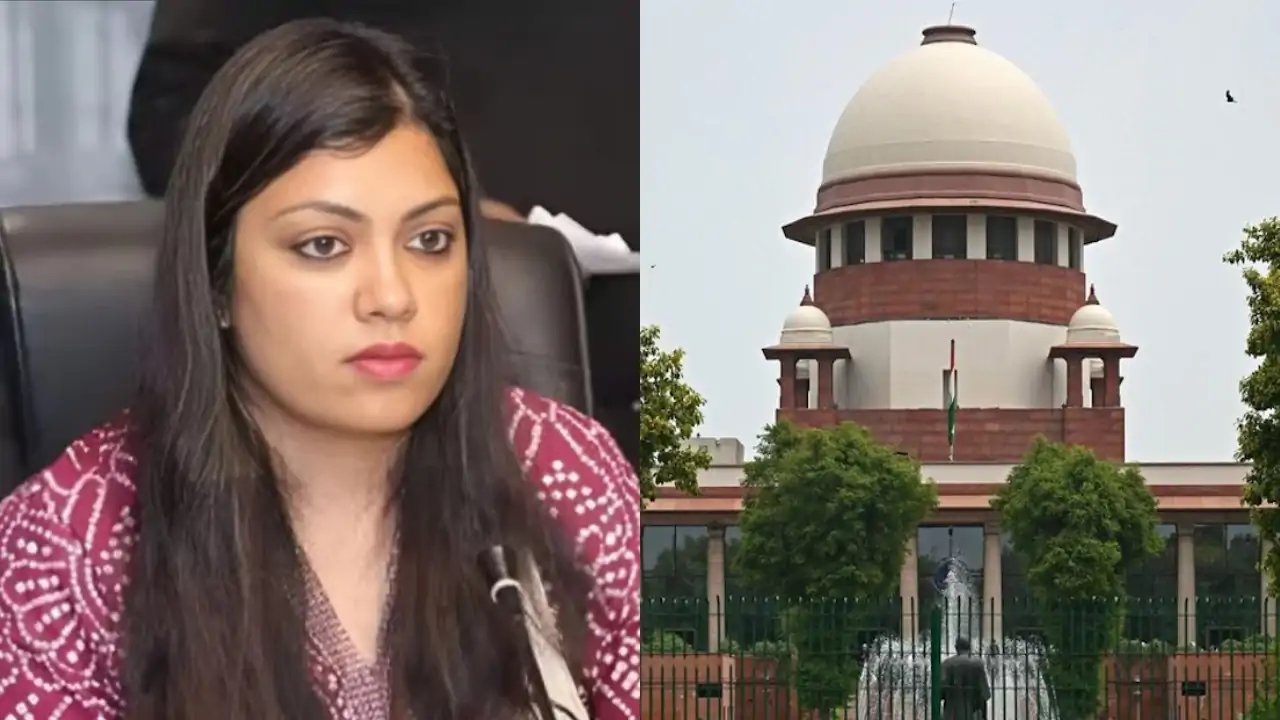
The Supreme Court on Wednesday stayed the operation of the Allahabad High Court order that directed Gautam Buddh Nagar District Magistrate Medha Roopam to pay compensation of ₹5 lakh from her salary for the detention of a student under the National Security Act (NSA) in connection with the Noida workers' protest in April. The bench, comprising Justice Satish Chandra Sharma and Justice NK Singh, also stayed the observations made in the high court order against the DM.
During the brief hearing, the bench heard Solicitor General Tushar Mehta, appearing for the district magistrate, and senior advocate Mukul Rohatgi for the state of Uttar Pradesh, before it muted the audio of the video conference proceedings. The court ordered that till the matter is heard on merits, the operation of the impugned judgment, particularly paragraphs 27 to 33, shall remain stayed. The matter was posted for further hearing on October 7.
Questions are being raised on the listing of two particular cases in the Supreme Court — one petition filed by Noida District Magistrate Medha Roopam and the second by the Uttar Pradesh government challenging the Allahabad High Court’s judgment quashing the detention of a student under the National Security Act in Noida workers' protest — before the junior-most court of Justice SC Sharma, according to Live Law. The roster of such cases was only meant for the senior-most four benches led by CJI Surya Kant, Justice Vikram Nath, Justice BV Nagarthna, and Justice MM Sundresh.
Raising the matter on X, formerly Twitter, Supreme Court advocate Prashant Bhushan said, “Shocking that the appeal against the Allahabad HC judgement quashing the preventive detention order of student activist was listed in the juniormost court of Justice SC Sharma, though the roster of such cases was only with the seniormost 4 benches! What is going on in the SC?!” According to Supreme Court’s roster dated July 13, cases relating to habeas corpus and preventive detention were assigned only to the first four benches, including CJI Surya Kant and others mentioned above.
However, these petitions — the one by Noida DM and the state of Uttar Pradesh — were taken by a bench comprising Justice Satish Chandra Sharma and Justice NK Singh, even when they did not have the roster for preventive detention matters with respect to the roster dated July 13. This happened when other cases related to detention over the Noida Workers’ protest are pending before a bench led by Justice BV Nagarthna, according to Live Law. The issue that is being pointed out here is that why petitions filed by Noida DM and State of UP were listed before Justice Sharma’s bench, given that such matters are assigned the category number 2202 pertaining to habeas corpus and preventive detention cases.
Also, according to Live Law, no defects were notified in the petition. What comes as a usual practice is that connected matters are assigned to the same bench. As far as Justice Sharma’s roster is concerned, cases related to preventive detention matters are not otherwise present in his roster which implies that the Noida DM’s matter was specially assigned to his bench. As per Live Law, only Chief Justice of India - who is master of the roster - has the power to do this as he has the prerogative to assign cases using administrative powers. The question here is why a special arrangement was done when already four other Supreme Court benches have been specifically assigned the roster for preventive detention and one another bench of Justice Nagarthana was already seized of connected petitions arising from the Noida workers’ protest.